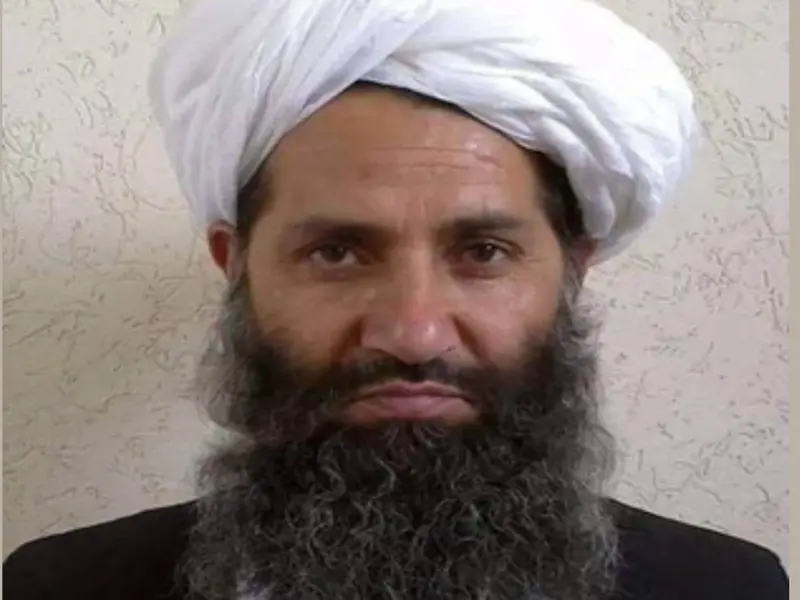
Pakistan-Afghanistan conflict tensions spiked sharply on February 27 after Pakistan reportedly carried out airstrikes inside Afghanistan. Social media claims quickly followed, suggesting that the reclusive Taliban supreme leader, Haibatullah Akhundzada, may have been targeted—or even killed.
As of publication, there is no official confirmation from either Pakistan’s military or the Taliban authorities regarding his death. Here’s what we know so far, and what remains unverified.
Who Is Haibatullah Akhundzada?
Haibatullah Akhundzada has led the Taliban since 2016. He became the movement’s chief after a U.S. drone strike killed his predecessor, Mullah Akhtar Mansour.
His Role in the Taliban
Akhundzada serves as:
- Supreme leader of the Taliban
- Head of the so-called Islamic Emirate of Afghanistan
- Final religious and political authority within the regime
Unlike many Taliban figures, Akhundzada maintains an extremely low public profile. He rarely appears in public and typically communicates through written statements or religious decrees issued via Taliban channels.
Why Is He So Reclusive?
His limited visibility has fueled speculation in the past. On multiple occasions, rumors have circulated about his ill health or death—none confirmed.
After the U.S. and NATO withdrawal in 2021, the Taliban returned to power under his leadership. However, governance decisions are often executed by cabinet members in Kabul, while Akhundzada is widely believed to operate primarily from Kandahar, the Taliban’s ideological heartland.
What Happened in the Latest Pakistan-Afghanistan Conflict?
The latest Pakistan-Afghanistan conflict escalation reportedly stems from mounting cross-border tensions along the Durand Line, the long-disputed boundary separating the two countries.
Pakistan’s Position
Pakistan claims it launched airstrikes targeting militant safe havens inside Afghan territory. Islamabad alleges that groups such as:
- Tehrik-e-Taliban Pakistan (TTP)
- Islamic State—Khorasan Province (ISKP)
have used Afghan soil to plan and launch attacks against Pakistani forces.
The operation has reportedly been referred to as “Operation Ghazab Lil Haq,” though independent verification of its scope remains limited.
Why Kandahar Matters
Reports suggest the strikes occurred in or around Kandahar, a symbolic and strategic Taliban stronghold.
Kandahar is:
- The birthplace of the Taliban movement
- A key religious and ideological center
- Widely believed to be Akhundzada’s base of operations
That geographical detail fueled speculation that he may have been the intended target.
Was Haibatullah Akhundzada killed?
Short answer: There is no official confirmation.
Claims circulating on social media suggest that Pakistan attempted to target Akhundzada directly. Some outlets have gone further, speculating about his possible death.
However:
- The Taliban has issued no statement confirming his death.
- Pakistan’s military has not publicly declared him a target.
- No verified imagery or independent intelligence confirms the claim.
In conflicts involving high-profile leaders, misinformation spreads rapidly. Without official acknowledgment or credible verification from international observers, these claims remain unsubstantiated.
For context, similar rumors about Akhundzada’s death have surfaced in previous years and were later dismissed.
Why Would Pakistan Target Him?
If—hypothetically—Akhundzada were targeted, the strategic logic would be significant.
As supreme leader, he:
- Shapes Taliban ideology
- Approves major strategic decisions
- Oversees religious rulings that define state policy
Targeting him would represent a major escalation, potentially shifting from tactical strikes against militant groups to leadership decapitation.
That would dramatically alter the Pakistan-Afghanistan conflict dynamic.
However, without confirmation, it remains speculative.
What Triggered the Escalation?
Cross-border violence between Pakistan and Afghanistan has intensified in recent months.
The Durand Line remains a core dispute. The Taliban government does not formally recognize it as an international border, while Pakistan treats it as settled.
Tensions typically flare over:
- Cross-border militant activity
- Border fencing disputes
- Alleged militant sanctuaries
Pakistan accuses the Afghan Taliban of failing to curb TTP activity. The Taliban, in turn, denies harboring anti-Pakistan militants.
What Happens Next?
If Akhundzada is alive—and no evidence currently proves otherwise—the Taliban leadership structure likely remains intact.
If he were confirmed dead, the implications would be substantial:
- A potential leadership succession crisis
- Internal Taliban power struggles
- Heightened regional instability
- Stronger retaliatory rhetoric from Kabul
The Taliban’s centralized religious authority model means leadership transitions carry high stakes.
Why This Story Matters Beyond the Region
The Pakistan-Afghanistan conflict is not just a bilateral issue. It affects:
- Regional security in South Asia
- Counterterrorism efforts
- U.S. and NATO strategic interests
- Refugee flows and humanitarian stability
Any credible threat to the Taliban’s top leadership could ripple across diplomatic channels in Washington, Beijing, Moscow, and New Delhi.
TL;DR
- Pakistan carried out airstrikes inside Afghanistan amid escalating cross-border clashes.
- Social media claims suggest Haibatullah Akhundzada may have been targeted or killed.
- There is no official confirmation from Pakistan or the Taliban.
- Kandahar, a Taliban stronghold, was reportedly hit.
- Until verified statements emerge, claims about his death remain unconfirmed.
In volatile conflicts, information moves faster than verification. For now, reports of Akhundzada’s death should be treated as speculation, not fact