
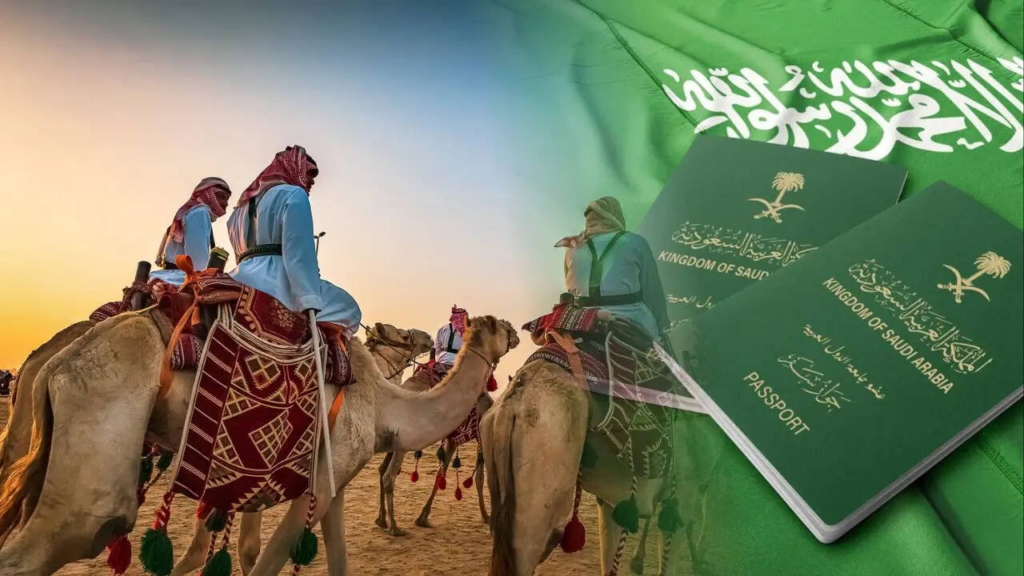
Saudi Arabia’s camels now have passports. It sounds like a punchline, but it’s official policy.
The Kingdom has launched a nationwide camel passport program to regulate ownership, strengthen livestock oversight, and modernize one of its most culturally significant industries. Led by the Ministry of Environment, Water, and Agriculture (MEWA), the initiative will build a centralized database covering more than two million camels.
Far from symbolic paperwork, the camel passport system represents a serious push toward traceability, animal health monitoring, and economic protection in a sector that blends heritage with high-value commerce.
What Is the Saudi Camel Passport System?
The Saudi camel passport is a physical identification booklet tied to a digital national registry.
Images released by MEWA show a green booklet stamped with the Saudi coat of arms and a gold camel emblem. But beyond the design, the goal is data integrity.
The system will:
- Create a verified national camel database
- Digitize ownership records
- Track vaccinations and veterinary history
- Regulate trade and transportation
- Reduce fraud and ownership disputes
According to Saudi state broadcaster Al Ekhbariya and reporting by Anadolu Agency, each passport links to a microchip embedded in the animal.
This combination, physical documentation plus electronic tagging, forms the backbone of the identification system.
What Information Will Each Camel Passport Include?
Each passport functions as a full identity profile for the animal. It includes:
- Microchip number
- Passport number
- Camel’s name
- Date of birth
- Breed
- Sex and color
- Place of birth
- Date and location of issuance
- Photographs from both sides
Veterinary and Vaccination Records
A dedicated section logs immunizations and health interventions. Entries must include:
- Veterinarian’s name
- Signature
- Official stamp
This improves traceability in cases of disease outbreaks and ensures verified medical histories during sales or breeding transfers.
Why Is Saudi Arabia Issuing Camel Passports?
The move addresses three overlapping priorities: regulation, economics, and heritage preservation.
1. Regulating a Massive Camel Population
Saudi Arabia is home to approximately 2.2 million camels (as of 2024 estimates), making it one of the largest camel-owning nations globally. Unofficial figures suggest around 80,000 camel owners nationwide.
With numbers that large, paper-based ownership claims invite disputes.
A centralized registry:
- Confirms legal ownership
- Simplifies transfers and auctions
- Reduces theft and fraudulent claims
2. Protecting a High-Value Industry
Camels aren’t just livestock—they’re premium assets.
At major festivals, especially the King Abdulaziz Camel Festival, prize-winning animals can sell for hundreds of thousands of dollars. Elite breeding lines are treated almost like thoroughbred racehorses.
The government has previously cracked down on cosmetic tampering, such as artificial lip or hump alterations, used to enhance beauty contest performance.
A standardized passport system adds transparency to breeding, lineage claims, and valuation.
3. Aligning With Saudi Vision 2030
Saudi Vision 2030 emphasizes diversification, digital governance, and modernization.
The camel passport initiative reflects that strategy:
- Digitized agricultural oversight
- Data-driven livestock management
- Integration of heritage industries into formal economic systems
It’s modernization without abandoning tradition.
How Does This Compare to Livestock ID Systems Elsewhere?
Camel passports may sound unusual, but livestock identification programs are common globally.
Examples include:
- The European Union’s cattle passport system
- Australia’s National Livestock Identification System (NLIS)
- USDA livestock traceability standards in the United States
What makes Saudi Arabia’s program distinctive is its cultural dimension. In many countries, livestock IDs are purely agricultural tools. In Saudi Arabia, camels are also symbols of national identity.
This dual role elevates the passport from a regulatory instrument to a cultural statement.
How Do Camel Beauty Contests Factor In?
Camel beauty competitions are serious business.
Judging criteria include:
- Lip shape
- Head size
- Neck length
- Hump structure
- Coat condition
With significant prize money at stake, disputes over authenticity and breed lineage have intensified in recent years.
The passport system provides:
- Verified identity
- Breeding documentation
- Medical transparency
In theory, this reduces manipulation and strengthens confidence in competition outcomes.
What Technological Infrastructure Supports the System?
The passport program relies on:
- Microchip implantation
- Centralized digital database
- Veterinary record integration
- Standardized documentation
Microchips allow authorities to scan and verify identity instantly. If a camel is transported across regions or sold at auction, officials can cross-reference the chip with national records.
This is especially important for:
- Disease monitoring
- Import/export compliance
- Theft prevention
To strengthen credibility, this section should cite:
- MEWA technical specifications
- Saudi agricultural modernization reports
- FAO guidelines on livestock traceability systems
Why This Matters Beyond Saudi Arabia
At first glance, camel passports may seem quirky. But they signal something larger: the formalization of traditional sectors in a rapidly modernizing economy.
Saudi Arabia is effectively saying:
Cultural heritage must meet regulatory standards.
By bringing camels into a digital governance framework, the Kingdom ensures:
- Data accuracy
- Market transparency
- International credibility in livestock trade
It also reinforces the camel’s symbolic place in national identity—while acknowledging its modern economic value.
Are There Potential Challenges?
Large-scale livestock registration programs are complex.
Possible hurdles include:
- Ensuring compliance among small-scale owners
- Preventing counterfeit documentation
- Maintaining database accuracy
- Covering rural or remote regions
Public adoption will determine long-term success.
If owners see passports as protective rather than restrictive, compliance will rise. If viewed as a bureaucratic burden, enforcement becomes harder.
TL;DR
- Saudi Arabia is issuing official passports for camels.
- The initiative will create a national database covering over two million animals.
- Passports include microchip numbers, breed data, photos, and vaccination records.
- The program aims to regulate trade, protect ownership rights, and modernize the camel industry.
- It aligns with Saudi Vision 2030’s broader digital transformation goals.
The Bigger Picture
Saudi Arabia’s camels now have passports, not because they’re traveling abroad, but because their economic and cultural value demands structure. In a country where camels once defined survival in the desert, they now sit at the intersection of heritage, high-value commerce, and digital governance. This isn’t just livestock management. It’s identity management.