
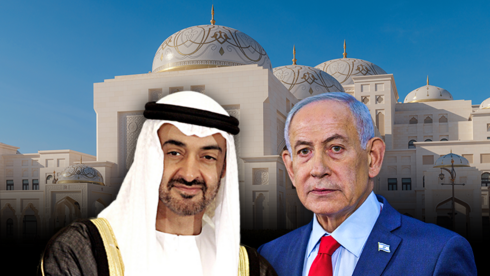
Israeli Prime Minister Benjamin Netanyahu reportedly made an unannounced trip to Abu Dhabi on Sunday and met United Arab Emirates President Sheikh Mohamed bin Zayed Al Nahyan, according to Israeli media and a senior Israeli official cited by Reuters.
The reported Netanyahu UAE visit comes at a politically sensitive moment, just weeks after allegations surfaced that Sheikh Mohamed warned Netanyahu about a possible major Hamas operation before the October 7, 2023 attack. Netanyahu has denied receiving such a warning and has threatened legal action against Haaretz, which first published the claim.
The latest meeting has not been publicly acknowledged by the UAE government. However, multiple reports now say Netanyahu did travel to Abu Dhabi and meet the Emirati president.
Did Netanyahu secretly visit the UAE?
Israeli Channel 12 first reported that Netanyahu flew to Abu Dhabi on a private aircraft, citing two unnamed sources.
According to the report, he left Israel shortly after noon, landed in Abu Dhabi at about 3:10 p.m. and spent roughly four hours in the UAE before returning home. The report said he used the same private aircraft associated with an earlier UAE trip.
Reuters subsequently reported, citing a senior Israeli official, that Netanyahu did travel to Abu Dhabi on Sunday and held a private meeting with Sheikh Mohamed. Channel 12, KAN, Haaretz and The Jerusalem Post also reported the visit.
More details emerged Monday from Israel Hayom, which reported that Netanyahu was accompanied by Mossad Director Roman Gofman, National Security Council head Shmuel Ben Ezra, a senior Shin Bet protection official and members of the prime minister’s office.
The Israeli report said the meeting had been arranged in advance and was originally intended to remain undisclosed until the delegation returned to Israel.
What have Israel and the UAE said?
The Israeli Prime Minister’s Office initially declined to provide details about the reported trip.
The UAE also did not immediately acknowledge the visit, according to multiple reports. That differs from the later reporting by Israel Hayom, which cited Israeli officials as confirming the meeting.
The lack of an immediate Emirati statement means the details of the meeting — including what was discussed — remain largely unknown.
Why is the Netanyahu UAE visit significant?
The reported meeting comes against the backdrop of a renewed dispute over what Netanyahu knew about Hamas’ intentions before October 7, 2023.
In September, Haaretz reported that Sheikh Mohamed had called Netanyahu roughly 10 days before the Hamas attack and warned him that Hamas leader Yahya Sinwar was preparing a major operation. The report said Netanyahu did not relay the warning to Israel’s senior security officials.
The allegation has not been accepted by Netanyahu.
His office has said that no warning was given to him by the UAE before October 7. Netanyahu has also threatened to sue Haaretz and the journalists behind the report.
The UAE has taken a more carefully worded position. Its foreign ministry previously said that Israeli and Emirati government entities have maintained “open and direct lines of communication” and that relevant intelligence is communicated through the appropriate bodies when necessary.
An Emirati official later told The National that the UAE discusses security matters with other countries through the relevant agencies rather than at the level of national leaders.
That statement was widely interpreted as rejecting the claim that Sheikh Mohamed personally delivered the alleged warning to Netanyahu.
What is the dispute over the October 7 warning?
The controversy centers on a reported conversation that is disputed by Netanyahu and the UAE.
According to Haaretz, Sheikh Mohamed allegedly told Netanyahu that information he had received indicated Hamas was preparing a significant operation. The report said the warning came around a week and a half before the October 7 attack.
The report further claimed that Netanyahu did not mention the conversation during a meeting with Israel’s security leadership on October 1.
The New York Times subsequently reported that two sources had also described a warning from Sheikh Mohamed to Netanyahu about a potential major Hamas attack. According to Israel Hayom, one source said he had spoken directly with Sheikh Mohamed, while another had been briefed by someone involved in the conversation.
However, the original source of the intelligence reportedly given to Sheikh Mohamed has not been publicly established.
That leaves several important questions unresolved:
- Did the conversation between Netanyahu and Sheikh Mohamed occur?
- What information, if any, did the UAE leader possess?
- Was Netanyahu given a specific warning or a more general assessment?
- Did the information reach Israeli intelligence agencies through other channels?
- Why does the reported conversation not appear in the internal investigations cited by former Israeli officials?
- What records exist of any such communication?
Netanyahu’s position remains that the reported warning did not happen.
How have Israeli officials responded?
The allegations have become part of a wider political dispute over the security failures preceding October 7.
Opposition figures have argued that Netanyahu and his government bear responsibility for decisions made before the attack. Netanyahu and his allies have rejected attempts to attribute the October 7 failure solely to the political leadership.
The timing is particularly sensitive because Israel is approaching another election campaign, making questions about the government’s handling of intelligence and security warnings politically consequential.
The controversy over the alleged UAE warning therefore involves both a factual dispute over what happened in September 2023 and a broader debate over responsibility for the failures that preceded October 7.
What does the UAE-Israel relationship look like?
Israel and the UAE formally established diplomatic relations in 2020 under the US-brokered Abraham Accords.
The relationship has developed into an important channel for economic, diplomatic and security cooperation, even as Israel’s war with Hamas and the wider regional conflict have placed pressure on ties between Israel and Arab states.
The UAE has maintained diplomatic relations with Israel while also publicly emphasizing the importance of Palestinian statehood and regional stability.
The two countries’ continued communication is particularly significant during periods of heightened regional tension because Abu Dhabi maintains relationships with multiple regional and international actors.
The reported Netanyahu visit therefore comes at a time when direct communication between Israeli and Emirati leadership could carry significance beyond bilateral relations.
What happened during Netanyahu’s reported meeting?
Very little has been publicly disclosed about the substance of Sunday’s meeting.
Israel Hayom reported that the two sides had planned to issue a joint statement after the Israeli delegation returned, but that the trip was disclosed before the planned announcement.
No official account of the agenda was immediately available.
Possible areas of discussion could include regional security and Israel-UAE relations, but these should not be presented as confirmed topics unless the two governments release details.
The reported presence of senior Israeli security officials suggests that the meeting was not necessarily limited to ceremonial diplomacy, but their attendance alone does not establish what was discussed.
What should readers make of the conflicting accounts?
The most important distinction is between the reported UAE visit, which is now supported by multiple reports and a senior Israeli official cited by Reuters, and the alleged 2023 warning, which remains disputed.
The available reporting supports the following picture:
| Issue | What is currently reported |
|---|---|
| Netanyahu visited Abu Dhabi | Reported by multiple Israeli outlets and a senior Israeli official cited by Reuters |
| He met Sheikh Mohamed | Reported by multiple outlets, including Reuters |
| He traveled by private plane | Reported by Channel 12 |
| The UAE publicly confirmed the visit | No immediate confirmation reported |
| UAE warned Netanyahu before October 7 | Reported by Haaretz and subsequently examined by other outlets; denied by Netanyahu |
| UAE says security information is shared | Confirmed in UAE statements |
| Netanyahu threatened legal action against Haaretz | Reported and publicly stated |
| Purpose of the September 27 meeting | Not publicly established |
This distinction is important because the two stories are connected by timing but should not be treated as proof of one another.
The fact that Netanyahu reportedly met Sheikh Mohamed in September 2026 does not establish that the two leaders had the alleged conversation in 2023. Likewise, the disputed 2023 warning allegations do not by themselves establish the purpose of the latest meeting.
Why the meeting is drawing attention now
The reported trip combines three sensitive issues: Israel’s relationship with the UAE, regional security and the unresolved political argument over the October 7 intelligence failures.
For Netanyahu, the meeting also comes amid an election campaign in which security and responsibility for October 7 remain major political issues.
For the UAE, the episode highlights the delicate position Abu Dhabi occupies in maintaining communication with Israel while managing its broader regional relationships.
And for observers, the central unanswered question is straightforward: what did Netanyahu and Sheikh Mohamed discuss behind closed doors?
Until either government releases a detailed account, the substance of the meeting remains unconfirmed.