The passage of a luxury superyacht through the Strait of Hormuz would not normally trigger global headlines. But when the vessel is reportedly tied to sanctioned Russian billionaire Alexey Mordashov, and the route cuts through one of the world’s most militarized maritime chokepoints during a fragile US-Iran standoff, the story quickly becomes bigger than a yacht.
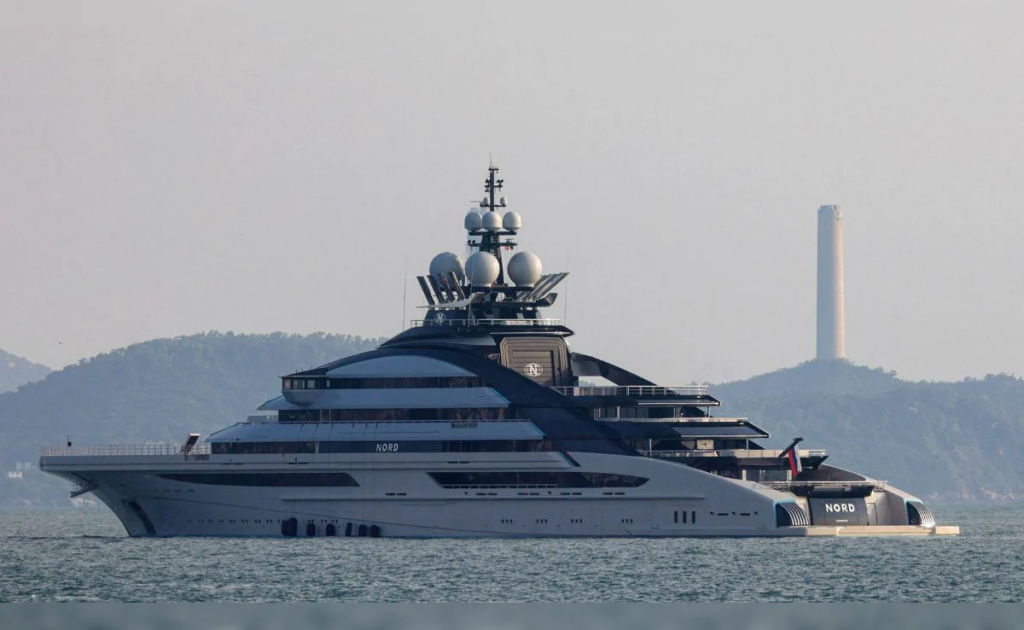
The 142-meter superyacht Nord recently sailed from Dubai to Muscat, Oman, crossing the Strait of Hormuz despite heightened naval tensions and overlapping restrictions imposed during the ongoing crisis involving Iran and the United States. The journey has renewed scrutiny of Mordashov, his global business empire, and the ways wealthy Russian elites continue to navigate international sanctions.
The voyage also underscores a larger geopolitical reality: even luxury vessels can become floating symbols of power, influence, and loopholes in a fractured global order.
Who is Alexey Mordashov?
Alexey Mordashov is one of Russia’s wealthiest businessmen and a major figure in the country’s steel and industrial sectors. He built his fortune through Severstal, one of Russia’s largest steel and mining companies, and has long been viewed as part of the circle of influential oligarchs whose fortunes expanded during post-Soviet privatization.
According to Forbes’ billionaire rankings, Mordashov’s net worth is estimated at roughly $37 billion, placing him among the richest people in Russia and Europe.
His business interests stretch far beyond steel. Over the years, he has accumulated stakes in sectors including:
- Mining
- Telecommunications
- Tourism
- Retail
- Energy equipment manufacturing
Bloomberg and corporate filings have linked him to investments in companies such as:
- Severstal
- Nordgold
- Power Machines
- TUI
- Lenta
- Rostelecom
His financial reach reflects the structure of modern Russian oligarch wealth: diversified holdings tied to industries considered strategically important to the Russian economy.
Why is the superyacht Nord attracting attention?
The vessel at the center of the story is Nord, a luxury superyacht reportedly associated with Mordashov through a Russian company owned by his wife, according to shipping data and Russian corporate records cited in recent reports.
Nord is not a modest pleasure craft drifting quietly through international waters. It is effectively a floating fortress of wealth.
Key details about Nord include:
- Length: 142 meters (465 feet)
- Multi-deck ultra-luxury design
- Helipads and high-end security systems reportedly onboard
- Estimated value in the hundreds of millions of dollars
The yacht drew international attention after Western governments imposed sanctions on Russian elites following Moscow’s invasion of Ukraine in 2022.
Authorities across Europe and the United States began targeting luxury assets linked to sanctioned oligarchs, including private jets, villas, and superyachts. Several vessels connected to Russian billionaires were seized, detained, or blocked from entering certain jurisdictions.
Nord, however, has largely avoided seizure.
Its latest transit through the Strait of Hormuz has reignited questions about how sanctioned individuals continue moving assets across global maritime routes despite extensive restrictions.
Why does the Strait of Hormuz matter so much?
The Strait of Hormuz is one of the world’s most strategically important waterways. Roughly a fifth of global oil shipments pass through the narrow corridor connecting the Persian Gulf to the Arabian Sea.
Any disruption in the strait can affect:
- Global oil prices
- Shipping insurance costs
- Energy supply chains
- International trade routes
The timing of Nord’s transit is particularly significant because the region remains tense following months of conflict involving Iran, the US, and Israel.
The route has become increasingly risky for commercial and private vessels due to:
- Naval patrols
- Threats of blockades
- Military escalation
- Drone and missile concerns
- Rising insurance premiums for ships
That makes the yacht’s successful passage unusual and politically symbolic.
How did Mordashov build his fortune?
Mordashov’s rise mirrors the trajectory of many post-Soviet industrial tycoons, though his path began from relatively modest circumstances.
According to Forbes, his parents worked in a mill, and he later studied engineering and economics before earning an MBA from Northumbria University in the UK.
His breakthrough came during the privatization era that reshaped Russia’s economy in the 1990s.
While working at a steel plant in Cherepovets, Mordashov reportedly acquired shares intended to protect the company from outside takeover attempts. Over time, those holdings evolved into control of Severstal, transforming him into one of Russia’s most powerful industrialists.
By the 2000s, he had become a major force in:
- Russian metallurgy
- International mining
- European tourism investments
- Telecommunications
Critics of Russia’s privatization era argue that many oligarch fortunes were built through insider advantages and opaque asset transfers. Supporters counter that figures like Mordashov modernized industries and expanded Russian companies globally.
What sanctions does Mordashov face?
Mordashov was sanctioned by the European Union, the United Kingdom, and the United States following Russia’s invasion of Ukraine in 2022.
Western governments accused prominent Russian oligarchs of benefiting from or supporting systems tied to the Kremlin.
Sanctions imposed on individuals like Mordashov typically include:
- Asset freezes
- Travel restrictions
- Limits on business dealings
- Financial transaction bans
The sanctions also triggered a wave of asset scrutiny worldwide, particularly involving luxury real estate and maritime holdings.
Still, enforcement remains uneven across jurisdictions.
Some countries cooperate aggressively with sanctions regimes, while others maintain looser oversight or more limited legal frameworks regarding asset ownership structures.
That complexity often allows ownership to be routed through:
- Family members
- Offshore entities
- Shell companies
- Trust structures
The Nord case highlights how difficult it can be to definitively establish beneficial ownership in the world of ultra-wealthy global finance.
Why this story matters beyond one yacht
At first glance, the story may seem like celebrity-level billionaire intrigue wrapped in maritime drama. But it reveals deeper fault lines in geopolitics and sanctions enforcement.
The Nord transit illustrates three broader trends:
Sanctions are powerful but imperfect
Western sanctions have restricted many Russian elites, but enforcement gaps remain. Complex ownership structures and international maritime laws create room for maneuvering.
Luxury assets have become geopolitical symbols
Superyachts are no longer just status symbols. They increasingly represent questions about global wealth, political influence, and international accountability.
Maritime chokepoints are becoming more volatile
The Strait of Hormuz remains central to global trade and energy security. Even isolated ship movements can attract scrutiny during periods of military tension.
What happens next?
There is currently no indication that Nord violated maritime law during its passage. However, the journey is likely to intensify discussions around sanctions monitoring and the movement of luxury assets linked to politically exposed individuals.
For global observers, the story is less about a single yacht and more about the intersection of wealth, geopolitics, and mobility in an increasingly fragmented world order.
Even amid sanctions, naval tensions, and economic pressure campaigns, the ultra-rich continue operating in spaces where finance, law, and diplomacy overlap like shifting currents in dark water.
TL;DR
Russian billionaire Alexey Mordashov is back in the spotlight after the superyacht Nord reportedly linked to him crossed the Strait of Hormuz during heightened regional tensions. The voyage highlights ongoing questions about sanctions enforcement, global maritime security, and how wealthy elites continue moving assets despite Western restrictions.