
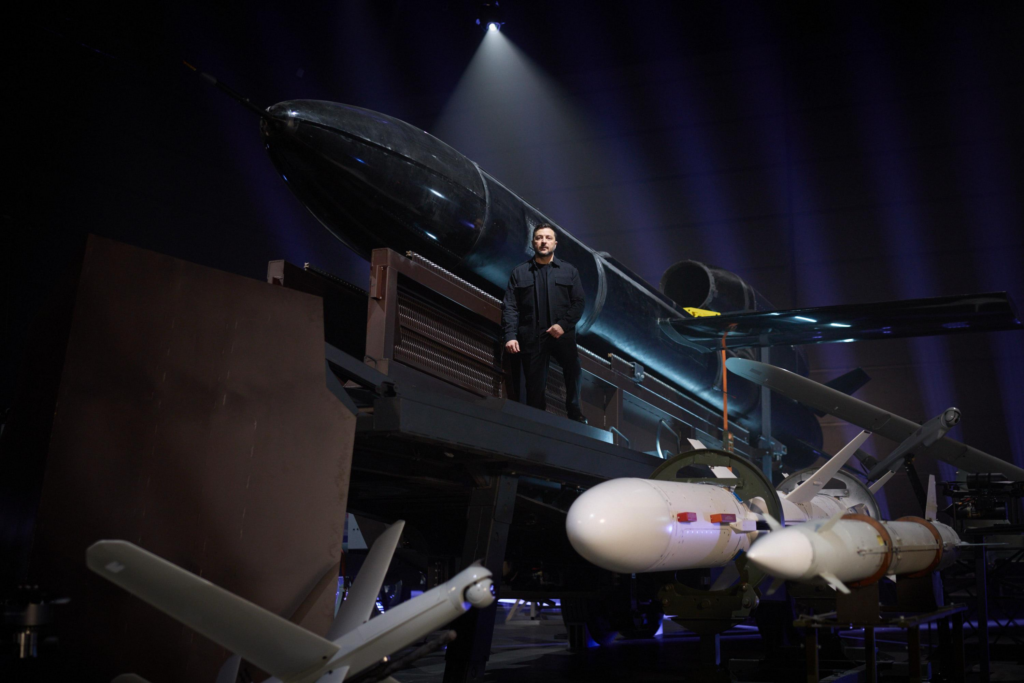
The Russia-Ukraine War is entering a new phase—one where machines are no longer just supporting soldiers, but replacing them in some of the most dangerous missions. In a striking development, Volodymyr Zelenskyy says Ukrainian forces recently captured a Russian position without deploying a single infantry soldier. Instead, unmanned ground vehicles—robots—executed the entire operation.
The claim marks a potential turning point in modern warfare: not just drones in the sky, but robots on the ground taking territory.
What happened: Ukraine’s robot-led assault
According to Ukrainian officials, the operation involved a coordinated deployment of robotic systems and drones to seize a Russian-held post.
A first in modern combat
- The position was captured exclusively using unmanned platforms
- No Ukrainian troops were physically present on the line during the assault
- Russian forces reportedly surrendered to machines
- Ukraine claims zero casualties in the operation
This isn’t just a tactical success—it’s a symbolic one. It demonstrates that frontline combat, traditionally defined by human presence, can now be executed remotely.
What are Ukraine’s ground combat robots?
Ukraine has rapidly expanded its fleet of unmanned ground vehicles (UGVs), each designed for specific battlefield roles.
Key robotic systems in use
- Ratel – likely used for reconnaissance and explosive delivery
- TerMIT – a logistics and supply transport robot
- Ardal and Rys – versatile platforms for surveillance and combat support
- Zmiy and Protector – potentially equipped for mine-clearing or direct engagement
- Volia – multi-role battlefield support unit
These machines operate across harsh terrain, including trenches, forests, and urban rubble—areas where human soldiers are most vulnerable.
What makes these robots effective?
- Remote operation reduces risk to human life
- Small size and mobility allow access to tight or dangerous spaces
- Modular design means they can carry weapons, cameras, or supplies
- Lower cost compared to armored vehicles enables wider deployment
How robots are saving lives on the battlefield
Zelenskyy emphasized a key metric: over 22,000 missions conducted by robotic systems in just three months.
Why that number matters
Each mission represents a scenario where a human soldier didn’t have to:
- Enter a mined area
- Approach an enemy trench
- Deliver supplies under fire
- Conduct reconnaissance in exposed terrain
In Zelenskyy’s framing, that’s potentially 22,000 instances where human risk was reduced or avoided.
The shift in military thinking
Traditionally, armies accepted casualties as part of operations. Now, the focus is shifting toward:
- Risk substitution: machines instead of humans
- Precision engagement: targeted, data-driven actions
- Sustained operations: robots do not fatigue
This reflects a broader trend across militaries worldwide.
The role of FPV drones and long-range systems
Ground robots do not operate alone. They are part of a larger ecosystem that includes aerial drones and missile systems.
First-person view drones
Ukraine has become a global leader in FPV drone warfare:
- Operators control drones in real time using camera feeds
- Drones can be used for surveillance or as precision strike tools
- Production has scaled to millions per year
Expanding strike capabilities
Ukraine’s arsenal now reportedly includes:
- Long-range drones capable of striking up to 1,750 km
- Indigenous missile systems like Neptune and Vilkha
- Deep-strike capabilities targeting logistics and infrastructure
Together, these systems create a layered battlefield where threats can come from air, land, and sea—often without direct human presence.
Maritime drones: extending the battlefield to sea
Ukraine’s innovation is not limited to land warfare.
Naval drone systems
- Sea Baby
- Magura
- Sargan
These unmanned vessels have been used in the Black Sea to:
- Target enemy ships
- Disrupt supply routes
- Conduct reconnaissance
Zelenskyy has suggested Ukraine could export this expertise, positioning the country as a leader in next-generation warfare technology.
Why this matters: a new era of warfare
This robot-led assault is not just a headline—it is a preview of where warfare is heading.
Changing nature of conflict
The battlefield is evolving in three key ways:
Human presence is no longer required
Combat operations can now be executed remotely, reducing casualties but raising new strategic questions.
Technology is becoming decisive
Victory is increasingly determined by:
- Speed of innovation
- Production scale
- Integration of AI and robotics
Warfare becomes more asymmetric
Smaller forces can challenge larger military powers using:
- Low-cost drones
- Agile robotic systems
- Decentralized tactics
The ethical and strategic questions ahead
As with any technological leap, this shift comes with trade-offs.
Key concerns
- Accountability: who is responsible when autonomous systems make mistakes?
- Escalation: does removing human risk make war more likely?
- Proliferation: what happens when these technologies spread globally?
These are urgent questions policymakers and the public will need to confront.
TL;DR
- Ukraine used robots and drones to capture a Russian position without deploying troops
- Over 22,000 robotic missions in three months highlight a shift toward machine-led operations
- Ground robots, FPV drones, and naval drones form a multi-domain combat system
- The development signals a major shift in how wars are fought, prioritizing technology over manpower