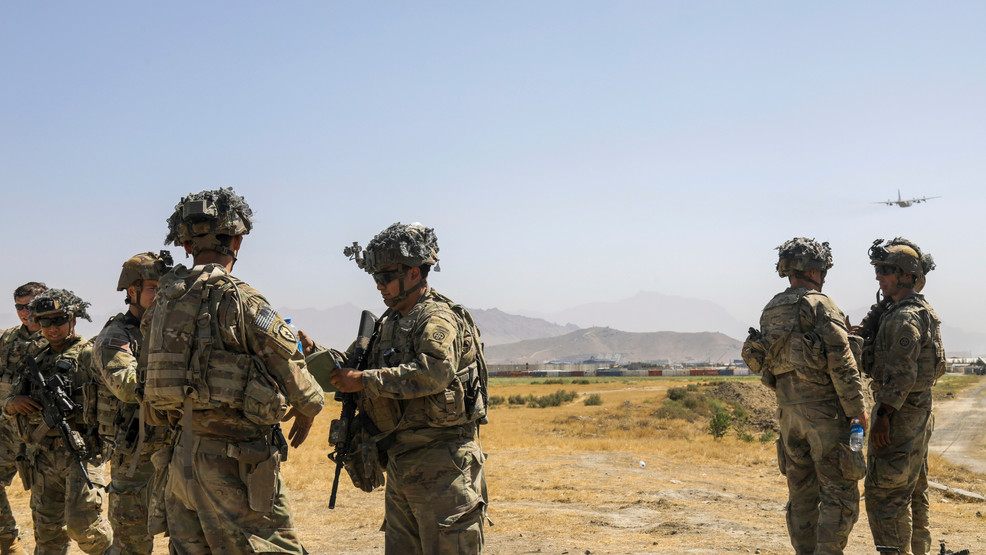
Reports that elements of the 82nd Airborne Division are preparing for deployment have added a new layer of urgency to the already volatile situation involving the United States, Iran, and Israel. While there is no official confirmation, multiple outlets suggest that the division’s elite Immediate Response Force (IRF) could soon be mobilised.
If true, this wouldn’t just be another troop movement. It would signal that Washington is positioning one of its fastest and most battle-ready units at the front edge of a potential conflict.
TL;DR
- The US may deploy the 82nd Airborne Division’s Immediate Response Force (IRF)
- IRF is a rapid-response unit of ~3,000 troops, deployable within 18 hours
- Around 2,000 troops could head to the Middle East
- Their mission could include securing key infrastructure like oil routes
- Deployment would mark a major escalation in the Iran-US-Israel conflict
Who Are the 82nd Airborne Division’s Immediate Response Force (IRF)?
The Immediate Response Force (IRF) is the tip of the spear within the 82nd Airborne Division—a unit specifically designed for rapid global deployment.
What Makes the IRF Different?
- High readiness: Always on standby for global crises
- Speed: Can deploy within 18 hours of notice
- Scale: Roughly 3,000 troops in a brigade-sized formation
- Flexibility: Capable of handling combat, evacuation, or stabilisation missions
Reports suggest that up to 2,000 troops, including command elements led by Brandon Tegtmeier, could be part of an initial deployment.
Why Their Movement Matters
Training exercises in early March were reportedly cancelled, and unusual flight activity has been tracked from Fort Bragg—both indicators that something operational may be underway.
What Can the 82nd Airborne Division Actually Do?
The 82nd Airborne Division specialises in “first-in” operations—entering hostile or unstable environments before heavier forces arrive.
Core Capabilities
- Airborne assaults (parachuting into contested zones)
- Securing airfields, bridges, and critical infrastructure
- Rapid seizure of strategic positions
- Supporting follow-on forces like Marines or armoured units
Unlike heavy divisions, they are light infantry, meaning:
- They deploy fast
- They rely on speed and surprise
- They need reinforcement for long-term combat
Possible Targets and Missions
Reports suggest the unit could be tasked with:
- Reinforcing US military operations
- Supporting deployments of the 31st Marine Expeditionary Unit
- Securing energy-critical locations like Kharg Island
- Protecting shipping lanes in the Strait of Hormuz
Why Would This Deployment Be a Major Escalation?
Deploying the 82nd Airborne Division isn’t just about readiness—it’s about signalling.
What It Signals
- The US is preparing for direct or expanded military involvement
- Rapid offensive or defensive operations are being considered
- Strategic assets (oil, shipping lanes) are at risk
Unlike naval deployments or air patrols, airborne troops are often used when boots on the ground may be needed quickly.
Coordination with Marines
The reported positioning of the 31st Marine Expeditionary Unit adds another dimension.
How they could work together:
- Marines: Initial assault or amphibious operations
- 82nd Airborne: Rapid reinforcement and area control
This combination creates a layered response capability, increasing both flexibility and escalation potential.
A Legacy of Rapid War Deployment: Why the 82nd Matters
The 82nd Airborne Division isn’t just another unit—it’s one of the most historically significant formations in the US military.
The “All American” Division
Nicknamed the “All American,” the division has been at the center of major US military operations for decades.
Its most famous mission came during D-Day.
What Happened on D-Day?
- Around 6,400 paratroopers dropped behind enemy lines in Normandy
- Their mission: secure routes, capture bridges, and disrupt German defenses
- Despite scattered landings, they regrouped and held key positions
- They played a crucial role in enabling Allied landings at Utah Beach
The division continued fighting for over a month without relief, helping turn the tide in Europe.
Other Major Deployments
- Korean War
- Vietnam War
- Gulf War
- Iraq and Afghanistan conflicts
Is this a real deployment or strategic signalling?
Even without official confirmation, the reports themselves carry weight.
The Psychological Warfare Angle
Military analysts often view such leaks as part of strategic messaging.
- Signals seriousness to adversaries
- Reassures allies
- Creates pressure during negotiations
This aligns with the broader US strategy—balancing diplomacy with military readiness.
Timing Matters
The reports come amid:
- A proposed ceasefire framework with Iran
- A temporary pause in military escalation
- Ongoing regional skirmishes involving Hezbollah
What Happens Next?
For now, everything remains fluid.
Possible Scenarios
- Deployment Moves Forward
Troops arrive in the region as a deterrent or operational force - Limited Show of Force
Presence is used to pressure Iran without direct engagement - Escalation into Direct Conflict
Ground operations become necessary - Diplomatic Breakthrough
Military buildup strengthens negotiating leverage
Key Indicators to Watch
- Official Pentagon confirmation
- Increased troop or equipment movement
- Escalation near key locations like the Strait of Hormuz
- Statements from Iran, Israel, and US leadership
Why This Story Matters Beyond the Battlefield
This isn’t just about troop movement—it’s about global stability.
Broader Implications
- Energy markets: Oil supply disruptions could spike prices
- Global security: Risk of a wider regional war
- US foreign policy: Balancing deterrence with diplomacy
- Allied dynamics: NATO and regional partners may get involved
A deployment of the 82nd Airborne Division would signal that the situation has moved beyond routine tensions into something far more serious.
Final Take
The possible deployment of the 82nd Airborne Division’s IRF sits at the intersection of preparation and perception. It may never result in boots on the ground—but the mere possibility reshapes the strategic landscape.
In modern conflict, movement is messaging. And right now, that message is clear: the US is preparing for scenarios it hopes it won’t have to act on.