
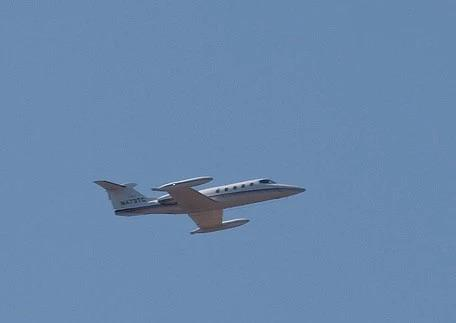
‘In the chaotic aftermath of the September 11, 2001, attacks, America’s skies went almost completely silent. The Federal Aviation Administration had ordered aircraft across the country to land and imposed an unprecedented grounding of civilian air traffic. Less than a day later, one extraordinary medical emergency led to an exception. A jet was cleared to fly from Florida to California and back carrying a rare supply of antivenom needed to save the life of Lawrence Van Sertima, a veteran snake handler who had been bitten by an inland taipan. The aircraft was accompanied by two fighter jets during the cross-country mission.
How a snakebite became a race against time
Van Sertima was bitten on the thumb on September 11 while attempting to place an inland taipan back into its enclosure in South Florida.
The venom quickly caused life-threatening complications. According to accounts from the medical team, he lost consciousness and developed severe bleeding as the venom interfered with blood clotting and affected his nervous system.
Miami-Dade Fire Rescue Captain Al Cruz, who had helped establish the county’s Venom One unit, brought available antivenom to the hospital. But it soon became clear that Van Sertima needed antivenom specifically suited to the taipan bite.
The problem was that the required medicine was extremely difficult to obtain.
Why was the antivenom so hard to find?
Medical officials determined that only a very limited supply of the appropriate antivenom was available in the United States.
One supply was at the Bronx Zoo in New York, while another was at the San Diego Zoo in California. With New York still dealing with the aftermath of the attacks, officials focused on the California supply.
That created an extraordinary logistical problem. The patient was in Miami, the medicine was in San Diego and the country’s aviation system had effectively been brought to a standstill.
Cruz and hospital officials spent hours contacting agencies and organizations in an attempt to find a way to move the antivenom.
How did the plane get permission to fly?
The request eventually reached Johnny Delgado, who was overseeing Baptist Health South Florida’s air ambulance service.
After midnight, Delgado contacted an FAA official he knew through his work in the air-medical field. He explained that Van Sertima’s condition was deteriorating and that he was unlikely to survive without the specialized antivenom.
The FAA granted an exceptional authorization, but the flight had to be conducted during daylight hours.
At first light on September 12, a contracted jet departed Fort Lauderdale for San Diego.
After reaching California, the aircraft was refueled while the antivenom was collected from the San Diego Zoo. San Diego Harbor Police then delivered the medicine to the aircraft in a small red cooler.
The jet headed back across the country.
What was the flight like?
The pilots later described the journey as deeply unsettling because of how empty the skies had become.
There was almost no normal aircraft traffic or radio chatter, a stark contrast to the crowded US aviation system that existed before the attacks.
The aircraft eventually landed in Miami at about 4:30 p.m. on September 12 at what was then Kendall-Tamiami Executive Airport, now Miami Executive Airport. A medical helicopter was waiting to carry the antivenom to the hospital.
Doctors administered the medicine shortly after it arrived, and Van Sertima ultimately survived.
Why was an inland taipan bite so dangerous?
The inland taipan is an Australian snake whose venom is widely regarded as among the most potent of any snake species.
Its venom contains toxins capable of producing severe effects, including disruption of blood clotting and neurological impairment. That makes rapid access to an appropriate antivenom particularly important after a serious bite.
Van Sertima’s case was especially difficult because the first antivenom available in Florida was not enough to address the specific venom involved.
Was this literally the only plane flying in the US?
The headline requires some nuance.
The United States did impose a nationwide grounding of civil aviation after the attacks, and the September 12 antivenom mission was an extraordinary exception. However, the country’s airspace was not literally restricted to one aircraft of any kind. Military, emergency, law-enforcement and other specially authorized flights could operate under the post-attack restrictions.
Contemporary aviation accounts describe the antivenom aircraft as the only nonmilitary plane flying over North America at the time, making the mission exceptionally unusual.
That distinction matters because saying “only one plane was allowed to fly” can misleadingly suggest that absolutely no other aircraft could take to the skies.
A rare medical mission in an extraordinary moment
The episode became one of the lesser-known stories from the days following 9/11: a cross-country flight was approved not for commerce or routine travel, but because a man was dying and a small supply of rare antivenom offered a chance to save him.
The mission connected a Florida hospital, a California zoo, local emergency responders and the FAA at a moment when the normal aviation system had effectively ground to a halt.
For Van Sertima, the life-saving medicine arrived in an unremarkable red cooler. The journey it took to reach him was anything but ordinary.
Fact-checking note: The US did ground civilian air traffic following the September 11 attacks, but it is more accurate to describe the antivenom mission as an exceptionally authorized nonmilitary flight rather than claim that it was literally the only aircraft permitted to fly. Contemporary aviation reporting identifies it as the only nonmilitary plane over North America during that period.