
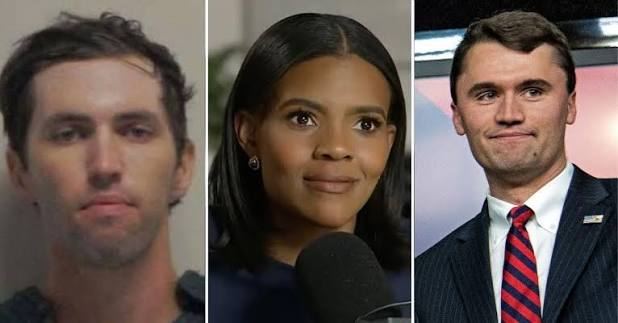
The criminal case surrounding the 2025 killing of conservative activist Charlie Kirk has returned to the centre of public attention after commentator Candace Owens released what she described as previously unseen surveillance footage of the suspected shooter before the fatal attack.
The footage, published on July 28, has sparked renewed online debate, with Owens and broadcaster Alex Jones arguing that it raises questions about the prosecution’s case against Tyler Robinson, the man arrested and charged in connection with Kirk’s death. However, authorities have not changed their position, and no court has determined that the newly circulated video undermines the evidence already presented.
As discussion spreads across social media, the distinction between public commentary and courtroom evidence has become increasingly important.
TL;DR
- Candace Owens released surveillance footage she says shows the suspected gunman before Charlie Kirk’s killing.
- Owens argues the individual in the footage does not match Tyler Robinson, who has been charged.
- Alex Jones echoed those claims, questioning the prosecution’s version of events.
- Law enforcement has not revised its case based on the video’s release.
- Robinson remains the accused, and the judicial process is still ongoing.
- The footage has reignited public debate but has not changed the legal status of the case.
What Does the Newly Released Charlie Kirk Surveillance Footage Show?
According to Owens, the surveillance clip captures an individual positioned on a rooftop shortly before the fatal shooting.
During an episode of her podcast, Owens analysed the footage frame by frame, highlighting movements she described as tactical and suggesting they deserved closer examination. She argued that the person seen in the video did not resemble Tyler Robinson.
Owens also focused on several moments that she said appeared unusual, including:
- A movement she characterized as a “lateral military crawl”
- A brief flash visible in the footage
- What she described as a forward throwing motion
- The person’s overall posture and movement across the rooftop
Importantly, Owens acknowledged that she could not definitively identify what caused the flash visible in the video. She presented her observations as reasons for additional scrutiny rather than as conclusive evidence.
Why the footage matters
The video’s significance lies less in what it definitively proves and more in its impact on public discussion.
Surveillance footage often becomes a focal point in criminal cases because viewers may interpret the same images differently. Without forensic analysis, authenticated timestamps, camera metadata, or expert testimony, however, video alone rarely tells the complete story.
Why Are Candace Owens and Alex Jones Questioning the Prosecution?
Soon after Owens released the footage, Alex Jones shared it on social media and endorsed her interpretation.
Jones argued that the clip appeared “raw and unedited” and claimed it differed from the timeline and sequence of events presented by prosecutors during Robinson’s preliminary hearing.
He further questioned the following:
- Whether the rooftop individual resembled Robinson
- The suspect’s movements before the shooting
- The handling of the alleged rifle
- The apparent lack of visible recoil in the footage
These remain Jones’ personal interpretations. Neither the court nor investigators have publicly validated these conclusions.
This distinction is important because commentary—even when widely shared online—is separate from evidence evaluated under judicial standards.
What Is the Official Position of Investigators?
Despite renewed online speculation, law enforcement authorities have not announced any changes to their investigation.
Tyler Robinson remains the defendant charged in connection with Charlie Kirk’s killing.
Earlier this month, prosecutors presented surveillance footage during Robinson’s preliminary hearing that reportedly showed a man walking across the Utah Valley University campus with what investigators described as a noticeable limp before the shooting.
That footage forms part of the prosecution’s evidence as the case proceeds through the court system.
At the time of writing:
- Robinson remains charged.
- A judge has not ruled on whether the case will proceed to trial.
- Authorities have not publicly stated that Owens’ video alters the prosecution’s evidence.
How Should Viewers Interpret Newly Released Surveillance Footage?
Public analysis is not courtroom evidence
High-profile criminal investigations increasingly play out on both legal and social media stages.
Creators, commentators, and independent analysts frequently examine surveillance videos frame by frame, sometimes reaching conclusions that differ from investigators.
However, courts generally consider far more than a single video clip. Judges and juries evaluate:
- Witness testimony
- Digital forensic evidence
- Ballistics
- Chain of custody
- Expert analysis
- Additional surveillance footage
- Physical evidence collected during the investigation
A short surveillance clip circulating online may provide only one piece of a much larger evidentiary record.
Context often determines meaning
Video evidence can be misleading when viewed without:
- Original resolution
- Camera angle information
- Complete recording length
- Authentication records
- Expert interpretation
For example, lighting artefacts, compression, frame rate limitations, or missing footage can affect how movements appear on camera.
That is one reason courts typically rely on forensic experts rather than public speculation when interpreting surveillance evidence.
Why Has the Charlie Kirk Surveillance Footage Gone Viral?
Several factors have amplified interest in the video:
High-profile commentators
Owens and Jones each have large online audiences, allowing the footage to spread rapidly across multiple platforms.
Ongoing criminal proceedings
Because Robinson’s case has not yet reached trial, new material related to the investigation naturally attracts public attention.
Public interest in forensic evidence
Modern audiences are increasingly interested in surveillance footage, body-camera recordings, and digital evidence, particularly in politically significant cases.
This combination has made the Charlie Kirk surveillance footage one of the most discussed aspects of the case in recent days.
What Happens Next in the Case?
The next developments are expected to occur through the judicial process rather than through social media.
Several issues remain unresolved:
- Whether Robinson will stand trial
- Whether additional surveillance footage will become public
- Whether prosecutors or defense attorneys introduce new forensic analysis
- Whether the court determines the evidentiary value of the newly circulated video
Until then, the claims made by Owens and Jones remain public commentary rather than judicial findings.
Why Separating Claims From Facts Matters
High-profile criminal cases often generate competing narratives long before a verdict is reached.
Public commentators may raise questions they believe deserve investigation, while prosecutors continue building their case based on evidence submitted in court.
For readers following developments, it’s helpful to distinguish among three categories:
| Established fact | Public claim | Court decision |
|---|---|---|
| Robinson has been charged. | Owens argues the rooftop figure is not Robinson. | No ruling has yet determined the significance of the new footage. |
| New surveillance footage has been released publicly. | Jones questions the prosecution’s narrative. | Trial proceedings remain ongoing. |
| Prosecutors presented surveillance evidence during the preliminary hearing. | Owens describes movements as military-style. | Courts have not adopted these interpretations. |
Maintaining that distinction helps prevent speculation from being mistaken for verified evidence.
The Bottom Line
The release of the Charlie Kirk surveillance footage has reignited debate surrounding one of the year’s most closely watched criminal cases. Candace Owens argues the newly published video raises significant questions about the identity of the rooftop figure, while Alex Jones has publicly supported that interpretation.
At the same time, investigators have not revised their case, Tyler Robinson remains the accused, and no court has concluded that the footage contradicts the prosecution’s evidence.
As the legal process continues, the significance of the surveillance video will ultimately depend not on online analysis but on how the courts evaluate it alongside the full body of evidence.