
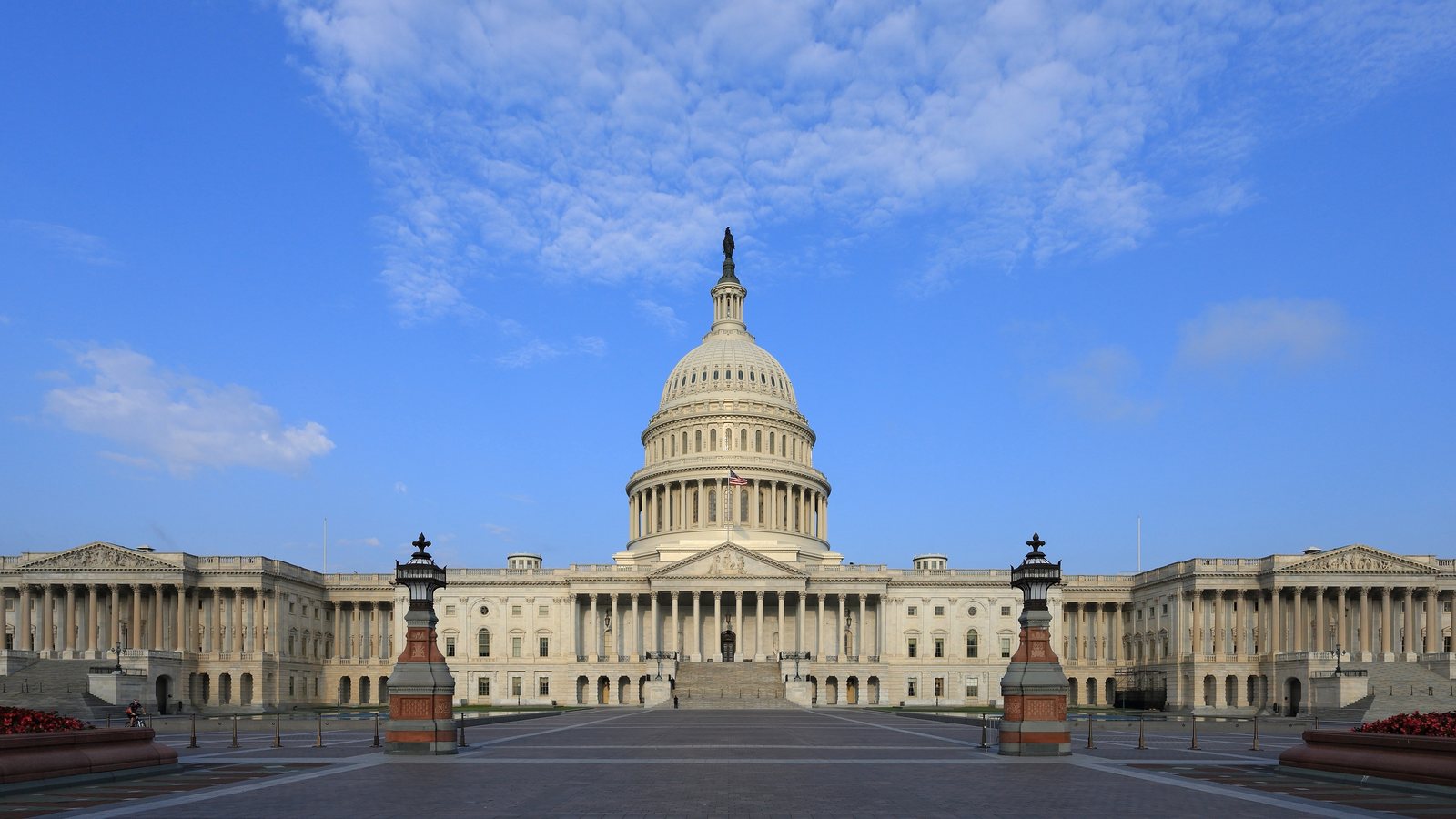

Democrats won both chambers on Tuesday, but the Democratic Congress does not take over until noon on Jan. 3, 2027. Until then, the Republican majorities elected in 2024 stay in charge. They have until Dec. 11 to keep the government funded.
What changes after January is control of the agenda, not the final say on laws. Democrats will pick which bills get votes, which of President Trump’s nominees the Senate confirms and whom committees subpoena. Trump keeps his veto, and he has said he will use it. For the race-by-race picture behind the new majorities, see our results story.
The dates between now and the new Congress
We built this timeline from the Constitution, the Congressional Research Service and the reporting linked in each row. Anything after Jan. 3 is a plan party leaders have announced, not a fixed event.
| Date | What happens | Source |
|---|---|---|
| Monday, November 9 | Congress returns for the lame-duck session. The Senate’s first vote is on a permitting bill. | Harbinger Strategies |
| Next week | House Republicans meet to choose a new leader. | AP via PBS |
| November 18 and 25 | Alaska runs its ranked-choice count, then certifies its uncalled Senate race. | Anchorage Daily News |
| Friday, December 11 | Stopgap government funding runs out. | CRS |
| December 31 | Some health and farm programs lapse unless Congress acts. | Holland & Knight |
| Sunday, January 3, 2027, noon | New terms begin, and the House elects a Speaker. | 20th Amendment |
| First week of the new Congress | House Democrats plan votes on tariffs, health subsidies, Medicaid and the Iran war. | TIME |
Republicans still run Congress for five more weeks
Both chambers come back on Nov. 9 for two weeks, then break for Thanksgiving. They return for two or three more weeks after that, according to a lame-duck preview from the lobbying firm Harbinger Strategies. That leaves at most five legislative weeks.
The fixed deadline is Dec. 11. The stopgap Trump signed on Sept. 2, H.R. 6500, funds the government only through that date, the Congressional Research Service says. Congress has to pass the regular spending bills or another stopgap before then, or a funding gap begins.
That forces the two parties to deal with each other before the handover. NPR reported that Democrats will have to work with Republicans on must-pass bills, including the 12 annual appropriations bills.
Other business is waiting too. In October the law firm Holland & Knight listed the annual defense bill and a farm bill among the leftovers. A temporary 2.5% raise in Medicare’s physician fees also expires Dec. 31.
Republicans have their own lame-duck list. They want to confirm several of Trump’s health department nominees before Democrats take the Senate, STAT reported on Wednesday.
Jan. 3 opens with a vote for Speaker
The 20th Amendment ends the terms of senators and representatives “at noon on the 3d day of January.” Their successors take over at that moment. In 2027 that is a Sunday. The Speaker’s election is among the first votes of the new Congress that day, the AP reported.
The Constitution says only that the House “shall chuse their Speaker.” Each party’s conference picks a nominee before the roll call. The winner needs “an absolute majority of all the votes cast for individuals,” a CRS report on Speaker elections says.
Democrats are preparing to nominate Hakeem Jeffries of New York, the AP reported. He would be the first Black Speaker, NPR noted. TIME, in its account of the Democrats’ plans, called his support wide “but not necessarily deep.” A handful of progressives have yet to commit. On the other side, Speaker Mike Johnson will not seek to lead Republicans in the minority, the AP reported Wednesday.
The Senate holds no floor vote for majority leader, since each party picks its own. Several senators and strategists told TIME that Chuck Schumer is “in a strong position to return as majority leader.” Schumer called the results a “generational remake of the Senate map,” the AP reported.
Committee gavels bring subpoenas and a check on nominees
Control of the committees is where the shift shows up first. TIME reported that Robert Garcia of California is in line to chair House Oversight and Jamie Raskin of Maryland to lead House Judiciary. In the Senate, it said, Sheldon Whitehouse would likely take Judiciary and Richard Blumenthal the Permanent Subcommittee on Investigations.
House Rule XI lets committees issue subpoenas for witnesses and documents. Most House committees also let their chair authorize them alone, the Congressional Research Service found. Each committee must adopt fresh rules every Congress, so the Democratic majority will write its own.
Garcia’s response to the results, posted to X, was two words: “LAWYER UP.” Citing Democratic committee staff, NPR listed likely targets. They include the Epstein files, the Trump family’s businesses, immigration enforcement and Health Secretary Robert F. Kennedy Jr.
The AP named Defense Secretary Pete Hegseth and Elon Musk as possible targets. Musk’s PAC spent heavily in this year’s Senate races. The AP also reported that impeachment of Trump or Cabinet officials is “not off the table,” a question we cover separately.
In the Senate, the Constitution makes many appointments subject to its “Advice and Consent.” NPR reported that the Democratic majority will halt the steady confirmation of Trump’s judges. Any new Cabinet nominee will need at least a handful of Democrats to take the job permanently.
Trump’s veto and the two-thirds math
In the first week, House Democrats plan bills to rescind Trump’s tariffs and restore expired Affordable Care Act subsidies, TIME reported. They also want to reverse $1 trillion in Medicaid cuts and force a vote on ending the Iran war. “This is a change election,” Jeffries said Tuesday night, according to NPR. “We need a Congress that puts the American people first.”
Trump answered a day before the election. “I’ll become Mr. Veto,” he told the Pod Force One podcast, adding, “and then at some point we’ll probably make deals,” NPR reported. He also posted a picture of a red cap stenciled with “veto,” the AP reported.
Overriding a veto takes two-thirds of each chamber under Article I. That is two-thirds of members present, CRS explains. With every seat filled and voting, that is 290 House votes, 72 above a bare majority, and 67 senators.
Republicans held the Senate 53-47 before Tuesday, and Democrats flipped seven seats, NPR reported. That gives Democrats at least 54. At 54, they would need 13 Republicans to override a veto and six to clear the Senate’s 60-vote filibuster. Even with both uncalled races, an override would still take 11.
Senate Majority Leader John Thune wrote that Republicans “will not stand idly by” as Democrats try “to unwind everything we’ve done.” Two researchers in The Conversation take a longer view. In their data, Congresses where the opposition held both chambers passed about 15% more laws than those where it held only the House. They call the pattern “descriptive rather than causal.”
Divided government after a midterm is the usual pattern for a president’s party. The first test comes Dec. 11, when a Republican Congress and the White House must agree on keeping the government open.