
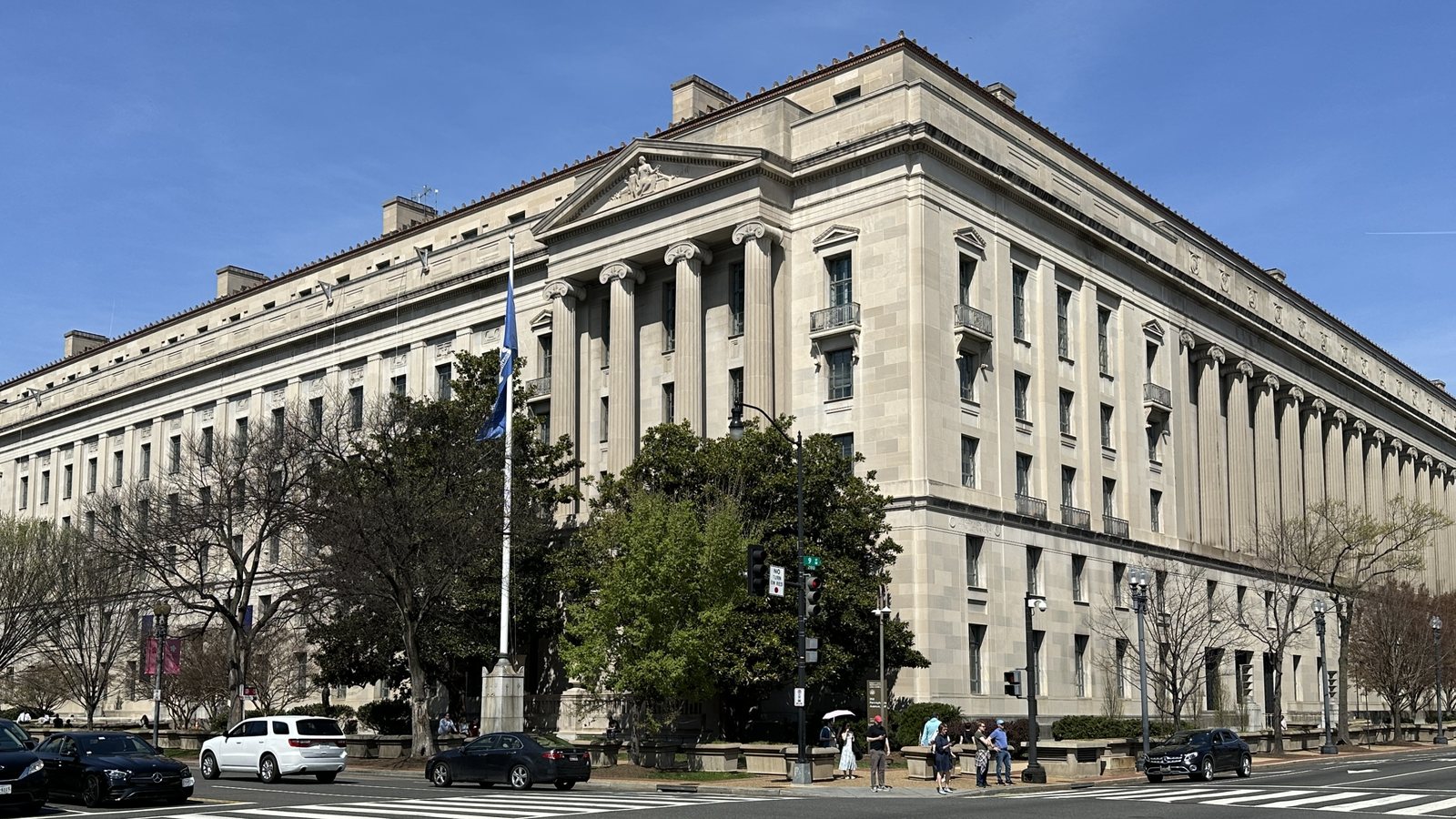

Ten days before Election Day, the Justice Department is in court in two states over ballots that voters are already casting. The DOJ ballot lawsuits ask different things.
In Alaska, it wants a judge to bar certification of the Senate race in one scenario: if Sen. Dan Sullivan loses. In California, it wants election offices to hold back roughly 20,000 mail ballots from the count.
Neither suit asks a court to throw out votes, according to the filings we read. But both ask federal judges to step into parts of the process that the Constitution leaves mainly to states. Every election law scholar we found quoted on the record says the government’s legal footing is weak. The Senate majority could hinge on races like these, as our guide to the 2026 Senate races to watch lays out.
What the two cases ask, side by side
We read the Alaska complaint, the DOJ’s emergency motion to the 9th Circuit in the California case, and California’s reply. Here is how they compare.
| Alaska | California | |
|---|---|---|
| Filed | Oct. 22, U.S. District Court for Alaska | Oct. 15, U.S. District Court, Los Angeles |
| Judge | Sharon L. Gleason (case 3:26-cv-00376-SLG) | David O. Carter (case 2:26-cv-12025-DOC) |
| What DOJ wants | No certification of a result “impacted by voter confusion” pending an investigation | Mail ballots from about 20,000 flagged voters set aside “not to cancel” until citizenship is checked |
| Legal hook it cites | National Voter Registration Act’s purpose clause, 52 U.S.C. § 20501(b)(3) | Federal ban on noncitizen voting, 18 U.S.C. § 611, plus the Supremacy Clause |
| Next step | No hearing on the docket as of Oct. 24 | Hearing Tuesday, Oct. 27; 9th Circuit ordered a state response by noon Saturday |
The judge in Alaska is confirmed by the case number’s initials and the court docket on CourtListener, which lists Judge Sharon Louise Gleason.
Alaska: a pause on certification, not on counting
The Alaska suit turns on Daniel J. Sullivan, a retired Petersburg teacher who shares a name with the incumbent. In June the state Division of Elections removed him, finding his candidacy was not filed in good faith.
The Alaska Supreme Court put him back on the ballot later that month. He took 2.5% in the August primary, behind Democrat Mary Peltola at 49.5% and Sen. Sullivan at 41.4%, the complaint says.
The DOJ argues his presence “threatens to mislead” Sullivan voters. It asks the court to block certification if two things happen: the senator loses, and moving every vote for the other Sullivan to him would flip the ranked-choice result.
Associate Attorney General Stanley Woodward signed the complaint. President Trump said Friday, “I’m the one that said do it,” Votebeat reported.
Notice what the suit does not ask. Counting goes ahead either way.
Alaska runs its ranked-choice tabulation on Nov. 18 and targets certification for Nov. 25, Alaska Public Media reported. The relief only bites after that, and only in a close loss for the senator.
The senator’s campaign kept its distance. Spokesperson Nate Adams said “we’ll let the DOJ complaint run its course,” and that the senator had no prior knowledge of it, Alaska Public Media reported. Peltola spokesman Harry Child called it a “despicable political threat to overturn an election.”
Sen. Lisa Murkowski, a Republican, said the DOJ “should never have filed this lawsuit,” NBC News reported. The state Department of Law said it was reviewing the complaint.
California: set the ballots aside before they are counted
The California case is the more urgent one, because counties are opening ballots now. Federal agencies say they matched the state’s voter roll against immigration records and produced a list of more than 20,000 registrants who are “highly likely” noncitizens. The DOJ gave that list to Los Angeles County and the secretary of state on Oct. 13 and asked them to segregate those voters’ mail ballots.
The state and county refused, so the DOJ sued on Oct. 15. Its core argument is about timing. Once staff separate a mail ballot from its envelope, nobody can tie it back to a voter.
Los Angeles County had already processed more than 331,000 mail ballots, according to the motion. Every minute of processing without segregation causes “untraceable disenfranchisement,” the DOJ told the 9th Circuit.
The department points to arrests. It charged 28 lawful permanent residents across California on Oct. 19, and Acting Deputy Attorney General Trent McCotter said all 28 appear on the list, according to the Justice Department’s release. The charges are accusations, and the law presumes the defendants innocent.
California disputes the list itself. Los Angeles County reviewed 200 of the records in a sworn filing.
Of those with usable birthplace data, about 39% listed a U.S. birthplace, ABC7 reported. The state also argues that Section 611 is a criminal law. In its view, Congress never gave the attorney general power to use it in a civil suit over ballot counting, Democracy Docket reported.
Friday’s letters put county registrars on notice
On Friday the fight spread to the counties. Prosecutors sent letters giving registrars 48 hours to help verify flagged voters and to sequester ballots they could not clear. At least 18 counties got them, according to the Los Angeles County registrar’s office, as the AP reported. NBC News put the number at 57 of 58 counties.
San Bernardino’s list has 1,133 names. “Any election official who knowingly processes the ballot of a noncitizen is opening themselves to legal jeopardy,” First Assistant U.S. Attorney Bill Essayli said, per NBC News.
Sen. Alex Padilla, a California Democrat, said the DOJ “has not provided any evidence” for its fraud claims.
What federal law lets the DOJ do to ballots already cast
States run elections. The federal government’s main tools are lawsuits under statutes Congress wrote, and criminal charges against individual voters. That is why both suits lean on indirect hooks: a purpose clause in one case and a criminal statute in the other.
Experts on record are skeptical of both. “There is no path for DOJ to block certification of an election result,” said Justin Levitt, a former Justice Department official, to Alaska Public Media.
David Becker of the Center for Election Innovation and Research said the administration has “absolutely no authority” over how Alaska certifies. Florida State’s Michael Morley called the Alaska suit “frivolous,” according to Votebeat.
Notre Dame’s Derek Muller said “the legal claim is so absurdly thin,” TPM reported. Walter Olson of the libertarian Cato Institute called it “nearly frivolous,” USA Today reported.
On California, Loyola Law School’s Jessica Levinson told ABC7 that “every high-quality study” of voter fraud finds it “exceedingly rare.” The DOJ’s track record also weighs in. It has lost 26 of the 31 suits it filed seeking unredacted voter rolls and won none, CBS News reported.
The administration says it is not trying to block results. “I’m not trying to not have an election certified. Of course not,” Attorney General Todd Blanche said, per NBC News. He added that a “doomsday” scenario could draw the DOJ in.
The Senate confirmed Blanche in August after a bruising fight.
There is one federal body with real power over a disputed Senate seat, and it is not the DOJ. The Constitution makes each chamber the judge of its members’ elections. Votebeat noted the Senate has refused to seat a winner before, in New Hampshire in 1975 and Iowa in 1924.
The court dates that decide this
The California case moves first. Judge Carter ordered any further opposition by 3 p.m. Saturday and a DOJ reply by 3 p.m. Sunday, ahead of Tuesday’s hearing.
The DOJ calls his not ruling yet a “constructive denial.” It asked the 9th Circuit, in appeal No. 26-7070, to decide by Saturday. California says there is nothing to appeal yet. Late Friday the 9th Circuit ordered California to respond to the emergency request by noon Saturday, Fox News reported. It had not ruled on the request as of Saturday morning.
In Alaska, the state has not yet filed an answer, and no hearing appears on the docket. Mail and early voting continue in both states in the meantime, though mail requests are down nationally, as our report on Democrats switching to in-person voting found. The next fixed date is Tuesday’s hearing in Los Angeles, unless the 9th Circuit acts first.