
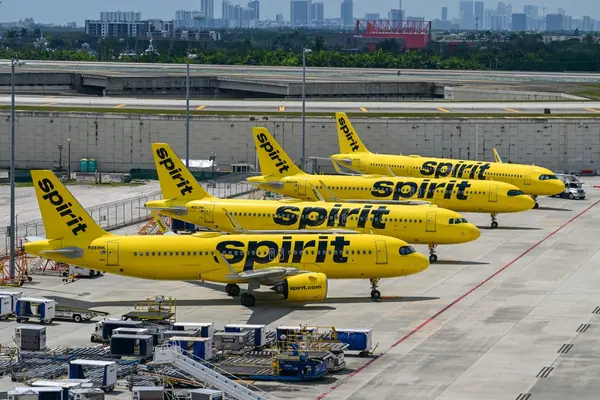
A lawsuit against Spirit Airlines is drawing national attention after the family of a 75-year-old man with dementia alleged the airline failed to provide promised assistance at a Texas airport, leading to his death hours later on a nearby highway.
The case centers on Marcos Humberto Vindel Osorio, a Honduran senior who arrived at George Bush Intercontinental Airport in June 2024 to visit family in the United States. According to the lawsuit filed in federal court in Houston, relatives informed the airline before the flight that Osorio suffered from mild dementia and would require assistance after landing.
The family says the airline agreed to help. They claim that help never came.
The result, according to the complaint, was catastrophic: Osorio allegedly wandered out of the airport alone, walked for hours along unfamiliar roads at night, and was eventually struck and killed by multiple vehicles on the Eastex Freeway.
The lawsuit has reignited broader questions about how airlines handle vulnerable passengers, especially older travelers with cognitive conditions who may struggle to navigate sprawling international airports without supervision.
What happened to Marcos Humberto Vindel Osorio?
According to the complaint, Osorio boarded a flight from Palmerola International Airport on June 8, 2024, headed to Houston.
His relatives reportedly notified Spirit Airlines at check-in that the 75-year-old had dementia that could worsen under stress. The family requested wheelchair or escort assistance after arrival, particularly because Osorio would need to pass through customs and navigate one of the busiest airports in Texas.
Court filings state that the airline confirmed it would assist.
But when relatives waited for Osorio in the arrivals area at George Bush Intercontinental Airport, he never appeared.
A Customs and Border Protection officer later informed the family that Osorio had cleared processing at around 7:43 p.m., according to the lawsuit. After realizing he was missing, relatives contacted authorities and began searching for him.
Hours later, Osorio was found dead on the Eastex Freeway.
The family alleges he had walked at least two hours from the airport before being struck by traffic.
Why the lawsuit could become a major test case
The lawsuit argues that Spirit Airlines failed in its duty to assist a passenger with a known cognitive disability.
According to the complaint, the airline’s alleged failure to provide support directly led to Osorio becoming disoriented and leaving the airport unattended.
The case may hinge on whether the airline violated obligations under the Air Carrier Access Act. This federal law requires airlines operating in the United States to provide accommodations for passengers with disabilities.
What is the Air Carrier Access Act?
The Air Carrier Access Act, often referred to as the ACAA, prohibits discrimination against airline passengers with disabilities.
The law requires airlines to provide certain forms of assistance, including:
- Wheelchair support
- Boarding and deplaning assistance
- Escort services through terminals when requested
- Help for passengers with mobility or cognitive impairments
Critically, the law does not simply apply to physical disabilities. Cognitive conditions such as dementia may also require accommodation if airlines are informed in advance.
Why airports can become dangerous for dementia patients
Airports are already stressful environments for many travelers. For people with dementia, they can become labyrinths of flashing screens, unfamiliar voices, security checks, long corridors, and rapidly changing instructions.
Medical experts have long warned that cognitive decline can worsen in high-stress situations, particularly when elderly individuals are separated from caregivers or placed in unfamiliar surroundings.
Common risks for dementia patients in airports include:
- Becoming disoriented after security screening
- Wandering away from designated pickup areas
- Difficulty understanding announcements or signage
- Panic or confusion during delays or immigration checks
- Increased vulnerability at night or in crowded spaces
Houston’s George Bush Intercontinental Airport spans thousands of acres and handles tens of millions of passengers annually. For an elderly traveler navigating customs alone at night, even finding the correct exit can become overwhelming.
The lawsuit arrives at a difficult time for Spirit Airlines
The case also lands during a turbulent period for Spirit Airlines.
The budget carrier recently faced bankruptcy proceedings amid mounting financial pressure, rising operational costs, and fierce competition in the low-cost airline market.
Although the lawsuit is separate from the company’s financial struggles, cases involving passenger safety can intensify public scrutiny, especially when vulnerable travelers are involved.
As of publication, Spirit Airlines had not publicly commented on the allegations detailed in the lawsuit.
Any future reporting should verify:
- Whether Spirit filed a legal response
- Whether settlement discussions emerge
- Whether federal regulators review the incident
Could airlines face stricter oversight after this case?
Aviation attorneys say the lawsuit may fuel renewed debate over how airlines document and verify disability assistance requests.
One key issue likely to emerge is accountability. Families often rely on verbal assurances from airline staff when arranging help for elderly or disabled relatives. But in practice, responsibility may shift between airlines, airport contractors, wheelchair providers, customs staff, and terminal personnel.
That fragmented system can create dangerous gaps.
The Osorio case could increase pressure for:
- Digital tracking of special-assistance passengers
- Mandatory handoff procedures between airport staff
- Better training for employees handling cognitive disabilities
- Stronger federal reporting requirements
Advocates for seniors and dementia patients have increasingly pushed for “safe travel protocols” similar to hospital discharge procedures, where vulnerable individuals cannot simply be left unattended.
A tragedy that highlights a growing issue
The lawsuit reflects a challenge that will likely become more common as populations age and international travel among seniors increases.
According to Alzheimer’s and dementia advocacy groups, millions of families now manage travel arrangements for elderly relatives with varying levels of cognitive impairment. Even mild dementia can become dangerous in unfamiliar, high-pressure settings.
For many readers, the details of the Osorio case cut deeper than a routine negligence lawsuit because the scenario feels painfully plausible: a family trusting a system designed to move people efficiently, only to discover that one missed handoff can carry devastating consequences.
The courts will ultimately determine whether Spirit Airlines bears legal responsibility for Osorio’s death. But the case has already exposed broader concerns about how airports and airlines protect passengers who may not be able to protect themselves.
TL;DR
A lawsuit filed in Houston accuses Spirit Airlines of failing to provide promised assistance to a 75-year-old passenger with dementia after he arrived from Honduras in 2024. The man, Marcos Humberto Vindel Osorio, allegedly wandered out of the airport alone and was later struck and killed on a nearby highway. The case raises serious questions about airline responsibilities under US disability laws and the safety of cognitively impaired travelers in major airports.