
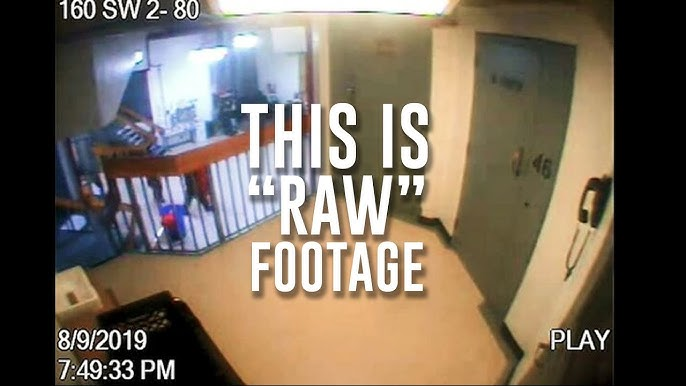
Nearly six years after Jeffrey Epstein was found dead in a Manhattan federal jail, the FBI has released more than 10 hours of surveillance footage from the night of his death, an extraordinary move aimed at closing one of the most scrutinized cases in modern U.S. criminal history.
The footage, made public after repeated promises from senior law enforcement officials, shows Epstein’s final documented movements inside the Metropolitan Correctional Center (MCC) in New York as he awaited trial on federal sex trafficking charges.
Alongside the release, the FBI confirmed it has formally ended its investigation into Epstein’s death and will not bring charges against any additional individuals connected to the case.
For an episode that has fueled years of speculation, conspiracy theories, and public distrust, the video is meant to be definitive. Whether it succeeds in doing so is another question.
Why did the FBI release Jeffrey Epstein’s surveillance footage now?
The release follows earlier statements from FBI Deputy Director Dan Bongino, who said publicly that video evidence would eventually be made available to address persistent claims that Epstein did not die by suicide.
In interviews earlier this year, Bongino argued that the footage clearly shows no one entering or exiting Epstein’s cell area during the critical window of time before his death. According to the FBI, the newly released material aligns with prior findings from the medical examiner and the Department of Justice’s Office of the Inspector General.
The timing, six years after Epstein’s death, reflects both the extraordinary public interest in the case and ongoing political pressure to release underlying evidence.
What does the Epstein surveillance footage actually show?
The video spans roughly 11 hours, covering the evening of August 9 and the early morning of August 10, 2019, inside the MCC.
Epstein’s last confirmed appearance alive
At approximately 7:49 p.m. on August 9, Epstein is seen alive in the footage. He is escorted by a guard through a stairwell and a common area before being led toward his cell.
The camera angle does not directly show the interior of the cell or the cell door itself. However, according to the FBI, it captures the surrounding corridor and common areas leading to the cell.
Overnight activity or lack of it
For much of the night:
- No inmates or guards are seen approaching Epstein’s cell area.
- A guard briefly appears near the corridor around 10:39 p.m. and again at 10:41 p.m.
- After that, the area remains largely empty for hours.
Investigators believe Epstein died sometime during this overnight window.
Discovered the next morning
Footage from the morning of August 10 shows guards moving through the common area around 6:30 a.m., apparently as part of routine morning procedures, including breakfast distribution.
Roughly three minutes later, more guards are seen converging toward Epstein’s cell area, marking the apparent moment when his unresponsive body was discovered. Epstein was later transported to a hospital, where he was pronounced dead. The medical examiner ruled the death a suicide by hanging.
Does the video rule out foul play in Epstein’s death?
According to the FBI, yes. According to skeptics, not entirely.
The FBI’s position
Federal authorities say the footage supports long-standing conclusions that:
- No one entered Epstein’s cell area during the relevant period.
- There is no physical evidence—DNA, fingerprints, audio, or eyewitness testimony—suggesting homicide.
- The findings are consistent with the autopsy and prior DOJ investigations.
Bongino summarized the agency’s stance bluntly in a previous interview: “There’s nobody there. If you have a tip, let us know. But there’s nothing.”
Why doubts persist
Despite the footage, questions linger for many observers because:
- The camera does not directly show the cell door.
- Epstein was a high-profile detainee with powerful enemies and connections.
- The MCC had a documented history of staffing shortages and infrastructure failures.
For critics, the absence of evidence is not the same as evidence of absence—especially in a facility that later faced intense scrutiny for operational failures.
What jail protocols were violated the night Epstein died?
Even as the FBI stands by its suicide ruling, it has acknowledged—and prior investigations confirmed—that multiple safeguards failed.
Key lapses included:
- Epstein was not checked every 30 minutes, as required for inmates on suicide watch or heightened monitoring.
- Two guards assigned to conduct inmate counts reportedly fell asleep during their shift.
- Logs were later falsified to indicate checks had occurred when they had not.
These failures fueled years of speculation and led to internal discipline, though criminal charges against the guards were ultimately dropped as part of a deferred prosecution agreement.
The FBI maintains that negligence, while serious, does not equate to criminal conspiracy.
What did the FBI conclude about a “client list”?
In a separate but closely watched finding, the FBI stated that it found no evidence supporting the existence of a so-called “client list”—a document long rumoured to contain the names of powerful individuals allegedly involved in Epstein’s crimes.
According to the agency:
- There is no proof Epstein maintained a formal list of clients.
- There is no evidence he was blackmailing politicians, celebrities, or business leaders.
- No new investigations into third parties will be opened without new, credible evidence.
This conclusion is likely to disappoint those who believed Epstein’s death prevented wider accountability. Federal officials say the lack of additional charges reflects evidentiary limits, not a lack of effort.
Why the Epstein case still matters
Jeffrey Epstein’s death came at a moment when he was facing the possibility of spending the rest of his life in prison—and when many hoped his trial would expose the full scope of a sex trafficking network that exploited minors.
Instead, his suicide left survivors without courtroom testimony, the public without full answers, and trust in the justice system further eroded.
The release of the surveillance footage is meant to draw a line under the case. But the larger issues it raised—elite impunity, institutional failure, and transparency in the criminal justice system—remain unresolved.
TL;DR
- The FBI has released 10+ hours of surveillance footage from the night Jeffrey Epstein died in jail.
- The video shows Epstein alive at 7:49 p.m. on August 9, 2019, and no one approaching his cell overnight.
- Authorities say the footage supports the conclusion that Epstein died by suicide.
- Jail protocols were violated, but the FBI says there is no evidence of foul play.
- The FBI has closed the case and says no “client list” exists and no further charges are coming.