
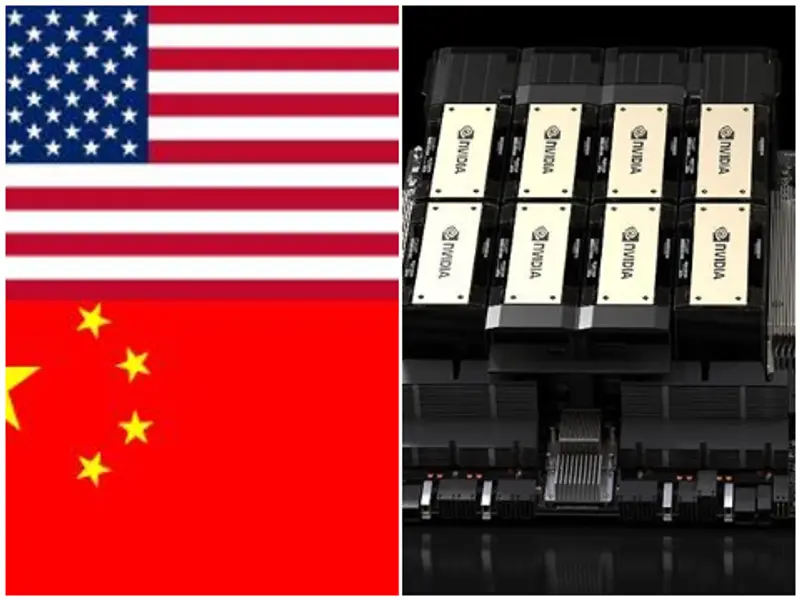
The long-running technology standoff between Washington and Beijing is entering a sharper, more consequential phase. US House Democrats have introduced a new bill aimed squarely at cutting off China’s access to the most advanced American-made artificial intelligence chips. If passed, the legislation could redraw global AI supply chains, strain US tech companies’ overseas ambitions, and deepen what policymakers now openly call the “chip war.”
The proposed law, formally titled the RESTRICT Act, arrives at a moment when AI chips have become strategic assets rather than mere commercial products. These processors power everything from large language models and autonomous systems to military simulations and intelligence analysis. The question at the heart of the debate is no longer whether chips matter, but who should be allowed to have the best ones.
Below is a clear, reader-first breakdown of what the bill does, why it matters, and how it could reshape the global AI race.
What is the RESTRICT Act?
The bill introduced in the US House is called the Restoring Export and Security Trade Restrictions for Integrated Circuit Technologies Act, or RESTRICT Act. It was presented by Representative Gregory W. Meeks, the ranking Democrat on the House Foreign Affairs Committee, along with 13 other House Democrats.
At its core, the RESTRICT Act seeks to block the export of the most advanced US artificial intelligence chips to China and other countries deemed national security risks.
Unlike broader technology legislation, this bill is tightly focused. It zeroes in on advanced integrated circuits used for AI workloads, including high-end processors such as Nvidia’s H200. These chips are critical for training and deploying cutting-edge AI systems at scale.
The stated goal is twofold:
- Protect US national security by preventing advanced AI capabilities from reaching strategic competitors
- Preserve American leadership in artificial intelligence by setting clear, enforceable export rules
Within the first 100 words of the bill’s rollout, sponsors framed it as a response to growing concerns that US technology could directly or indirectly strengthen China’s military and surveillance capabilities.
Why are AI chips treated as national security assets?
To understand the bill’s urgency, it helps to grasp why AI chips now sit at the center of geopolitical strategy.
AI chips power more than consumer technology
Modern AI chips are not just faster versions of old processors. They are purpose-built to handle massive parallel computations needed for:
- Training large AI models
- Running advanced image and signal analysis
- Simulating complex military or intelligence scenarios
- Enabling autonomous systems
In defense terms, access to top-tier AI chips can compress years of research into months. That speed advantage is what alarms US policymakers.
Military and intelligence implications
US officials have repeatedly warned that advanced AI could enhance:
- Military planning and logistics
- Autonomous weapons development
- Cyber warfare capabilities
- Mass surveillance and intelligence analysis
From Washington’s perspective, selling the most powerful AI chips to China risks accelerating these capabilities in ways that are difficult to monitor or reverse.
What exactly would the RESTRICT Act prohibit?
If enacted, the RESTRICT Act would impose clear limits on who can receive advanced US-made AI chips.
Countries of concern
The bill defines “countries of concern” as nations subject to a US arms embargo as of January 1, 2025. China falls squarely within that category.
Exports of advanced integrated circuits and related products to these countries would be denied export licenses by the US Department of Commerce.
Chips covered under the ban
While the legislation does not list every chip model by name, it explicitly targets the most advanced AI processors. Nvidia’s H200, often cited as a benchmark for cutting-edge AI hardware, is a prime example.
In practical terms, this would mean:
- No direct sales of advanced AI chips to China
- No approval of export licenses for these products
- Tight scrutiny of any indirect or intermediary routes
Why is the bill critical of Trump’s AI chip policy?
One of the bill’s sharpest edges is its criticism of President Donald Trump’s decision to allow certain AI chip sales to China, including Nvidia’s H200.
Representative Meeks argued that permitting these sales undermines US national security and weakens America’s position in the global AI race. His core claim is that providing advanced AI tools to a “chief strategic competitor” risks strengthening China’s military and global influence.
From the bill’s sponsors’ perspective, short-term commercial gains for US companies should not outweigh long-term strategic risks.
This tension highlights a recurring dilemma in US tech policy:
- Restrict exports too aggressively, and US firms lose revenue and global market share
- Loosen controls, and strategic rivals gain access to transformative technology
The RESTRICT Act comes down firmly on the side of tighter control.
Does the RESTRICT Act introduce new export controls?
One of the more misunderstood aspects of the bill is what it does not do.
Codifying, not reinventing, restrictions
The RESTRICT Act does not create an entirely new export control regime. Instead, it codifies existing restrictions on advanced integrated circuits and related products into law.
Supporters say this provides:
- Clarity for companies navigating complex export rules
- Consistency across administrations and policy shifts
- Stronger legal backing for enforcement
In effect, the bill aims to lock in current safeguards so they cannot be easily weakened by future executive decisions without congressional oversight.
How does the bill treat US companies operating abroad?
The legislation is not purely restrictive. It also introduces a framework designed to help trusted US companies remain competitive internationally.
A license-free pathway for secure operations
The bill would require the Commerce Department to establish a secure, license-free export pathway for US-owned companies operating data centers outside the United States.
To qualify, companies would need to meet strict requirements covering:
- Physical security of facilities
- Cybersecurity protections
- Controls on remote access
- Safeguards against unauthorized technology transfer
Eligibility would be limited to US-owned facilities located outside countries of concern.
This provision reflects an attempt to strike a balance: limiting risky exports while allowing American firms to operate globally without excessive red tape.
How flexible is the definition of “advanced AI chips”?
Technology evolves quickly, and lawmakers appear aware of that reality.
Under the bill, the definition of an “advanced integrated circuit or product” could be revised after two years. However, there is a crucial condition: Congress must be certified that any changes would not harm US national security.
This mechanism gives regulators room to adapt to new chip architectures and performance thresholds while keeping lawmakers directly involved in oversight.
How does this fit into the broader US-China chip war?
The RESTRICT Act is not an isolated move. It is part of a much wider and intensifying technology rivalry between the world’s two largest economies.
US strategy so far
Over the past several years, the US has imposed controls on:
- Advanced semiconductor exports
- Chipmaking equipment
- Key design software and manufacturing tools
The underlying concern is that these technologies could be used to enhance China’s military capabilities.
China’s response
China has responded with its own set of controls and strategic investments, including:
- Export restrictions on critical materials such as rare earth elements
- Massive state-backed funding for domestic semiconductor production
- Accelerated efforts to reduce reliance on foreign chipmakers
The result is a fragmented global tech ecosystem, where supply chains are increasingly shaped by politics as much as by market forces.
What are the economic and industry implications?
For US tech companies, the bill presents both risks and reassurances.
Potential downsides
- Loss of revenue from one of the world’s largest tech markets
- Reduced economies of scale for advanced chip production
- Increased incentives for China to develop domestic alternatives
Potential upsides
- Clearer rules reduce regulatory uncertainty
- Stronger protection of intellectual property
- Long-term preservation of US leadership in advanced AI
For the global AI ecosystem, the bill could accelerate a bifurcation where US- and China-led technology stacks diverge further.
What happens next?
The RESTRICT Act still faces a legislative path that includes committee review, debate, and potential amendments. Its fate will depend on bipartisan support, industry lobbying, and broader geopolitical developments.
Regardless of whether it passes in its current form, the bill signals something important: in Washington, AI chips are no longer viewed as neutral commercial goods. They are strategic instruments, and policy around them is hardening accordingly.
TL;DR
- US House Democrats have introduced the RESTRICT Act to ban advanced AI chip sales to China
- The bill targets high-end processors like Nvidia’s H200 on national security grounds
- It criticizes Trump-era decisions allowing such sales
- The legislation codifies existing export controls rather than creating new ones
- It offers a secure, license-free pathway for trusted US companies operating abroad
- The move deepens the ongoing US-China chip war and could reshape global AI supply chains