
For nearly two days, a US Air Force airman remained alone in the mountains of Iran after his F-15E was shot down. Injured, short on food and water, and being hunted by Iranian forces, he moved to higher ground and waited for help.
The officer, identified publicly by the mission call sign “Dude 44 Bravo,” was the weapons-systems officer aboard the two-person F-15E crew. The aircraft was struck by an Iranian shoulder-fired missile while flying over a mountainous area of Iran on April 2, according to the account published by News18.
His pilot, known as Alpha, was rescued within hours. Bravo’s ordeal lasted roughly 50 hours before US forces finally reached him.
How did Bravo survive the crash?
The missile strike damaged Bravo’s parachute, leaving him in a free fall estimated at 70 to 100 mph.
He hit the ground with serious injuries, including a broken back, arm and shoulder. In his first public account, Bravo recalled looking up and realizing that his parachute was gone, describing the moment as the most terrifying he had experienced.
Despite those injuries, he did not remain near the crash site.
Bravo moved away and climbed a 7,000-foot ridgeline, believing the elevated position would provide a safer place to hide while the search for him unfolded.
How did he evade Iranian forces?
Bravo spent another full day in a cold, windy high-altitude desert with almost no food or water.
The danger was not only the environment. Iranian forces were actively searching for the downed American crew, and US officials said they came within a few hundred meters of Bravo at one point. American forces tracked the movements of the Iranian search teams while racing to locate their missing airman.
His survival training became critical as he tried to remain concealed despite his injuries.
In describing the experience, Bravo used a grim line to explain the stakes: “Never let a lack of motivation put you on Iranian TV.”
When was Bravo finally rescued?
The rescue came about 50 hours after the shootdown.
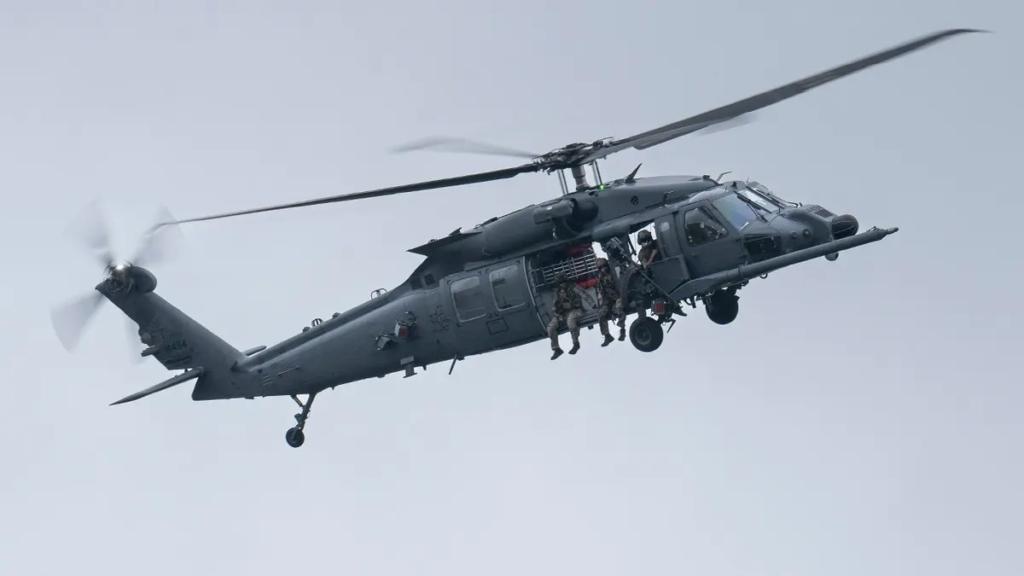
US forces assembled a large operation involving more than 90 service members on the ground, several hundred personnel in the air and thousands of others supporting the mission. The CIA also played a key role in helping identify Bravo’s position and confusing Iranian forces searching the area.
The operation reached him as the sun rose on Easter Sunday.
For Bravo, the arrival of the rescue team marked the end of nearly two days spent wounded and isolated behind enemy lines.
What did Bravo say when rescuers reached him?
Bravo has now spoken publicly about the experience, appearing in the season premiere of CBS’s 60 Minutes.
He said seeing the rescuers was one of the greatest moments of his life. When they finally reached him, his message was remarkably brief.
“Let’s go.”
The words captured the urgency of an extraction that was not yet complete.
Why was the rescue operation so complicated?
Finding Bravo was only part of the mission.
The rescue force also had to get him and more than 90 personnel out of Iran. At a makeshift desert airstrip, the landing gear of rescue aircraft became stuck in the sand, preventing the planes from taking off and leaving the personnel stranded. A clandestine Air Force unit eventually helped resolve the situation.
The US military then destroyed two stranded aircraft, reportedly worth about $100 million each, along with Little Bird helicopters, to prevent their technology from being captured by Iranian forces.
The decision illustrates another risk built into a rescue mission conducted deep inside hostile territory: sensitive military equipment could not simply be abandoned behind.
What role did the CIA play?
The operation was not purely a military search-and-rescue effort.
According to the account, CIA personnel helped pinpoint Bravo’s location while simultaneously working to confuse Iranian forces. That intelligence support gave US commanders a clearer picture of both the missing airman’s position and the movements of those searching for him.
The mission therefore brought together intelligence, surveillance, special operations and combat rescue capabilities.
What happened to the other crew member?
Bravo was not the only American forced to eject from the damaged F-15E.
The pilot, Alpha, landed separately and was rescued within hours. The two men had come down roughly five miles apart in mountainous terrain, leaving the US military with two separate recovery problems.
Alpha’s comparatively rapid recovery meant the focus shifted to locating Bravo, whose injuries and isolated position made his rescue far more difficult.
Why did Bravo climb higher despite his injuries?
Moving toward a 7,000-foot ridgeline may appear counterintuitive for someone suffering a broken back and other injuries.
But Bravo believed the higher ground offered a safer hiding place as Iranian forces searched the area. His decision was part of a broader attempt to create distance from the crash site and avoid detection while US forces worked to find him.
The account shows how survival in enemy territory can come down to a series of rapid decisions made under extreme physical stress.
Bravo had to balance his injuries, exposure, limited supplies and the possibility of being captured.
Why was the mission kept so tightly controlled?
A search-and-rescue operation inside an adversary’s territory carries risks far beyond those of a conventional recovery mission.
The US had to locate a wounded service member without allowing Iranian forces to reach him first, while also planning a safe extraction route for the rescue personnel and aircraft.
The scale of the operation, including the number of aircraft, personnel and intelligence assets involved, reflects how difficult it was to recover one airman from hostile territory.
Bravo calls the survival a “modern-day miracle”
After reaching safety, Bravo described his survival as a “modern-day miracle.”
He said the episode represented more than his own experience, crediting the teamwork, training, faith, decision-making and leadership that went into bringing him home.
The story is ultimately less about one dramatic escape than about the chain of decisions that kept a wounded airman alive long enough for rescuers to reach him.
Shot from the sky, badly injured and alone in the mountains, Bravo survived almost two days while a large US operation worked to find him.
By the time the rescuers arrived, he had already done the hardest part: staying alive.