
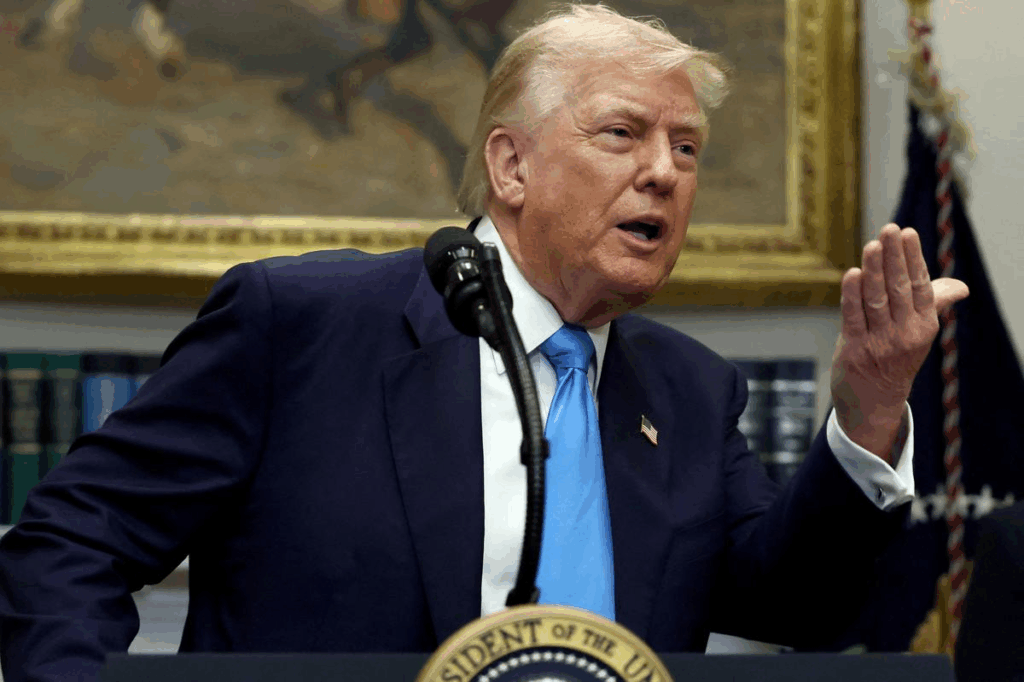
While a new round of traditional stimulus checks seems off the table, President Donald Trump is floating a fresh idea: rebate checks funded by U.S. tariff revenues. The concept mirrors a bill introduced by Sen. Josh Hawley (R-Mo.) — the American Worker Rebate Act of 2025 — which could send hundreds of dollars directly to taxpayers.
Below, we break down what’s being proposed, how it differs from pandemic-era stimulus checks, and what it could mean for your wallet.
What is the American Worker Rebate Act of 2025?
Introduced by Sen. Josh Hawley on July 28, the American Worker Rebate Act would return tariff revenue to U.S. taxpayers.
Under the proposal:
- $600 per tax-paying adult and $600 per dependent child.
- A family of four could receive $2,400.
- Payments would phase out by 5% for:
- Joint filers with an adjusted gross income over $150,000.
- Single filers earning more than $75,000.
If tariff revenues exceed expectations, the bill allows for larger rebate amounts. Hawley’s office says the eligibility rules would be similar to COVID-19 stimulus checks.
How Trump’s tariff rebate idea fits in
During a press briefing on July 25, Trump was asked whether the “tariff revenue coming in” could lead to rebates for the public.
“We have so much money coming in, we’re thinking about a little rebate,” Trump said. “The big thing we want to do is pay down debt. But… a little rebate for people of a certain income level might be very nice.”
The proposal taps into one of Trump’s signature economic policies: high tariffs on foreign goods. According to Treasury Department figures, June 2025 brought in a $27 billion surplus from tariff revenues, the first June surplus since 2017. Treasury Secretary Scott Bessent projects that annual tariff revenues could exceed $300 billion.
Why tariffs are at the center of this proposal
Tariffs are taxes on imports paid by companies that bring goods into the U.S. While the government collects the revenue, businesses often pass these costs on to consumers through higher prices.
A July 28 analysis by The Budget Lab at Yale estimated Trump’s tariffs could cost U.S. households an average of $2,400 in 2025 through price increases. The rebate concept is positioned as a way to return some of this money back to consumers.
However, economists warn that:
- Rebates won’t fully offset higher prices.
- Tariffs can slow economic growth and spur inflation if costs rise too sharply.
Stimulus checks vs. tariff-funded rebates: Key differences
Although both put money into Americans’ pockets, their purposes differ:
| Feature | Stimulus Check | Rebate |
|---|---|---|
| Goal | Boost spending and stimulate the economy. | Refund money to taxpayers who have overpaid or to return specific revenue. |
| Example | Pandemic-era checks (2020–2021). | 2021 Recovery Rebate Credit for missed stimulus payments. |
| Source of funds | Federal spending allocations. | Specific revenue streams (e.g., tariff collections). |
A rebate funded by tariffs would be more like a tax refund than a stimulus boost, although the cash flow to households could still support consumer spending.
Who would qualify if this becomes law?
Eligibility would likely match Hawley’s bill parameters:
- All tax-paying adults and dependent children meeting income thresholds.
- Reduced benefits for higher-income earners.
- Possibly targeted at “certain income levels,” as Trump suggested.
Final details depend on how Congress negotiates the bill and whether income phaseouts mirror pandemic-era thresholds.
Will Americans actually see these checks in 2025?
That remains uncertain. Key points to consider:
- Congress approval is required. Hawley’s bill needs to pass both chambers.
- Republicans control the House and Senate, making passage more likely, but debates over deficit reduction vs. direct payments could slow progress.
- Trump’s priority is to pay down the national debt, which could compete with the rebate idea.
If approved quickly, payments could theoretically be sent later in 2025, but no timeline exists yet.
Why it matters
For many households, even a one-time $600 per person could help offset higher grocery, fuel, and housing costs. But there’s a bigger fiscal question: Should tariff revenue be used for rebates or debt reduction?
Supporters argue:
- Tariffs were intended to protect American jobs, rebates give workers a direct benefit.
- Returning revenue helps balance the impact of higher consumer prices.
Critics warn:
- Rebates may mask the broader economic cost of tariffs.
- Long-term growth could slow if tariffs dampen trade.
Bottom line
The Trump tariff rebate proposal — and Hawley’s American Worker Rebate Act — signal a shift from pandemic-style stimulus toward targeted revenue returns. While the numbers sound promising, the outcome hinges on congressional action and broader economic priorities.
Until a bill passes, rebate checks remain an idea, not a guarantee.