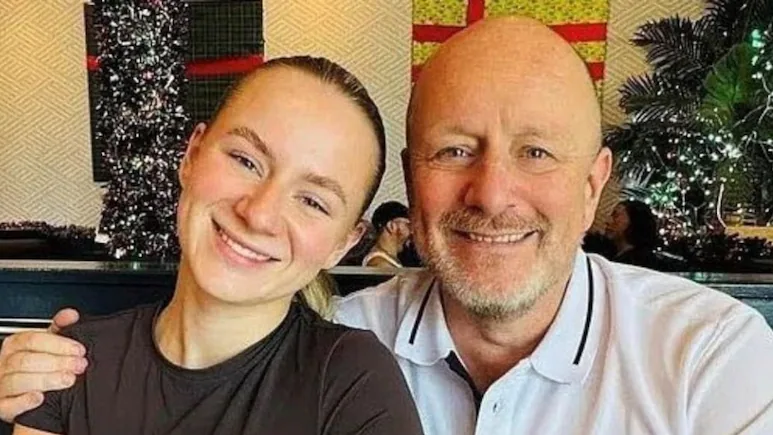
A deadly family dispute in Prosper, Texas, has cast a harsh light on how political polarization and gun access can collide in deeply personal ways. In January 2025, a 23-year-old British woman visiting her father in the U.S. was shot and killed inside his home after an argument over former President Donald Trump and gun ownership, an argument that escalated with devastating speed.
The case, now examined in a UK coroner’s court, raises urgent questions about gun safety, alcohol use, and how ideological divides can fracture families beyond repair.
What happened in the Prosper, Texas, shooting?
On January 10, 2025, Lucy Harrison, a fashion buyer from Warrington, England, was visiting Texas with her boyfriend, Sam Littler. The trip was meant to be a family visit. Instead, it ended in tragedy.
According to testimony presented at the Cheshire Coroner’s Court, Lucy and her father, Kris Harrison, became embroiled in a heated argument inside his Prosper home. The disagreement centered on U.S. politics, specifically Donald Trump, and Kris Harrison’s ownership of a firearm.
Minutes later, Lucy was dead from a gunshot wound.
A visit that turned fatal
Sam Littler told the court that arguments between Lucy and her father were not unusual, particularly when conversations turned to guns or American politics. Lucy, he said, was openly uncomfortable with her father owning a firearm and often became distressed when he defended his right to have one.
On that day, the discussion escalated quickly.
Why did Trump and gun ownership become flashpoints?
Politics wasn’t just background noise—it was central to the argument.
A deeply personal question
During the confrontation, Lucy reportedly referenced controversies surrounding Donald Trump and sexual assault allegations. She asked her father a pointed question: how would he feel if she were in the position of a woman who had been sexually assaulted?
Sam testified that Kris Harrison replied that he had two other daughters living with him and that such a situation “would not upset him that much.” The remark, Sam said, devastated Lucy.
“She became quite upset and ran upstairs,” he told the court.
Lucy’s mother, Jane Coates, later described her daughter as someone who cared deeply about social issues and wasn’t afraid to debate them.
“She was passionate about things,” Coates said. “She loved to have debates about things that meant a lot to her.”
What happened moments before the shooting?
The sequence of events after the argument is chilling in its brevity.
The final minutes
Sam Littler testified that Lucy was later in the kitchen when her father took her by the hand and led her into his bedroom. Roughly 15 seconds later, he heard a loud bang.
What followed was chaos.
- Kris Harrison began screaming for his wife.
- Sam ran toward the bedroom.
- Lucy was found lying on the floor near the bathroom entrance.
- Kris was “just screaming, just sort of nonsense,” Sam said, according to Sky News.
Lucy died at the scene.
How does Kris Harrison explain the shooting?
Kris Harrison admitted to shooting his daughter but said it was not intentional.
“I did not understand what had happened”
In his testimony, Harrison said he purchased the gun several years earlier for family security. He claimed he had never discussed the firearm with Lucy before that day—an assertion that contradicts Sam Littler’s account.
According to Harrison, he picked up the gun to show it to Lucy.
“I suddenly heard a loud bang,” he told the court. “I did not understand what had happened. Lucy immediately fell.”
He said he could not remember whether his finger was on the trigger when the weapon discharged.
Alcohol use on the day of the incident
The court also heard that Harrison had a history of alcohol addiction and had previously sought treatment in rehab. On the day of the shooting, he admitted to drinking about 500 milliliters of white wine.
That detail matters. Alcohol is a known risk factor in firearm accidents, a point frequently emphasized by public health researchers.
Why does this case resonate beyond one family?
This is not just a story about one household or one argument. It reflects broader tensions in American life, especially around guns and political identity.
Guns in the home: a persistent risk
Research consistently shows that the presence of a firearm in the home increases the risk of accidental shootings and domestic homicides. Studies from institutions like the CDC and Johns Hopkins Bloomberg School of Public Health have found that guns are far more likely to harm household members than to be used in self-defense.
Political polarization is turning personal
Arguments about Donald Trump and gun rights have fractured families across the U.S. What makes this case different—and more disturbing—is how quickly rhetoric turned lethal when a firearm was close at hand.
The argument was ideological. The outcome was irreversible.
How alcohol, firearms, and family dynamics intersect
Experts often point to a dangerous triad:
- Emotional conflict
- Alcohol consumption
- Easy access to a loaded firearm
When all three converge, the risk of tragedy spikes.
In this case:
- The argument was emotionally charged.
- Alcohol had been consumed.
- A gun was present and handled during the dispute.
Each factor alone might not have been fatal. Together, they proved deadly.
What the inquest reveals about accountability and grief
Despite admitting to shooting his daughter, Kris Harrison expressed deep remorse.
“There isn’t a day I don’t feel the weight of that loss,” he told the court. “A weight I will carry for the rest of my life.”
The inquest is not a criminal trial, but its findings may influence future legal proceedings and policy discussions, particularly around gun safety and storage.
Why this story matters now
The Texas shooting involving Lucy Harrison is a stark reminder that debates over guns and politics are not abstract. They play out in kitchens and living rooms, often among people who love each other.
For international audiences, the case also underscores the cultural gap between countries with strict gun laws, like the UK, and the U.S., where firearms are deeply embedded in law and identity.
For Americans, it raises an uncomfortable question: how many arguments become fatal simply because a gun is within reach?
TL;DR
- A 23-year-old British woman was shot and killed by her father in Texas after an argument over Trump and gun ownership.
- The shooting occurred during a family visit and involved alcohol consumption and a firearm kept in the home.
- The case highlights the lethal intersection of political polarization, gun access, and family conflict.
- An inquest is ongoing, with broader implications for gun safety debates.