
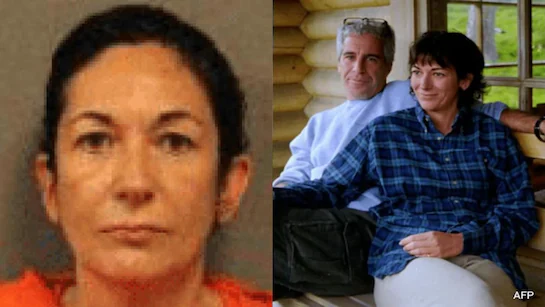
Within hours of a newly released prison deposition, social media feeds filled with zoomed-in screenshots, facial comparisons, and a familiar internet refrain: that isn’t really her. Ghislaine Maxwell prison video explained: body double claims
The footage shows Ghislaine Maxwell appearing remotely from prison and repeatedly invoking the Fifth Amendment when questioned about her links to Jeffrey Epstein. Soon after, online users began arguing that the woman on screen looked different from older photos taken before her 2020 arrest.
No credible evidence supports those claims. But the reaction itself reveals something important: high-profile criminal cases now unfold not only in courtrooms but also in algorithm-driven suspicion factories.
What the deposition video actually shows
The video was released by the United States House Oversight Committee as part of questioning connected to her trafficking conviction.
During the session:
- Maxwell appeared via secure video link from prison
- She declined to answer multiple questions
- She invoked constitutional protections repeatedly
- The exchange focused on her relationship with Epstein
Why did she invoke the Fifth Amendment
Invoking the Fifth Amendment does not imply guilt or innocence. It simply means answering could expose a person to further criminal liability.
In cases tied to wider networks or ongoing litigation, attorneys often advise clients to stay silent to avoid new legal exposure.
Where the body double theory came from
The claims began with side-by-side image comparisons posted online. Users pointed to perceived changes in:
- jawline shape
- nose profile
- eye spacing
- facial fullness
Some attributed the changes to weight gain or aging. Others suggested impersonation or staged footage.
A viral post amplified speculation by suggesting the prison appearance might not involve Ghislaine Maxwell at all. The post itself acknowledged uncertainty, but the visual comparison format helped the theory travel quickly.
Why faces look different in prison footage
Several mundane factors explain most perceived differences:
1. Camera optics
Remote legal video often uses fixed-lens security cameras. These flatten depth and distort facial proportions, especially near the edges of the frame.
2. Lighting
Courtroom photography uses controlled lighting. Correctional video relies on overhead institutional lighting, which deepens shadows around the eyes and nose.
3. Age progression
Ghislaine Maxwell was arrested in 2020 and convicted in 2021. Over several years:
- skin elasticity changes
- facial fat redistributes
- Stress alters appearance
4. Weight fluctuations
Diet, medication, and limited activity commonly change facial fullness during incarceration.
Why conspiracy theories cluster around the Epstein case
The Epstein investigation produced a rare combination:
- elite social circles
- incomplete public records
- shocking criminal allegations
- a defendant who died before trial
That mixture left gaps in public understanding. Online speculation often fills informational gaps faster than official findings.
The psychology of “replacement” theories
Body double claims follow a common pattern seen in many high-profile cases:
- A known face appears in low-quality footage
- Viewers compare it to curated public photos
- Differences feel meaningful
- Narrative forms around a hidden truth
Humans recognize faces extremely well but misjudge facial changes over time. Research shows people often believe strangers have changed identity when presented with age-spaced images of the same person.
What evidence would actually be required to prove impersonation
For a body double claim to be credible, it would need verifiable institutional inconsistencies such as:
- prison intake records mismatch
- biometric identity conflict
- court authentication failure
- sworn testimony contradicting identity verification
None have been presented publicly.
Correctional video depositions undergo identity confirmation procedures before testimony is accepted into the legal record.
The role of social media amplification
Platforms reward visually striking claims more than procedural explanations.
A simple comparison image spreads faster than legal verification details because:
- it’s instantly interpretable
- it invites participation
- it encourages amateur investigation
In high-profile cases, engagement often substitutes for evidence.
What we actually know about Ghislaine Maxwell’s status
Ghislaine Maxwell was convicted in federal court in 2021 on sex trafficking charges involving minors and conspiracy counts. She is serving a 20-year sentence in federal custody.
No official statement from the Bureau of Prisons, court records, or congressional investigators indicates misidentification.
Why this story matters beyond one case
The reaction to the prison video shows a broader shift in public trust. Increasingly, official footage is treated as just another claim competing with online interpretation.
The result is a parallel justice narrative:
- courts decide legal truth
- internet communities debate visual truth
When those collide, perception can overshadow documentation.
TL;DR
- A prison deposition video of Ghislaine Maxwell triggered online claims of a body double.
- The speculation relies on appearance differences in low-quality footage.
- No credible evidence supports impersonation.
- Lighting, aging, and camera distortion explain most visual discrepancies.
- The episode reflects how viral analysis now accompanies major criminal cases.