
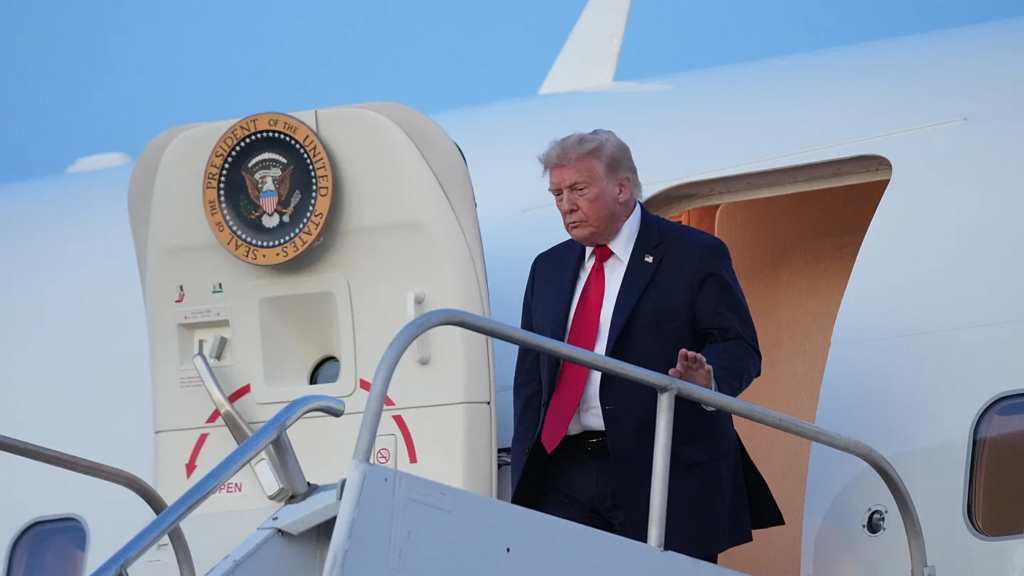
A federal judge has struck down former President Donald Trump’s controversial $100,000 H-1B visa fee, delivering a major victory to states, universities, hospitals, and technology companies that rely heavily on skilled foreign workers.
The ruling, issued Monday by a federal court in Boston, found that the Trump administration exceeded its authority by imposing the massive fee increase without approval from Congress.
The decision reignites a long-running debate around the H-1B visa program — one that sits at the intersection of immigration, economic competitiveness, outsourcing, and the future of the American tech workforce.
What Is the H-1B Visa Program?
The H-1B visa program was created under the Immigration Act of 1990 to help US employers hire highly skilled foreign workers in specialised fields where domestic talent may be limited.
The visas are commonly used for jobs requiring:
- Technical expertise
- Advanced education
- Specialized training
Most H-1B workers are employed in:
- Software engineering
- Information technology
- Artificial intelligence
- Healthcare
- Banking
- Academic research
- Engineering
To qualify, applicants generally need at least a bachelor’s degree or equivalent professional experience.
How Long Does an H-1B Visa Last?
An H-1B visa:
- Is initially valid for three years
- Can usually be extended for another three years
- Does not automatically provide permanent residency
However, many H-1B holders later transition to employment-based green cards.
According to estimates from Capital Economics, the United States currently has:
- Around 700,000 H-1B visa holders
- Approximately 500,000 dependents are tied to those visas
Why the H-1B Program Matters to the US Economy
The H-1B program has become deeply embedded in the American technology ecosystem.
At least 60% of approved H-1B visas since 2012 have gone to computer-related occupations, according to Pew Research Centre data.
Major users of the program include:
- Big Tech companies
- IT consulting firms
- Universities
- Hospitals
- Financial institutions
- Research organizations
Some employers are exempt from annual visa caps, including many universities and nonprofit research institutions.
How the H-1B Lottery Works
The government caps new H-1B visas at:
- 65,000 annually
- Plus an additional 20,000 for applicants with US master’s degrees or higher
Because applications regularly exceed the limit, visas are distributed through a lottery system.
Why Trump Introduced the $100,000 H-1B Fee
The Trump administration announced the dramatic fee increase last September, raising the lottery application fee from $215 to $100,000 for certain employers.
The policy took effect almost immediately — within 24 hours of its announcement.
The White House argued the move was designed to discourage companies from replacing American workers with lower-paid foreign labour.
In its official justification, the administration accused some employers of:
- Outsourcing US jobs
- Shutting down domestic IT departments
- Using foreign workers to reduce labor costs
The administration particularly targeted staffing and consulting firms that frequently place foreign tech workers at US companies.
Why Indian Workers Became Central to the Debate
The H-1B conversation has long been tied to India because Indian nationals make up the overwhelming majority of visa recipients.
According to Pew Research Center:
- Nearly 75% of approved H-1B applications in 2023 went to Indian nationals
Large outsourcing firms, including companies such as Tata Consultancy Services (TCS), Infosys, and Wipro, have frequently faced criticism from immigration skeptics who argue the program suppresses wages for American workers.
Critics of the program often point to a 2020 Economic Policy Institute report that found:
- About 60% of H-1B positions certified by the US Labor Department paid below the median wage for those occupations
Supporters dispute the claim that H-1B workers broadly undercut American labor.
Instead, they argue the program:
- Helps fill skill shortages
- Boosts innovation
- Supports economic growth
- Improves company productivity
- Complements, rather than replaces, domestic workers
Why the $100,000 Fee Failed
Despite its political visibility, the fee appears to have had limited practical impact.
According to court filings:
- Only 85 employers paid the fee
- The government collected just $8.5 million in revenue by mid-February
Immigration attorneys say the massive cost made the fee commercially unrealistic for most employers.
Bernhard Mueller, co-chair of immigration practice at law firm Ogletree Deakins, described the policy bluntly:
“The $100,000 fee was not a success in terms of revenue generation.”
Notably, the policy did not apply to:
- International students already in the US on student visas
- Workers transitioning from student status into H-1B employment
Analysts at Capital Economics also found that H-1B issuance levels remained relatively consistent with previous decades despite the fee increase.
What Did the Federal Judge Rule?
US District Judge Leo Sorokin ruled Monday that the Trump administration violated the Administrative Procedure Act by imposing what effectively amounted to a tax without congressional authorization.
In his opinion, Sorokin wrote:
“The Court finds that the Policy imposes a tax on H-1B petitions without the requisite delegation by Congress.”
The ruling sided with a coalition of 20 states that challenged the policy.
The states argued the fee hurt their ability to:
- Hire teachers
- Recruit university faculty
- Conduct academic research
- Staff hospitals and medical institutions
Why the Legal Fight Isn’t Over
The ruling adds to a growing legal split over the policy.
Another federal court previously upheld the fee in a separate lawsuit brought by the US Chamber of Commerce.
A third challenge is also pending in federal court in San Francisco, filed by religious groups and labor organizations.
That creates the possibility of conflicting appellate rulings — potentially setting the stage for Supreme Court involvement.
Why This Case Matters Beyond Immigration
The case reflects a larger national debate over how the US should balance:
- Economic competitiveness
- Domestic labor protections
- Immigration policy
- Global talent recruitment
The US Tech Industry Still Depends on Foreign Talent
Despite political backlash, many American companies continue to argue that shortages in highly specialised fields make global recruitment necessary.
Areas particularly dependent on skilled foreign labour include:
- Artificial intelligence
- Semiconductor engineering
- Cybersecurity
- Cloud computing
- Healthcare technology
Immigration Has Become a Bipartisan Economic Issue
The H-1B debate increasingly cuts across traditional political lines.
Some Republicans argue the program hurts American workers. Some Democrats and labour groups share concerns about wage suppression and outsourcing.
At the same time, business leaders warn that restricting skilled immigration could weaken America’s global competitiveness — especially against China in emerging technologies.
What Happens Next?
The Trump administration’s fee policy is currently scheduled to expire in September, but ongoing lawsuits could determine whether similar fee structures can legally be imposed in the future.
For now, the ruling offers relief to:
- Universities
- Hospitals
- State governments
- Tech employers
- Skilled foreign workers seeking US employment
But the broader political fight over the H-1B program is far from over.
As artificial intelligence reshapes the labour market and global competition for technical talent intensifies, the debate around skilled immigration is likely to become even more central to America’s economic future.