
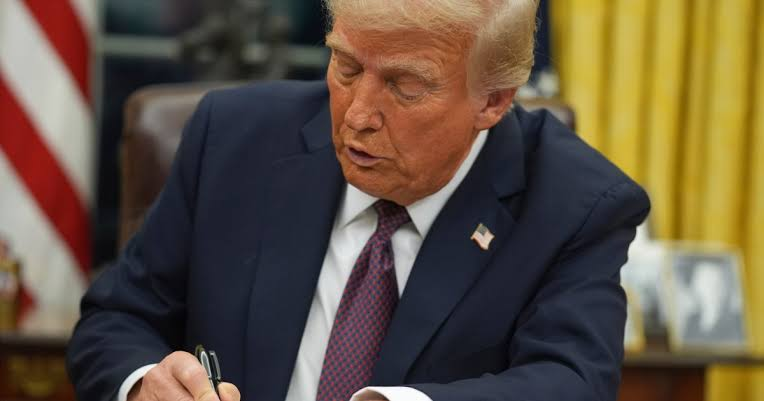
President Donald Trump has signed two executive orders aimed at narrowing who can automatically receive US citizenship at birth, reviving one of the most contentious issues in American immigration policy. The move comes weeks after the US Supreme Court rejected an earlier effort to restrict birthright citizenship, prompting the administration to pursue a narrower legal strategy.
The new orders target specific categories of births that the White House argues are not protected by the Citizenship Clause of the 14th Amendment. While administration officials say the measures close legal loopholes, constitutional scholars expect the orders to face immediate court challenges.
Here’s what the new executive orders say, who could be affected, and why the legal debate is far from settled.
What did Trump’s new executive orders change?
Unlike the broader executive order previously challenged in court, the latest directives focus on specific groups that the administration argues fall outside the scope of automatic birthright citizenship.
According to the White House, the orders target:
- Children born to foreign nationals who travel to the US primarily for “birth tourism.”
- Children born to foreign government employees stationed in the United States.
- Children of individuals classified under US law as “alien enemies.”
The administration argues that these categories do not qualify for citizenship protections under the 14th Amendment’s Citizenship Clause.
What is birthright citizenship?
Birthright citizenship is the legal principle that most people born on US soil automatically become US citizens.
The policy stems from the 14th Amendment, ratified in 1868, which states:
“All persons born or naturalized in the United States, and subject to the jurisdiction thereof, are citizens of the United States.”
For more than a century, courts have generally interpreted this language to grant citizenship to nearly all children born in the United States, regardless of their parents’ immigration status, with limited exceptions such as children of accredited foreign diplomats.
Why is the Trump administration focusing on “birth tourism”?
One of the executive orders specifically targets so-called birth tourism, in which foreign nationals travel to the United States to give birth so their child acquires US citizenship.
White House Deputy Chief of Staff Stephen Miller announced that the administration considers the practice effectively banned under the new order.
Supporters argue that birth tourism exploits US immigration laws, while critics contend that executive action cannot override constitutional protections established by the 14th Amendment.
Estimates cited by the administration have suggested that between 20,000 and 25,000 mothers traveled to the US for birth tourism during 2016-2017, although those figures remain debated.
Why are legal experts questioning the orders?
Many constitutional scholars believe the executive orders are likely to face immediate legal challenges.
Critics argue that:
- The Constitution, not the president, defines citizenship.
- Executive orders cannot alter constitutional rights.
- Previous Supreme Court decisions have broadly interpreted birthright citizenship protections.
Former Biden administration official Deborah Fleischaker told Reuters that the new orders appear to be another attempt to limit constitutional protections despite recent court rulings.
The administration, however, maintains that its orders address categories of individuals it believes are not covered by the Citizenship Clause.
What did the Supreme Court say previously?
The Supreme Court recently rejected an earlier Trump administration effort to broadly deny automatic citizenship to children born in the United States when neither parent was a US citizen or lawful permanent resident.
Following that ruling, Trump criticized the Court, arguing that the 14th Amendment was adopted after the Civil War with a different historical purpose, specifically to guarantee citizenship for formerly enslaved people and their descendants.
Legal scholars remain divided over whether that historical context changes the amendment’s modern application, but longstanding judicial precedent has generally favored broad birthright citizenship protections.
Could the executive orders affect US territories?
The White House has also indicated that the new policy framework could eventually affect birthright citizenship in certain US territories if Congress passes future legislation.
However, no automatic changes to citizenship in US territories occur solely because of these executive orders. Any broader changes would likely require congressional action and face additional legal scrutiny.
What happens next?
The executive orders are expected to face swift lawsuits from immigration advocacy groups, civil rights organizations, and constitutional law experts.
Courts will likely examine:
- Whether the president has authority to redefine citizenship through executive action.
- Whether the targeted categories fall outside the protections of the 14th Amendment.
- How existing Supreme Court precedents apply to the administration’s new legal approach.
The litigation could ultimately return the issue to the Supreme Court, setting the stage for another major constitutional battle over the scope of birthright citizenship.
TL;DR
President Donald Trump has signed two executive orders seeking to limit birthright citizenship for certain groups, including children born through alleged birth tourism, children of foreign government employees, and those born to individuals classified as alien enemies. The administration argues these categories are not protected by the 14th Amendment, while legal experts say the Constitution and existing Supreme Court precedent make the orders vulnerable to court challenges.