
The US Air Force is eliminating civilian staff positions at the China Aerospace Studies Institute, a government-run research organization that has spent years examining China’s military capabilities.
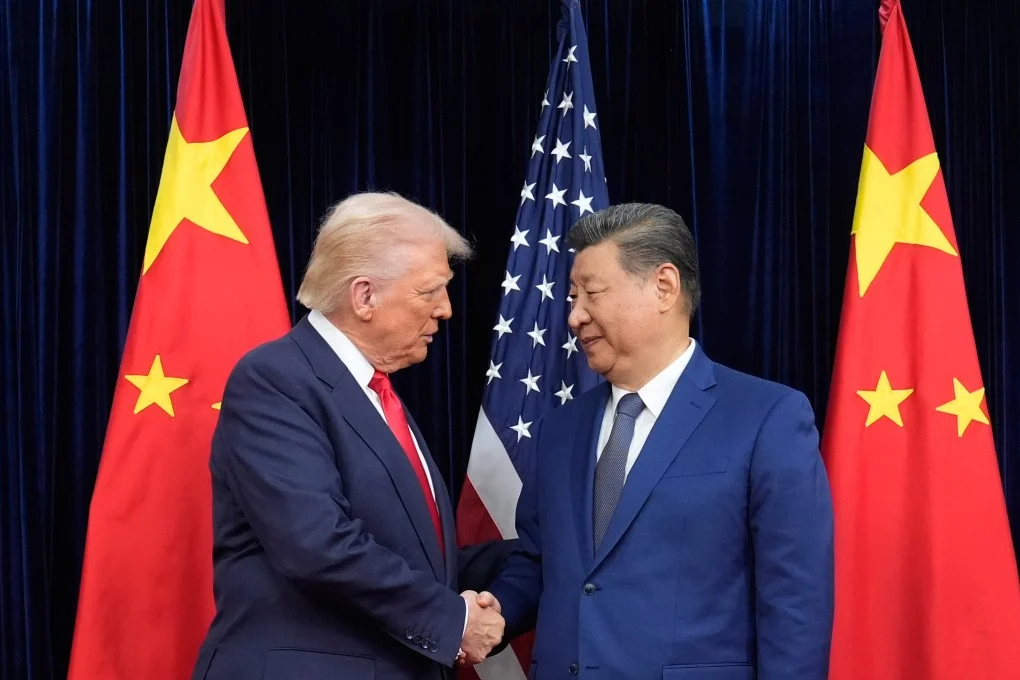
The decision comes just as Chinese President Xi Jinping is visiting Washington for talks with President Donald Trump, drawing attention because CASI has become a prominent US source of open-source research on China’s air, space, missile and cyber forces.
The status of the institute itself is less straightforward than the phrase “shuts down” suggests. An Air Force spokesperson initially said CASI’s mission would continue using military personnel, while CASI later said on its official account that Air University had decided to close the institute. The conflicting descriptions have left the organization’s precise future unclear.
What is happening to the China Aerospace Studies Institute?
CASI is based at Air University at Maxwell Air Force Base in Alabama and has operated since 2017 as a center focused on understanding China’s military and aerospace capabilities.
According to the Air Force, civilian employees assigned to CASI will no longer be funded as part of an ongoing civilian restructuring within Air Education and Training Command.
The affected employees were told that their positions would be defunded, but they were also informed that they would remain in their current jobs until further notice and could be considered for reassignment.
That means the immediate change concerns the institute’s civilian workforce rather than an overnight shutdown of every CASI activity.
Is CASI actually being closed?
This is where the story becomes complicated.
The Air Force initially told Breaking Defense that CASI would continue its mission by using assigned military personnel. The service therefore did not characterize the move as a closure.
But shortly afterward, CASI’s official X account posted a statement saying that Air University had decided to close the China Aerospace Studies Institute. Breaking Defense subsequently noted the discrepancy and said it had asked the Air Force for clarification.
CASI’s own account of the decision said that the institute would continue working through existing commitments for a period, while its civilian researchers and scholars would eventually need to seek positions elsewhere.
As a result, the most precise description at this stage is that CASI’s civilian research structure is being dismantled, while the question of whether the organization will survive in another form remains unsettled.
Who runs CASI and what does it study?
CASI operates under Air University and focuses on open-source analysis of China’s military.
Its research covers a broad range of subjects, including:
- China’s military aerospace capabilities
- The People’s Liberation Army Air Force
- Missile and rocket forces
- Military space operations
- Cyber and information warfare
- Artificial intelligence and military applications
- China’s defense-industrial base
Unlike classified intelligence organizations, CASI’s published work is generally based on publicly available information. Its reports are intended to help US military personnel, policymakers and researchers better understand how China’s armed forces are organized and how their capabilities are developing.
The institute’s own Air University archive shows that it continued publishing research throughout 2026, including work on China’s aerospace forces, space information systems, electronic warfare and other PLA developments.
Why has CASI become important?
China’s military has expanded rapidly across air, space, missile and naval domains, creating a large demand for specialized research inside the US defense establishment.
CASI developed a niche by concentrating specifically on China’s aerospace and military systems and by publishing detailed studies that could be read by both government personnel and the broader defense community.
Its researchers have examined subjects ranging from China’s hypersonic weapons and space warfare concepts to nuclear command structures and the country’s growing use of artificial intelligence.
The value of that model is that analysts can scrutinize Chinese-language publications, military documents, technical literature, satellite imagery and other publicly accessible material without relying solely on classified intelligence.
What has CASI published recently?
CASI’s recent work illustrates the breadth of its research.
A March 2026 study examined China’s People’s Liberation Army Rocket Force and the management of its nuclear warheads, including storage, movement, testing and security arrangements. The report focused on publicly available information and examined facilities associated with China’s nuclear infrastructure.
The institute also published research on Chinese military involvement in advanced technology and the links between Chinese defense institutions and foreign universities and companies.
Another recent study examined China’s military use of space-related technologies and the potential development of integrated sensor networks that could contribute to what military planners call a “kill web.”
These studies show why CASI became a significant source for researchers monitoring China’s military modernization.
What did CASI find about Western institutions and China?
One of the institute’s recent areas of research involved interactions between foreign universities, companies and Chinese defense-linked organizations.
A 2026 CASI study identified hundreds of interactions involving US institutions and Chinese defense-related laboratories and organizations over a multiyear period.
The report examined activities including conferences, research partnerships, joint laboratories, academic exchanges and published research.
CASI argued that some apparently routine academic or commercial connections could create opportunities for the exchange of expertise with potential military applications. Those findings are the institute’s analytical assessment and should not be treated as proof that every identified interaction involved improper technology transfer.
The report nonetheless illustrates the type of open-source defense research CASI has been producing.
What happens to CASI’s civilian researchers?
Under the Air Force’s initial description, civilian employees affected by the restructuring would remain in place temporarily while being evaluated for reassignment.
CASI’s subsequent statement painted a more consequential picture, saying the institute’s researchers and scholars would eventually have to look for other employment.
The institute also said it had enough completed work in its pipeline to continue publishing reports for some time.
A 10th-anniversary event planned for February 2027 was reportedly canceled.
That suggests the disruption could affect not just staffing but the institute’s long-term ability to operate as an independent research center.
Is this connected to Trump’s meeting with Xi?
The timing has inevitably attracted attention because the personnel decision comes during Xi’s visit to Washington.
However, there is no public evidence in the material available so far showing that the Air Force made the CASI staffing decision specifically because of the Trump-Xi summit.
The Air Force has described the move as part of a broader civilian restructuring within Air Education and Training Command.
That explanation should be distinguished from outside interpretations linking the development to a broader effort to reduce tensions with Beijing.
The timing is politically notable, but timing alone does not establish the reason for the decision.
Are other China-focused military institutes being affected?
CASI is not the only US military organization devoted to studying China’s armed forces.
The Navy operates the China Maritime Studies Institute at the US Naval War College, while the Army operates the China Landpower Studies Center at the US Army War College.
The Naval War College told Breaking Defense that it did not anticipate changes to the staffing or capacity of its China Maritime Studies Institute.
The status of the Army’s China Landpower Studies Center was less clear in the reporting available at the time.
That means the CASI changes do not automatically indicate that all China-focused research programs across the US military are being dismantled.
Why does the staffing issue matter?
The distinction between civilian researchers and military personnel is important.
Civilian analysts working in a research institute can develop specialized expertise over many years, publish long-form studies and build networks with universities, think tanks and other researchers.
Replacing that structure with a smaller military staff could change the institute’s research output, although the eventual effect would depend on how many personnel are assigned and what functions they are authorized to perform.
The Air Force says CASI’s mission will continue. CASI’s leadership, meanwhile, has indicated that the existing civilian research model is effectively ending.
The two positions describe very different futures for the organization.
What does this mean for US-China relations?
CASI’s fate is becoming part of a much larger debate over how Washington should study and manage China.
The United States continues to treat China as a major strategic competitor while simultaneously pursuing dialogue and economic agreements with Beijing.
That creates a complicated policy environment in which the US military must both understand Chinese capabilities and navigate efforts to manage bilateral tensions.
Whether the CASI decision reflects only an internal personnel restructuring or a broader shift in how Washington organizes China-related research will become clearer as the Air Force and Air University provide more information.
What happens next?
The immediate question is whether CASI will continue as a functioning research organization after its civilian positions disappear.
If the Air Force’s initial position prevails, the institute’s mission could continue under military personnel.
If CASI’s closure announcement reflects the final decision by Air University, the organization could instead wind down after completing existing commitments.
Either way, the disappearance of its civilian research structure would mark a substantial change for an institute that has spent nearly a decade producing publicly available analysis on China’s military.
For now, the facts point to a transition rather than a simple one-line closure story: civilian CASI positions are being eliminated, the Air Force says its mission will continue, and CASI says Air University has decided to close the institute.