
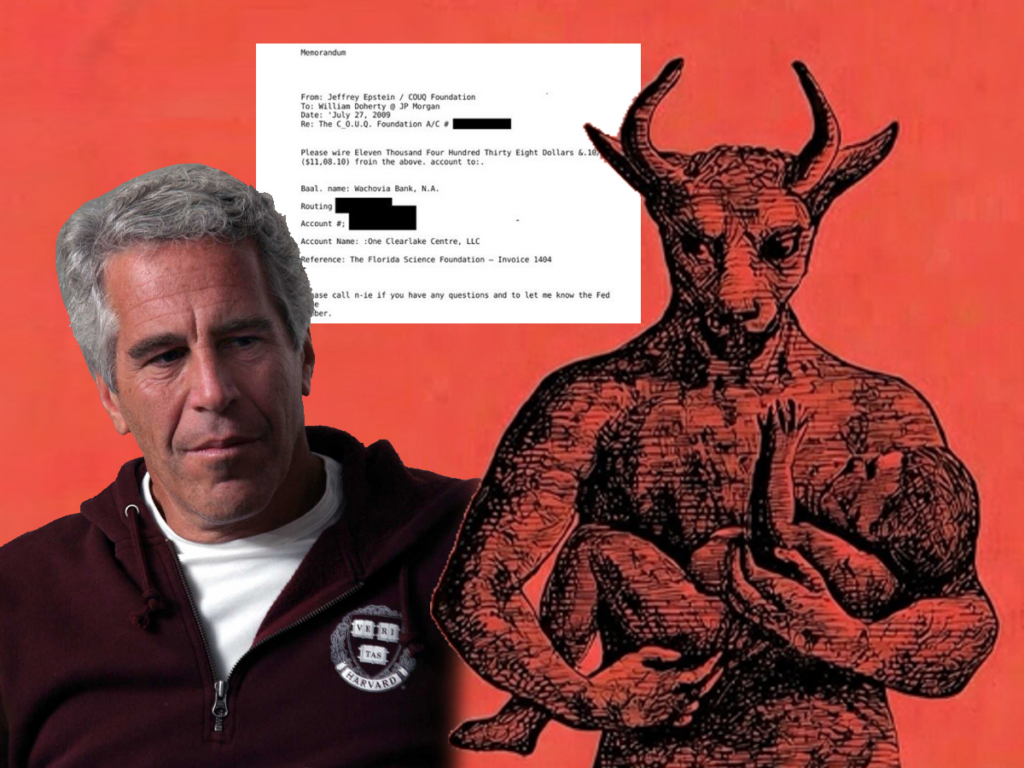
Within hours of a newly circulated document from the Epstein files, the Baal reference controversy, and social platforms filled with claims about cults, rituals, and hidden symbols. The viral image was a 2009 JPMorgan wire-transfer fax tied to Jeffrey Epstein.
The reason it spread so quickly was not the dollar amount or the recipient. It was one word: “Baal.”
Here’s what the document actually shows, why it raised legitimate banking questions, and how a likely clerical error turned into a global occult narrative.
What is the Epstein files Baal reference?
The viral document is an internal JPMorgan wire-transfer record connected to Jeffrey Epstein while he was a client of the bank.
A line in the memo appears to reference “Baal.”
Online users interpreted this as a religious or ritualistic signal.
The simpler explanation
Financial documents are full of shorthand fields. In banking records:
- “Bank” fields are often abbreviated
- Faxed copies distort characters
- OCR (optical character recognition) frequently misreads letters
“Baal” is widely believed to be a misread or typographical error for “Bank.”
A single mis-recognized character can convert:
| Intended text | OCR result |
|---|---|
| BANK | BAAL |
| BNK | BAAL |
| BAML (Bank of America Merrill Lynch) | BAAL |
This kind of transcription error is common in scanned legal filings. But context mattered. The Epstein case already lives in a climate of distrust.
So the internet filled in the gaps.
Why did the document raise real red flags?
The occult claims are shaky. The banking concerns are not.
The 2009 record indicates Epstein received manual handling for a transaction even after his conviction for procuring a minor.
Why does that matter in finance compliance?
Banks categorize clients by risk level. Convicted sex offenders typically trigger enhanced scrutiny.
Standard protocol
High-risk clients usually involve:
- Automated monitoring
- Escalated compliance review
- Restrictions on services
- Potential account termination
The memo suggests something different.
What regulators look for
Financial investigators typically ask:
- Why was the transaction manually approved?
- Who authorized the oversight?
- Was monitoring consistent with AML rules?
- Were Suspicious Activity Reports filed?
Public reporting has indicated JPMorgan filed suspicious activity alerts related to unusual payments years earlier, yet continued the relationship until 2013.
That gap is the actual story. Not ancient gods.
Who is Baal, and why did the internet connect it to Epstein?
Baal is a Canaanite deity referenced in ancient Near Eastern religion and the Hebrew Bible. Historically:
- Associated with storms and fertility
- Later demonized in Abrahamic traditions
- Linked in some texts to sacrificial rites
Once users recognized the name, they connected it to other long-running speculation surrounding Epstein.
The speculation ecosystem
Three pre-existing narratives collided:
- Epstein’s ties to wealthy elites
- The unusual architecture on Little St. James Island
- Unverified allegations circulating online
When the Baal reference appeared, it functioned like a spark landing on dry grass.
Not evidence. A catalyst.
Why the temple on Epstein’s island fuels theories
Photos of a blue-and-white domed building on Epstein’s private island have circulated for years.
Legal records describe:
- A room containing a piano
- Murals of constellations and mythological imagery
- A decorative dome structure
Architecturally unusual buildings often become symbolic anchors in conspiracy narratives. Humans interpret unfamiliar design as coded meaning, especially when trust is already broken.
How misinformation spreads from one ambiguous word
The Epstein files Baal reference followed a predictable viral pattern.
Step 1: Ambiguity
A document contains unclear text.
Step 2: Context vacuum
The case already has secrecy and institutional failure.
Step 3: Pattern seeking
People connect unrelated elements.
Step 4: Narrative consolidation
Influencers package speculation into certainty.
Step 5: Algorithmic amplification
Emotion outranks accuracy.
Why Epstein specifically accelerates rumors
Criminal cases involving abuse, wealth, and power create a unique credibility collapse. When institutions appear slow or opaque, audiences turn to alternative explanations. Not because they prefer conspiracy. Because they distrust official silence.
The real institutional questions worth asking
The document matters, just not for supernatural reasons.
Compliance accountability
- Why did the banking relationship continue after warnings?
- What controls failed?
- Did internal risk teams disagree with executives?
Regulatory oversight
- How aggressively did regulators audit the relationship?
- Were penalties proportionate?
Cultural issues inside financial institutions
This case illustrates a broader concern: reputation risk vs revenue incentives.
TL;DR
- The “Baal” in the wire transfer likely results from a scanning or typing error.
- The document still raises serious compliance questions about banking oversight.
- The occult theory spread because the Epstein case already eroded public trust.
- The important story is institutional accountability, not symbolism.
Why this episode matters beyond one document
The controversy shows how modern scandals evolve: Evidence gaps + public distrust + viral platforms = myth creation.
When institutions fail transparency tests, speculation becomes the public’s investigative tool. Sometimes that leads to breakthroughs. Other times it leads to digital folklore.
The Epstein files Baal reference sits squarely in the second category. The banking oversight questions, however, remain unresolved and worth scrutiny.