


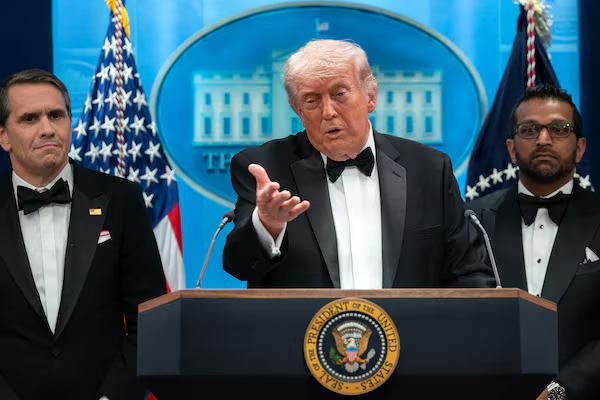
A shooting outside the annual White House Correspondents’ Association Dinner has triggered urgent questions about intent, security, and warning signs. At the center of the investigation is Cole Tomas Allen, whose alleged messages to family members before the attack are now a key focus for authorities trying to understand what led to the incident.
What did the suspect say in his message?
According to investigators, Allen sent a series of messages shortly before the shooting that combined apology, grievance, and intent.
The most striking elements of the message include:
- An opening apology to family members for “abusing their trust”
- A statement acknowledging he did not expect forgiveness
- Expressions of political anger directed at the current administration
- Indications that the act was premeditated rather than impulsive
In a separate message cited by officials, the suspect reportedly referred to himself using a self-styled moniker and reiterated anti-administration views.
Why this message matters
For investigators, pre-attack communications often serve as a roadmap to motive. In this case, the language suggests:
- Awareness of wrongdoing
- Emotional detachment or resignation
- A desire to justify actions through ideology
These elements are frequently examined in threat assessments to determine whether an attack was driven by personal grievance, political extremism, or a combination of both.
How did the White House dinner shooting unfold?
The incident occurred near the venue hosting the White House Correspondents’ Association Dinner, one of Washington’s most high-profile gatherings attended by journalists, government officials, and the U.S. president.
Sequence of events
- The suspect arrived in Washington after traveling from California via Chicago
- He checked into a hotel linked to the event
- On the night of April 25, he allegedly attempted to breach the security perimeter
- Shots were fired, striking a Secret Service agent
The agent, protected by a bulletproof vest, survived the attack. The suspect was quickly apprehended, and security teams moved high-profile attendees, including Donald Trump, to safety.
What do authorities say about motive?
Officials have not confirmed a definitive motive but say early findings point toward political targeting.
Statements from law enforcement indicate:
- The suspect may have intended to target members of the administration
- Messages referenced grievances related to government policies
- Social media activity is being reviewed for ideological patterns
The case is being treated as a serious federal offense, with multiple charges already filed, including assault on a federal officer.
A developing profile
Investigators are also piecing together behavioral patterns leading up to the incident. According to family accounts shared with authorities:
- The suspect had shown signs of increasing radicalization
- He was actively engaged in political discourse and activism
- He had acquired firearms and practiced regularly
These details are critical in determining whether there were missed warning signs.
What charges is the suspect facing?
Prosecutors have outlined initial charges that reflect the severity of the incident.
These include:
- Two counts related to firearm use
- One count of assault on a federal officer with a dangerous weapon
Officials have also noted that the suspect is currently not cooperating with investigators, which may complicate efforts to establish a clear motive.
Why pre-attack warnings are often missed
Cases like this raise a recurring question: could the attack have been prevented?
While hindsight can make warning signs appear obvious, real-time intervention is far more complex.
Common challenges
- Volume of signals: Many individuals express extreme views without acting on them
- Privacy boundaries: Authorities cannot act without credible, immediate threats
- Fragmented information: Clues are often spread across personal messages, social media, and offline behavior
In this case, the suspect’s messages were sent shortly before the attack, leaving little time for intervention.
The broader security implications
The incident underscores the persistent challenge of securing high-profile public events, even with layered protection.
What worked
- Rapid response by security personnel
- Protective equipment preventing fatalities
- Immediate lockdown protocols
What’s under review
- Perimeter breach vulnerabilities
- Pre-event screening procedures
- Intelligence-sharing mechanisms
Expect security protocols around major political events to tighten further in the aftermath.
The role of rhetoric and radicalization
Although the investigation is ongoing, the case highlights how personal grievances can intersect with political narratives.
Experts often point to a pattern where:
- Individuals internalize political or ideological frustrations
- These frustrations evolve into perceived personal missions
- Online and offline reinforcement amplifies extreme views
However, it’s important to distinguish between strong political opinions and the rare cases where individuals turn to violence.
TL;DR
- The suspect in the White House dinner shooting allegedly sent apologetic but politically charged messages before the attack
- The messages suggest premeditation and ideological motivation
- A Secret Service agent was injured but survived due to protective gear
- Authorities are still investigating the exact motive
- The case raises questions about missed warning signs and event security