
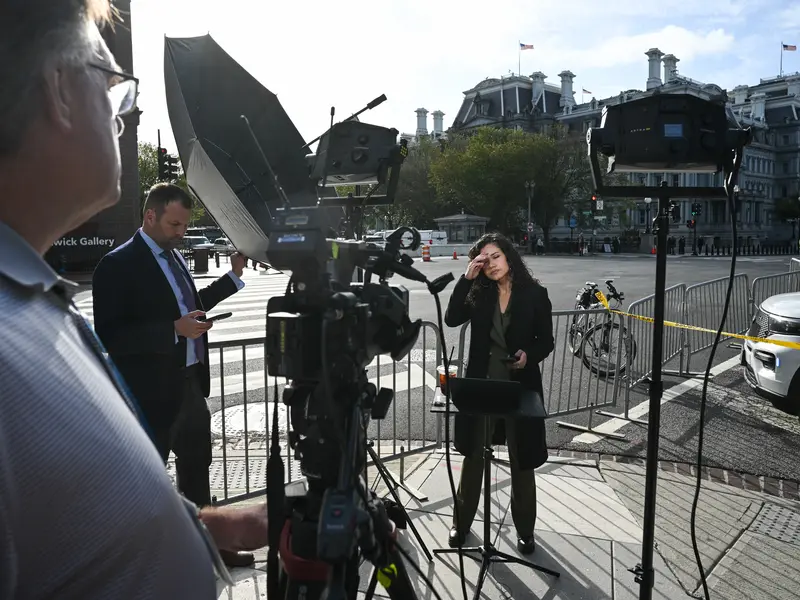
Reporters from CNN, MS NOW and Politico were turned away from the White House on Thursday, September 24, despite a federal judge ordering the Trump administration to restore their press credentials.
The three news organizations said their journalists were denied entry when they attempted to return to the White House grounds hours after US District Judge Timothy Kelly issued a temporary restraining order requiring the administration to immediately reinstate their access.
The outlets subsequently asked the court for an emergency hearing, arguing that the administration had not complied with the order. CNN’s role was especially significant that day because the network was scheduled to handle television pool coverage of President Donald Trump’s meeting with Chinese President Xi Jinping.
The dispute has rapidly escalated from a fight between the White House and three news organizations into a court battle over how the government can regulate press access.
What happened at the White House on Thursday?
Journalists from CNN, MS NOW and Politico attempted to enter the White House after Judge Kelly’s ruling was issued.
According to a joint court filing from the three organizations, reporters from each outlet were turned away at the complex.
The filing said: “This morning journalists from each of CNN, MS NOW, and Politico attempted to enter the White House and were turned away.”
The organizations then returned to federal court and asked Kelly to intervene immediately.
The White House’s refusal to admit the reporters came only hours after the judge had ordered the administration to restore their credentials for 14 days.
What did Judge Timothy Kelly order?
Judge Kelly issued a temporary restraining order early Thursday morning in the lawsuit brought by CNN, MS NOW and Politico.
The order directs the administration and the other named government defendants to “immediately return, reinstate, and restore” the journalists’ White House hard-pass credentials.
The temporary order is scheduled to remain in effect for 14 days unless the court changes it.
Kelly said the administration’s decision to revoke the credentials likely violated the journalists’ constitutional due-process rights. His ruling focused on the absence of adequate notice and an opportunity for the affected journalists to challenge the government’s decision before their access was taken away.
The judge’s order did not represent a final ruling on the broader First Amendment dispute. It temporarily restored access while the case proceeds.
Why did Trump ban the three outlets?
Trump announced the ban on September 18 through a post on Truth Social.
He accused CNN, MS NOW and Politico of repeatedly publishing what he described as “fake news” and said their access to the White House would end immediately.
Trump also suggested that additional news organizations could face similar restrictions.
The following day, journalists from the three outlets reported that their White House credentials had been deactivated. Reporters were turned away and some press passes were confiscated.
The administration defended the decision by arguing that access to the White House is a privilege rather than a constitutional right to a particular physical location.
What did CNN, MS NOW and Politico argue in court?
The three outlets filed a federal lawsuit on September 21 challenging the administration’s decision.
They argued that the ban violated the First Amendment’s protections for freedom of the press and the Fifth Amendment’s guarantee of due process.
Their legal case focuses in part on the claim that the government retaliated against them because of the content of their reporting.
The White House rejected that characterization and argued that the First Amendment protects the outlets’ ability to publish but does not guarantee them a hard pass, a seat in the briefing room or a place in the White House press pool.
The case was assigned to Kelly, who also handled CNN correspondent Jim Acosta’s 2018 legal dispute over White House press access.
What did the judge say about due process?
Kelly’s ruling centered on the government’s process for taking away the journalists’ credentials.
The judge cited the general constitutional principle that people must receive notice and an opportunity to be heard before the government deprives them of a constitutionally protected interest.
Kelly concluded that the outlets had presented enough evidence at this stage to show that the credential revocations likely failed to provide the required process.
The ruling is temporary, meaning it does not settle every question raised by the lawsuit.
It does, however, require the administration to restore access while the legal dispute continues.
Why were reporters still blocked after the order?
That is now the central question before the court.
CNN, MS NOW and Politico argue that turning their reporters away after the order amounted to noncompliance with the judge’s directive.
The administration may have a different interpretation of how the order applies to physical entry and credential processing, but the public record on Thursday showed that the journalists were not permitted to enter.
The outlets therefore sought immediate judicial intervention rather than waiting for the normal litigation schedule.
Judge Kelly directed the administration to respond to the allegations of noncompliance by 12:30 p.m. ET, according to Axios.
Why was CNN’s pool assignment important?
CNN was scheduled to participate in the White House television pool covering Trump.
The White House press pool exists because it is often impossible for every news organization to send reporters and cameras into every presidential event. A smaller group covers the event and distributes material to other outlets.
CNN’s exclusion therefore affected more than the network’s own reporting.
Earlier in the week, other major television networks announced that they would suspend pool coverage in solidarity after CNN was prevented from carrying out its assigned duties.
The dispute consequently created an unusual situation in which the administration’s decision regarding one outlet affected the way multiple organizations covered the president.
How did other news organizations respond?
The fight quickly spread beyond the three organizations directly affected.
ABC, CBS, Fox News and NBC were among the major television networks that halted participation in pooled television coverage after CNN was excluded from its scheduled assignment.
The decision meant there was no replacement pool covering some presidential events.
The broader media response reflected concerns that changing access rules for one organization could affect the entire system through which the White House press corps shares coverage.
The Associated Press and other organizations also expressed support for the legal challenge brought by the three outlets.
What does the case say about White House press access?
The legal dispute raises a complicated distinction between general press freedom and access to a particular government facility.
The White House argues that reporters do not have an unrestricted right to enter the complex simply because they work for a news organization.
The three outlets argue that the government cannot selectively remove journalists because officials dislike their reporting.
That distinction is now being examined in federal court.
The legal question is not simply whether reporters can publish stories about the president. It also concerns whether government officials can control access to government-controlled spaces in a way that depends on the viewpoint or content of the journalists’ work.
Has Trump had disputes over press access before?
Yes.
Trump’s administration has had several legal and political confrontations with news organizations over access during both of his presidential terms.
The current case also echoes the 2018 dispute involving CNN’s Jim Acosta, whose White House credential was temporarily revoked after a confrontation with Trump during a news conference.
Judge Kelly was involved in that earlier case and issued a temporary order restoring Acosta’s access.
That history became a point of discussion when the current lawsuit was assigned to Kelly.
Why is the First Amendment central to the case?
The First Amendment prevents the government from making laws that abridge freedom of speech or freedom of the press.
The three organizations contend that the administration’s ban was connected to its objections to their reporting, which they say makes the decision constitutionally problematic.
The Trump administration disputes that interpretation and says the outlets remain free to publish their coverage even if they are not granted physical access to the White House.
Kelly’s Thursday order did not finally decide the First Amendment question. Instead, his immediate ruling focused heavily on due process and the circumstances under which the credentials were revoked.
What is the Fifth Amendment issue?
The Fifth Amendment’s due-process protections generally require the federal government to follow appropriate procedures before depriving a person of certain protected interests.
Kelly’s order found that the plaintiffs had shown a likely problem with that process.
The core issue was whether the reporters were given adequate notice and a meaningful opportunity to contest the loss of their credentials before the government acted.
That question is separate from whether the underlying press-access policy itself violates the First Amendment.
Both constitutional issues are now part of the broader lawsuit.
Does the ruling mean the reporters can stay inside the White House indefinitely?
No.
The order is temporary and lasts for 14 days unless modified by the court.
It is intended to preserve access while the court considers the case further.
The administration can continue to challenge the order through the legal process, including by seeking further relief from higher courts.
The Thursday confrontation is therefore another stage in an ongoing case rather than the final resolution of the dispute.
Why does the timing matter?
The confrontation occurred on the same day Xi Jinping was scheduled to meet Trump at the White House.
The timing increased the practical importance of the access dispute because presidential events involving a foreign head of state generate extensive media coverage.
The White House television pool was also under pressure because CNN had been scheduled for coverage duties.
The combination of a major diplomatic event and a court order restoring access created an unusually visible test of whether the administration would implement the judge’s ruling immediately.
What is the White House’s position?
The administration has argued that White House access is controlled by the executive branch and that journalists are not automatically entitled to physical access to every presidential event.
It has also said the First Amendment protects the right to publish but does not guarantee a hard pass or a particular place within the White House press operation.
The administration’s lawyers defended the original exclusion in court before Kelly issued his temporary restraining order.
The White House now faces the additional legal issue of explaining why the reporters were still turned away after the judge ordered their credentials restored.
What are the media organizations seeking?
CNN, MS NOW and Politico are asking the court to enforce Kelly’s order and restore their reporters’ ability to enter the White House.
They have also asked for expedited consideration because presidential events occur continuously and missed access cannot always be recovered later.
Their argument is that a temporary legal victory has limited practical value if journalists remain physically barred from performing their jobs.
The administration, meanwhile, can continue defending its underlying position through the federal court process.
Could the case affect other media organizations?
The outcome could have implications beyond the three organizations involved.
The White House press corps operates under a system in which access decisions can affect how journalists cover presidential events and how information is distributed to the public.
If a government can remove a particular organization from that system based on its reporting, other outlets could potentially face similar decisions in the future.
That is one reason press organizations and First Amendment groups have closely followed the case.
The court’s eventual interpretation could help define the boundaries between presidential control over access and constitutional protections for the press.
What happens next?
The immediate issue is the administration’s response to the allegation that it failed to comply with Kelly’s order.
The three outlets have asked for an emergency hearing, while the judge has sought an explanation from the administration.
The broader lawsuit will continue beyond that immediate dispute.
For CNN, MS NOW and Politico, the case is about restoring access and challenging the government’s authority to exclude their journalists.
For the Trump administration, the case concerns the extent to which the White House can determine who receives access to presidential facilities and under what conditions.
The Thursday confrontation has therefore added a new layer to an already contentious legal battle: a federal judge ordered the credentials restored, but reporters from the three organizations said they were still turned away.
The court’s response to that alleged noncompliance could become the next major development in the case.