
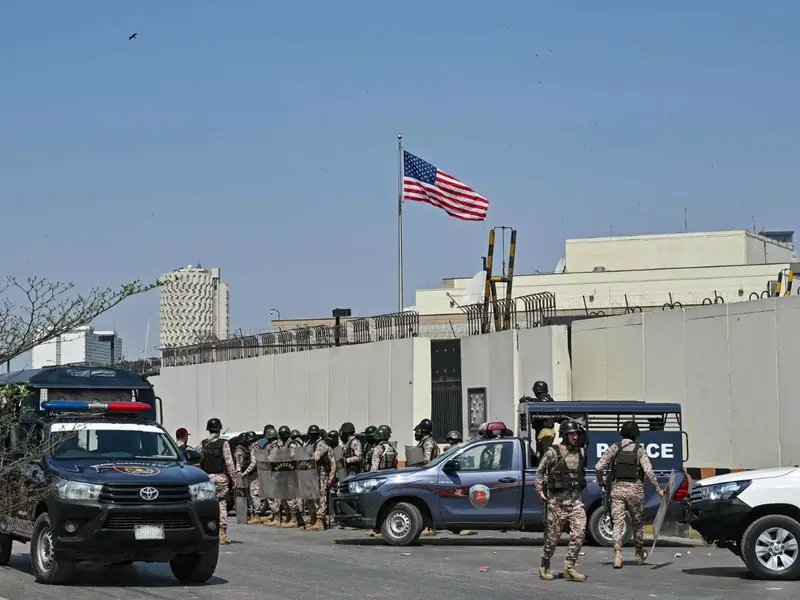
The decision by the United States to close its consulate in Peshawar has raised questions about security, diplomacy, and regional stability. While the move may appear sudden, it reflects long-standing concerns about safety in one of Pakistan’s most volatile regions.
What Is the Official Reason for Closing the Peshawar Consulate?
The United States Department of State cited security concerns for diplomatic personnel as the primary reason.
In its statement, the department emphasized:
- The safety of US diplomats remains the top priority
- The closure is tied to evolving security conditions
- It is also part of broader “efficient resource management.”
Importantly, this is not a complete withdrawal from the region. The US clarified the following:
- The U.S. Embassy in Islamabad will now oversee engagement in the province
- Policy priorities in Pakistan remain unchanged
Why Is Peshawar Considered a High-Risk Location?
Proximity to Conflict Zones
Peshawar sits near the Afghanistan border, making it strategically important—but also highly unstable.
The broader Khyber Pakhtunkhwa region has:
- Seen repeated militant activity
- Experienced cross-border tensions
- Been a hotspot for insurgent groups
Rising Violence and Militancy
Recent years have seen the following:
- Increased attacks targeting security forces
- Clashes between Pakistani forces and militant groups
- Allegations by Pakistan of Afghan-based militants operating across the border
These dynamics create a difficult environment for foreign missions, which are often high-profile targets.
Anti-US Sentiment and Protests
There have also been protests tied to broader geopolitical tensions, including demonstrations outside US facilities in Karachi.
Such protests, especially during periods of heightened regional conflict, can escalate quickly and pose risks to diplomatic staff.
Is This a Complete US Exit From the Region?
No. The US is not leaving Pakistan or even the region—it is restructuring how it operates.
What Changes:
- Physical consulate operations in Peshawar will cease
- Diplomatic work for the region will shift to Islamabad
What Stays the Same:
- Engagement with local officials in Khyber Pakhtunkhwa
- Economic and security cooperation
- Broader US-Pakistan diplomatic ties
Other US diplomatic posts in:
- Islamabad
- Karachi
- Lahore
will continue functioning as usual.
Why Now? Understanding the Timing
The timing of the closure is tied to a combination of factors:
1. Deteriorating Security Conditions
An uptick in militant violence in Khyber Pakhtunkhwa has increased risks for foreign personnel.
2. Regional Instability
The broader region—including Afghanistan and tensions involving Iran—has created a more unpredictable security environment.
3. Diplomatic Risk Management
Modern diplomacy increasingly favors the following:
- Centralized operations in safer cities
- Reduced physical footprint in high-risk zones
- Greater reliance on remote engagement
What Does This Mean for US-Pakistan Relations?
Despite the closure, the move does not signal a breakdown in relations.
Continued Strategic Interests
The US remains invested in:
- Counterterrorism cooperation
- Regional stability
- Economic engagement
Symbolic vs Practical Impact
- Symbolically, closing a consulate may suggest caution
- Practically, diplomatic work continues through other channels
This is more about how diplomacy is conducted, not whether it continues.
A Broader Trend: Diplomacy in High-Risk Regions
The closure fits into a wider global pattern.
Embassies and Consulates Are Adapting
Countries increasingly:
- Consolidate operations in safer locations
- Limit staff exposure in conflict-prone areas
- Use technology to maintain diplomatic contact
Security First Approach
Incidents in past decades have reshaped diplomatic strategy, making personnel safety non-negotiable.
TL;DR
- The US shut its Peshawar consulate due to security risks.
- Rising militancy in Khyber Pakhtunkhwa is a key factor.
- The US is not leaving Pakistan—operations are shifting to Islamabad.
- Diplomatic engagement with the region will continue remotely.
- The move reflects a broader global trend toward safer, centralized diplomacy.
The Bottom Line
The closure of the consulate in Peshawar is less about retreat and more about recalibration. For the US, it’s a practical decision shaped by security realities on the ground.
For observers, it’s a reminder that diplomacy today isn’t just about presence—it’s about balancing influence with safety in an increasingly complex world.