
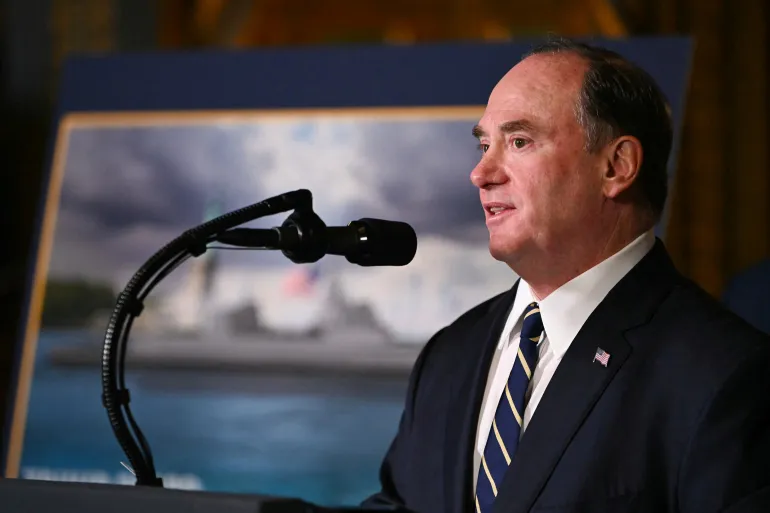
The sudden firing of John Phelan has exposed a deeper power struggle inside the Pentagon, one that goes beyond routine leadership changes. What initially appeared to be a standard reshuffle is now being viewed as part of a broader effort by the United States Department of Defense to tighten control, accelerate reforms, and align leadership during a period of geopolitical strain.
At the center of the fallout: clashes over modernization, command authority, and even constitutional limits.
What led to John Phelan’s firing?
Officials describe the decision as the result of mounting frustrations with Phelan’s leadership, particularly his handling of naval modernization efforts.
Slow progress on critical reforms
One of the biggest concerns was the pace of reform within the Navy, especially in shipbuilding and force readiness.
- Phelan was seen as moving too slowly on expanding ship production
- Efforts to modernize fleet capabilities reportedly stalled
- Pentagon leadership pushed for faster, more aggressive changes
In a military increasingly focused on competition in regions like the Indo-Pacific and the Middle East, delays in modernization are not just bureaucratic issues, they are strategic risks.
Breakdown in chain of command
Another major issue was Phelan’s reported deviation from established decision-making structures.
- Officials claimed he did not consistently follow the chain of command
- Key decisions were allegedly not routed through senior leadership
- This created friction with top defense officials
In a system where hierarchy is foundational, even small deviations can escalate into major conflicts.
How did tensions with Pete Hegseth and Steve Feinberg escalate?
The friction between John Phelan and Defense Secretary Pete Hegseth had reportedly been building for months, with Deputy Secretary Steve Feinberg also involved in the dispute.
A leadership style mismatch
At its core, the conflict appears to have been about approach:
- Hegseth pushed for rapid transformation and stricter alignment
- Phelan was viewed as more cautious and resistant to sweeping changes
This difference in tempo created a widening gap in expectations.
The breaking point
According to officials, the situation reached a tipping point when:
- Leadership lost confidence in Phelan’s ability to execute reforms
- Internal disagreements became increasingly public and difficult to manage
- A decision was made that a leadership change was necessary
Ultimately, both Hegseth and Donald Trump backed the move, signaling unified support at the highest levels.
Did a legal dispute play a role?
Yes, and it may have intensified the fallout.
The Mark Kelly controversy
A key flashpoint reportedly involved Mark Kelly, a former astronaut and Navy veteran.
- Kelly had posted a video reminding military personnel of their duty not to follow unlawful orders
- Discussions emerged within defense circles about potential disciplinary action
- A federal judge reportedly ruled that punishing him would violate First Amendment protections
Phelan is said to have resisted any move that would ignore the ruling.
Why this mattered
This dispute went beyond a single incident. It touched on:
- Civil-military boundaries
- Constitutional limits on military authority
- The role of legal compliance in defense decisions
For Pentagon leadership, this disagreement appears to have deepened concerns about alignment and decision-making.
How does this fit into a broader Pentagon shake-up?
Phelan’s removal is not an isolated event. It is part of a wider pattern of leadership changes across the defense establishment.
A wave of high-level dismissals
Recent weeks have seen multiple senior officials replaced, including:
- Top military commanders
- Senior Pentagon leadership figures
- Key strategic decision-makers
These moves suggest a coordinated effort to reshape leadership.
What is driving the shake-up?
Several factors are likely at play:
- Ongoing tensions related to Iran and the Strait of Hormuz
- Pressure to modernize military capabilities rapidly
- A push for tighter control and clearer command structures
Who is replacing John Phelan?
Following his dismissal, Undersecretary Hung Cao has been named acting Navy secretary.
This interim appointment ensures continuity while the administration likely searches for a permanent replacement aligned with its priorities.
Why does this matter for the US Navy?
Leadership changes at this level can have immediate and long-term implications.
Operational impact
- Strategic priorities may shift quickly
- Ongoing projects, including shipbuilding, could be accelerated
- Internal culture and decision-making processes may change
Strategic implications
The Navy plays a central role in:
- Securing global shipping routes
- Deterring adversaries in key regions
- Supporting broader US military strategy
Any disruption or realignment at the top can influence how effectively those roles are carried out.
What should readers take away?
The firing of John Phelan reflects more than a personnel change. It highlights a Pentagon under pressure, where disagreements over speed, authority, and legality can determine careers.
It also underscores a recurring theme in government: leadership is not just about policy, but about alignment. When that alignment breaks, even high-ranking officials can find themselves out of step and out of a job.
TL;DR
- John Phelan was fired as US Navy Secretary amid internal Pentagon tensions
- Key issues included slow reform progress and chain-of-command concerns
- Clashes with Pete Hegseth and Steve Feinberg escalated over time
- A legal dispute involving Senator Mark Kelly added to the friction
- The move is part of a broader Pentagon leadership shake-up
- Hung Cao has been appointed acting Navy secretary