
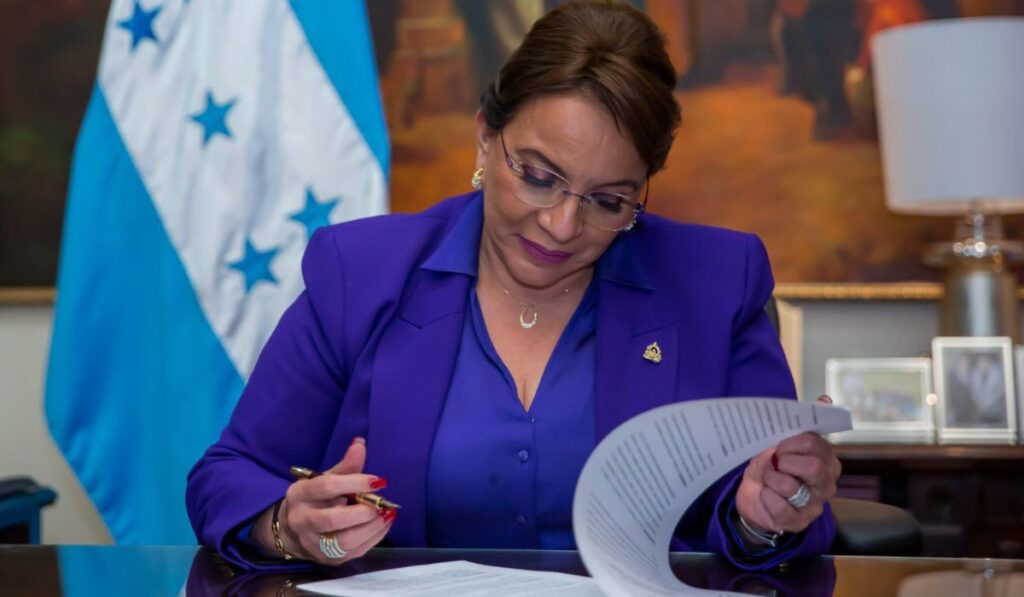


For 13 years, the morning-after pill was illegal in Honduras, but President Xiomara Castro has lifted the much-criticized restriction in a historic move. She is the country’s first female president, and she made the shift by executive order on International Women’s Day.
“Today 8 March commemorates women’s historic struggle,” President Castro tweeted. “I am signing the Executive Order for the universal use of the morning-after pill.” Later “The World Health Organization (WHO) determined that it is part of the reproductive rights of women and is not abortive,” Castro added.
Castro vowed to amend Honduras’ stringent reproductive rights laws after taking government in 2022. Following a coup in 2009, the morning-after pill was outlawed in Honduras. The country is predominantly Catholic, and the emergency pill was outlawed following the overthrow of Xiomara Castro’s husband, then-President Manuel Zelaya. But, in December of last year, feminist groups in the country battled to get the pill legalized, and as a result, it was only approved for rape victims.
Health secretary told BBC last year that they will never change their stance
Honduran health secretary Jose Manuel Matheu told the BBC in July 2022 that the country’s attitude on the subject will never change.
“We are not going to promote the morning-after pill as contraception,” he had declared, adding that doing so would lead to “sexual debauchery”. His usage of the term “desenfreno sexual” (sexual debauchery) went viral, with people criticizing him for using such a word.
Abortion is currently prohibited for everyone in Honduras and is punished by up to six years in prison. Even in cases of rape or incest, it is prohibited. According to the UN, between 51,000 and 82,000 unsafe abortions are conducted in Honduras each year.