
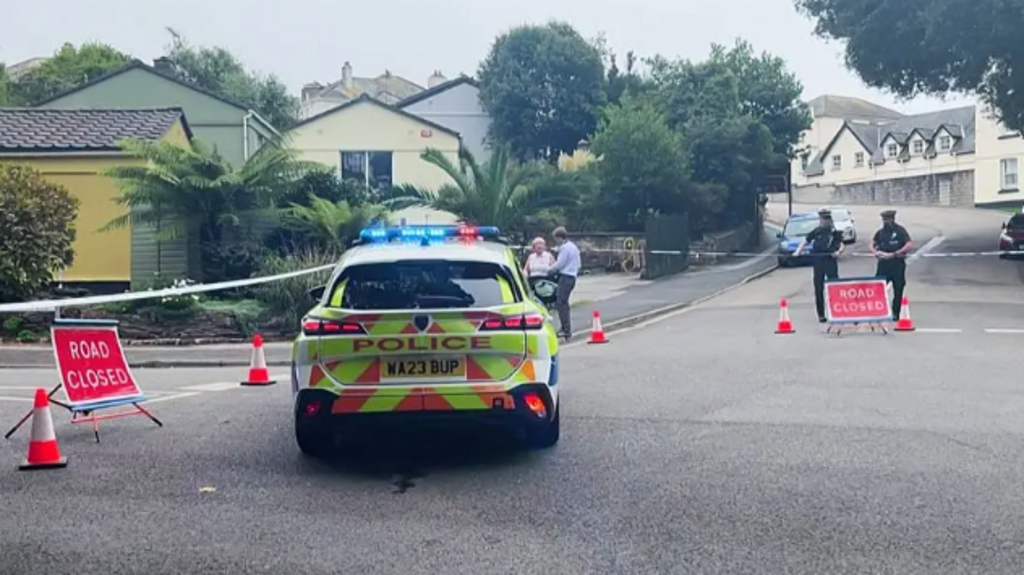
A World War II bomb discovered in the waters near Falmouth Docks triggered a major evacuation on Wednesday, forcing about 2,000 residents to leave their homes while Royal Navy bomb-disposal specialists worked to remove the device safely.
The suspected 250-pound (115kg) American air-dropped bomb was discovered in the water near Falmouth Docks on Monday, September 21. Police and emergency services initially imposed a 300-meter exclusion zone before military specialists advised a wider area would be needed for the operation.
By Wednesday afternoon, the device had been safely moved away from the docks, the evacuation cordon was lifted, and residents were told they could return home. Cornwall authorities said the bomb would be disposed of in deep water away from the shoreline.
How was the World War II bomb discovered in Falmouth?
The unexploded ordnance was discovered by a diver in the waters off the Falmouth area.
The discovery was reported to Falmouth Coastguard, triggering a coordinated response involving police, local authorities and military specialists.
Because the device was located close to the docks and populated parts of the town, authorities immediately established a safety cordon around the area.
The device was later assessed and identified as a suspected American air-dropped bomb dating from World War II.
Why were 2,000 people evacuated?
The main concern was the potential danger posed by moving or disposing of a large unexploded wartime bomb.
Authorities initially imposed a 300-meter exclusion zone around the discovery site. Military bomb-disposal specialists then assessed the operation and concluded that a larger area would be required before they could safely proceed.
Cornwall Council initially warned that the cordon could eventually extend to 1,400 metres and potentially affect as many as 1,309 households.
That estimate was later substantially reduced. Following further advice from military specialists, the planned exclusion zone was cut to approximately 755 meters, covering an estimated 339 households.
The evacuation was required because bomb-disposal teams could not proceed until they were satisfied that residents within the affected area had left.
What did residents have to do?
People living inside the 755-metre zone were instructed to leave their homes by 9 a.m. on Wednesday.
Police officers and other emergency personnel went through the affected area to assist residents and make sure they understood the evacuation instructions.
Cornwall Council established reception facilities for people who did not have another place to stay. Residents who needed assistance leaving their properties were told to notify emergency services.
Officials also advised people not to return to the cordoned area for essential items unless they had been given permission to do so.
The evacuation affected homes, businesses and other properties within the designated safety zone.
Who handled the bomb?
Royal Navy bomb-disposal specialists from Bravo Squadron were brought in to assess the device and determine the safest way to deal with it.
Bravo Squadron specializes in dealing with unexploded ordnance found in British coastal waters, ports and other maritime environments.
The unit combines specialist diving capabilities with explosives expertise, allowing its personnel to investigate and move dangerous wartime devices beneath the water.
Lieutenant Commander Benjamin Brown, the squadron’s commanding officer, said the bomb was on the larger side of the type his team normally encounters, although specialists had previously dealt with substantially larger devices.
The Royal Navy considered several possible disposal methods, including a controlled explosion, before determining the safest way to move the bomb away from the populated area.
How was the bomb ultimately dealt with?
By Wednesday afternoon, the bomb had been towed away from Falmouth Docks toward an offshore exclusion area in Falmouth Bay.
The operation required close coordination between military personnel, police, boats and other emergency services.
Once the bomb had been moved away from the docks, authorities lifted the cordon and residents were allowed to return.
Cornwall Council said the device would be disposed of in deep water well away from the shore, meaning members of the public were not expected to witness a demolition from land.
The successful removal brought an end to the emergency operation that had disrupted much of the town for several days.
Why does a bomb from World War II remain dangerous?
Unexploded bombs can remain hazardous decades after they were dropped.
While their age can affect their condition, it does not automatically make them safe. Explosives and mechanical components can deteriorate unpredictably, while the device may still contain material capable of detonating.
For that reason, specialists generally treat unexploded wartime ordnance as potentially dangerous until it has been properly assessed.
The difficulty increases when such devices are found underwater, because divers have to work in a challenging environment while also dealing with tides, visibility and the movement of the device.
Why was the exclusion zone changed from 1,400 meters to 755 meters?
The difference came from further technical assessment.
Cornwall Council initially prepared for a potential 1,400-meter cordon based on early military advice. That would have affected a much larger section of Falmouth and potentially more than 1,300 households.
After specialists carried out additional analysis, however, the expected exclusion zone was reduced to 755 meters.
The final plan affected around 339 households.
The change meant fewer residents had to leave their homes while still giving bomb-disposal teams the safety margin they believed was necessary.
Did the incident affect trains and roads?
Yes.
The emergency operation caused significant disruption to transport around Falmouth.
Great Western Railway suspended services between Falmouth Town and Falmouth Docks from Wednesday morning because the railway line fell within the safety arrangements associated with the bomb operation.
No trains or replacement buses were able to operate between those two stations while the restrictions were in place.
Services between Truro and Falmouth Town continued on a reduced basis, while local road restrictions also affected bus routes in the area.
GWR said services would resume once the bomb had been safely removed and the emergency restrictions lifted.
How did authorities support evacuated residents?
Cornwall Council prepared reception centers for people who needed somewhere to go during the evacuation.
All Saints Church on Killigrew Street was designated as one of the places residents could use for assistance.
Emergency teams also provided support to people who needed help leaving their homes, including those with mobility or other practical difficulties.
The council asked residents to take essential medication, medical equipment, phones, chargers and other necessities, while avoiding delays caused by collecting non-essential belongings.
Authorities repeatedly emphasized that people should follow instructions from police rather than attempting to re-enter the restricted area on their own.
Why are unexploded bombs still found in UK towns?
Large parts of Britain were targeted during World War II, leaving unexploded ordnance in urban areas, ports, rivers and coastal waters.
Falmouth’s location makes the discovery particularly understandable from a historical perspective. The town and its harbor had strategic importance during the war, making the surrounding area a potential target.
Many unexploded devices are discovered accidentally decades later during construction, dredging, diving, excavation or other work.
The discovery of the Falmouth bomb therefore reflects a problem that has not entirely disappeared with the passage of time.
Was this the first large bomb disposal operation in southwest England?
No.
Royal Navy bomb-disposal teams regularly respond to discoveries of wartime ordnance across southwest England, particularly around coastal areas and naval facilities.
The region has seen several major operations involving unexploded bombs in recent years.
In one notable 2024 case, Royal Navy divers helped deal with a 500kg World War II bomb discovered in Plymouth. That operation required a major military and civilian response before the device could be safely removed.
The existence of such specialist teams is particularly important for coastal communities where wartime ordnance can remain buried or submerged for decades.
Why was the Falmouth operation considered sensitive?
The challenge was not simply the size of the bomb.
Its location in the water near a busy dock and populated areas meant that any attempt to move or dispose of it had to account for the surrounding community, marine traffic and infrastructure.
That required the authorities to balance two competing needs: giving bomb-disposal experts enough room to work safely while keeping the disruption to Falmouth as limited as possible.
The eventual 755-meter cordon reflected the military assessment of the area required for the operation.
What happened after the bomb was removed?
Once the device had been towed away from the docks, the emergency phase of the operation came to an end.
Police confirmed that the cordons were lifted and residents were free to return to their homes.
The operation involved dozens of police personnel as well as military specialists, council workers and volunteers.
Cornwall officials thanked residents and local businesses for their cooperation during what had been a disruptive and unsettling few days.
The immediate danger to people in Falmouth had passed, although transport restrictions and other knock-on effects continued temporarily.
A wartime threat that surfaced nearly 80 years later
The Falmouth incident is a reminder that World War II has not entirely disappeared from Britain’s landscape.
Nearly eight decades after the conflict ended, bombs dropped during the war can still be found beneath roads, construction sites and coastal waters.
This particular device remained hidden underwater until a diver encountered it in September 2026.
Within days, a routine discovery had turned into a large-scale emergency operation involving the Royal Navy, police, the local council and hundreds of evacuated households.
The bomb was eventually moved safely away from the town, allowing Falmouth residents to return home.
For the Royal Navy’s bomb-disposal specialists, however, the mission was a familiar one: dealing with a weapon that had been waiting underwater since another era of British history.