
Quick Summary
- Alex Acosta, former U.S. Labor Secretary and ex-U.S. attorney, approved a 2008 non-prosecution deal that allowed Jeffrey Epstein to avoid federal sex trafficking charges.
- The deal let Epstein plead to state charges and serve just 13 months in jail with work-release privileges.
- A 2020 Justice Department review found Acosta made the key decision to cut the deal while bypassing victims and investigators.
- Acosta resigned as labor secretary in 2019 amid renewed scrutiny.
- He will testify voluntarily before the House Oversight Committee on September 19, 2025, as part of its ongoing Epstein investigation.
The House Oversight Committee has announced that former U.S. Labor Secretary Alex Acosta will voluntarily testify in September as part of its ongoing probe into the Jeffrey Epstein case. Acosta, a figure at the center of one of the most controversial legal deals in modern American history, was the U.S. attorney who approved a non-prosecution agreement with Epstein in 2008—an arrangement that allowed the financier to avoid federal sex trafficking charges and serve a lenient sentence.
Acosta’s role has long drawn criticism, resurfaced during his tenure in the Trump administration, and ultimately led to his resignation in 2019. His upcoming testimony is expected to shed new light on how and why the deal was made, as lawmakers widen their inquiry into Epstein’s network and possible government failures.
What was Alex Acosta’s role in the Epstein case?
In 2008, Alex Acosta was serving as U.S. attorney for the Southern District of Florida. At the time, Epstein was facing a federal investigation into allegations that he sexually abused dozens of underage girls. Instead of pursuing federal charges, Acosta’s office brokered a secretive non-prosecution agreement.
Key details of the deal:
- Epstein pleaded guilty to two state charges involving just one underage victim.
- He served only 13 months in a Palm Beach County jail, where he enjoyed work-release privileges that allowed him to leave the facility for up to 12 hours a day, six days a week.
- Federal charges that could have carried a life sentence were dropped, shielding Epstein and his associates from deeper legal exposure.
NBC News and other outlets later revealed that the agreement bypassed the FBI, the lead federal prosecutor, and, crucially, Epstein’s victims—many of whom were not even informed of the deal until after it was finalized.
What did later investigations reveal?
A 2020 Justice Department report concluded that Acosta personally made the “pivotal decision” to resolve the Epstein investigation through the state plea deal rather than federal charges. The review also found that his deputies excluded federal investigators and failed to properly inform victims, raising serious questions about prosecutorial conduct and accountability.
While the report did not find evidence of criminal misconduct by Acosta, it highlighted systemic flaws in how the case was handled. The findings fueled renewed public outrage and reinforced suspicions that Epstein’s wealth, power, and political connections played a role in securing leniency.
Why did Acosta resign as labor secretary?
In 2017, Acosta was appointed as Secretary of Labor under President Donald Trump. His confirmation hearings included questions about the Epstein deal, but the issue did not derail his appointment.
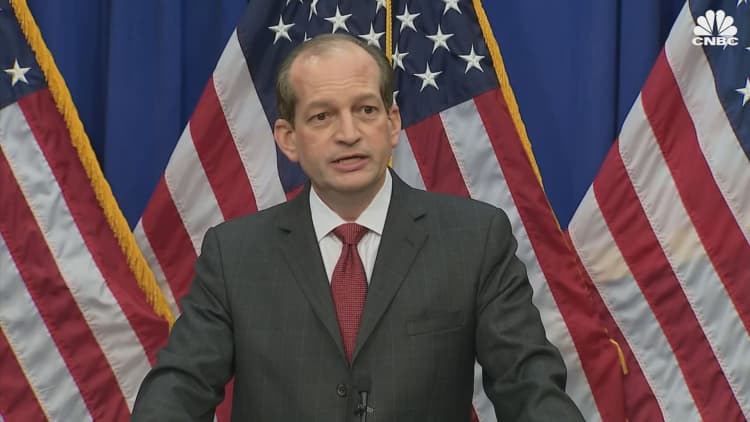
However, Epstein’s arrest on new federal sex trafficking charges in July 2019 thrust the 2008 plea agreement back into the spotlight. Facing mounting criticism from lawmakers, advocates, and the public, Acosta held a press conference defending his decisions. He argued that his office had secured at least some accountability when the case risked collapsing altogether.
The explanation failed to quell the backlash. Within days, Acosta announced his resignation, saying he did not want the Epstein scandal to become a distraction for the administration.
Why is Congress calling Acosta now?
The House Oversight Committee’s current investigation into Epstein is broader than Acosta’s role alone. The panel is seeking testimony from a wide array of figures, including former presidents, secretaries of state, and former attorneys general from both Republican and Democratic administrations.
While Acosta was not initially subpoenaed, committee members reached out in mid-August 2025 for a voluntary interview. He has now agreed to appear for a transcribed session scheduled for September 19.
In parallel, the committee is issuing a new subpoena to the Epstein estate for documents relating to:
- The circumstances and investigations surrounding Epstein’s death in 2019.
- The operation of sex-trafficking networks connected to him.
- Possible ethics violations involving elected officials.
By including Acosta, lawmakers aim to understand how federal prosecutors allowed Epstein to evade accountability for years and to prevent similar failures in future sex trafficking cases.
Why does Alex Acosta’s testimony matter?
Acosta’s testimony could address several unresolved questions:
- Decision-making process: Why did Acosta’s office cut federal prosecutors and the FBI out of the negotiations?
- Political influence: Did Epstein’s powerful social and political connections play a role in the outcome?
- Victims’ rights: Why were victims not consulted or notified, in violation of the Crime Victims’ Rights Act?
- Systemic lessons: What reforms are necessary to ensure such a deal cannot happen again?
For survivors of Epstein’s abuse, accountability remains incomplete. For Congress, the answers could influence future legislation on prosecutorial discretion, victim notification, and the handling of sex trafficking cases.
The bigger picture
Acosta’s controversial deal with Epstein is more than a historical scandal—it is a window into how wealth and influence can distort justice. The Oversight Committee’s renewed focus reflects broader concerns about transparency, prosecutorial accountability, and systemic failures in addressing sexual exploitation.
As Acosta prepares to testify, lawmakers and the public alike are looking for clarity on whether his decisions were prosecutorial misjudgments or part of a deeper culture of impunity that allowed Epstein to operate for decades.