

Democrat Scott Colom has won Mississippi’s US Senate race, unseating Republican Sen. Cindy Hyde-Smith eight days after Election Day. The Associated Press called it just before 6 p.m. Eastern on Wednesday, Nov. 11, when Colom led by 4,669 votes out of 962,237 counted, about half a percentage point, according to the AP’s explanation of its call.
Hyde-Smith conceded the same evening. The win gives Democrats at least 55 seats in the Senate that convenes in January, with Alaska still counting. Colom will also be Mississippi’s first Black senator since 1881, and the first Black Mississippian the state’s voters have ever sent to the Senate directly.
How a 43-vote lead became a call
The race came close to a tie on election night. After the final overnight update, from Pike County at 3:03 a.m. Eastern, Colom led by 43 votes, the AP said. As we reported on Nov. 4, Mississippi then gave mail ballots and affidavit ballots until Nov. 10 to arrive or be cured.
Those late ballots broke toward Colom. His lead was 2,990 votes on Wednesday morning and 4,404 by 2:30 p.m. Eastern, CNBC reported from AP figures. Hinds County, which includes Jackson, gave him 80% of its vote.
The deciding update came from Jackson County on the Gulf Coast. Hyde-Smith needed to win the final updates in Republican-leaning counties like it, the AP said. Instead, Colom won its 2,173 new votes by just over a point.
The AP estimated that fewer than 12,000 votes remained for county officials to review, many of them affidavit ballots that may not count. That was not enough for Hyde-Smith to close a gap of more than 4,600 votes.
Colom’s lead in the official count rose to more than 5,600 votes on Thursday, Nov. 12, WLBT reported that evening.
At the call, Time reported the AP’s shares as 49.2% for Colom and 48.7% for Hyde-Smith, with about 99% counted. Independent Ty Pinkins had 2.1%, according to CNBC.
None of these figures is final yet. Counties must certify their results by 5 p.m. on Friday, Nov. 13, MPB News reported. The Secretary of State then declares the winner, by Dec. 3 under the state’s election calendar.
Hyde-Smith conceded rather than go to court
Mississippi has no recount law, so Hyde-Smith’s only route was to persuade a court to order a review. The AP noted that about 40 statewide recounts have taken place since 2000. Only three changed the winner, and each of those was decided by hundreds of votes, not thousands.
She chose not to try. Hyde-Smith called Colom late Wednesday afternoon, her campaign said, according to the Mississippi Free Press. In a video posted to X, she said: “While this is not the outcome we worked for or hoped for, I respect the decision of Mississippi voters.”
She also congratulated Colom and wished him well, WLBT reported. Her campaign had worked “to ensure every legally cast vote was counted,” she said. No court challenge had been reported by Thursday evening.
Mississippi’s other senator, Republican Roger Wicker, congratulated Colom on X. “Mississippi voters have spoken, and they have honored you with the privilege to represent the state we love,” he wrote, The National News Desk reported. President Trump, who called Colom a “Marxist radical” at a rally last month, said Thursday, “I give him a lot of credit,” the AP reported.
Colom told Hyde-Smith “God bless you and thank you, Senator” on the call, according to Time. In his own remarks he argued the state had been neglected by his party. Mississippi is “a betrayed cause,” not a lost one, he said, criticizing national Democrats for spending “almost nothing in Mississippi,” NPR reported. “We did it the hard way, the grassroots way,” he told Reuters, in a story carried by the Spokesman-Review.
A 55-seat majority, with Alaska still out
Colom’s seat is the eighth Republican-held seat Democrats have flipped this cycle, Time reported. That brings them to at least 55 seats, counting independents who caucus with them. NBC News called it the reddest seat to flip this cycle. Donald Trump carried Mississippi by 23 points in 2024.
Alaska decides the final number. Democrat Mary Peltola led Sen. Dan Sullivan by 3,975 first-choice votes in the state’s latest unofficial results, down from 4,250 on Tuesday, The Hill reported on Thursday. Any ranked-choice tabulation runs on Nov. 18, and Alaska certifies on Nov. 25, according to the Anchorage Daily News.
A second candidate named Dan Sullivan is also on that ballot, a quirk we explained before the vote.
So the Senate that meets in January will be 55-45 or 56-44. Our earlier rundown of the midterm results covers what control changes. Either way, Democrats remain short of the 60 votes needed to break a filibuster.
Colom, 43, is district attorney for Mississippi’s 16th Judicial District. In 2023 Hyde-Smith blocked his nomination by President Joe Biden to be a federal district judge, citing his positions on transgender issues, Time and Reuters reported. Republican Sen. Roger Wicker had supported the nomination.
He will be sworn in when the new Congress convenes at noon on Jan. 3, 2027, the date the 20th Amendment sets for terms to begin. As a senator, he will vote on judicial nominations like the one Hyde-Smith once blocked.
What “since 1982” and “since Reconstruction” mean
Time called Colom “the first Democratic Senator elected there since 1982.” That refers to John Stennis, a Democrat who won his last election that year, beating Republican Haley Barbour. Stennis retired, and Republican Trent Lott took his seat in January 1989. No Democrat has represented Mississippi in the Senate since.
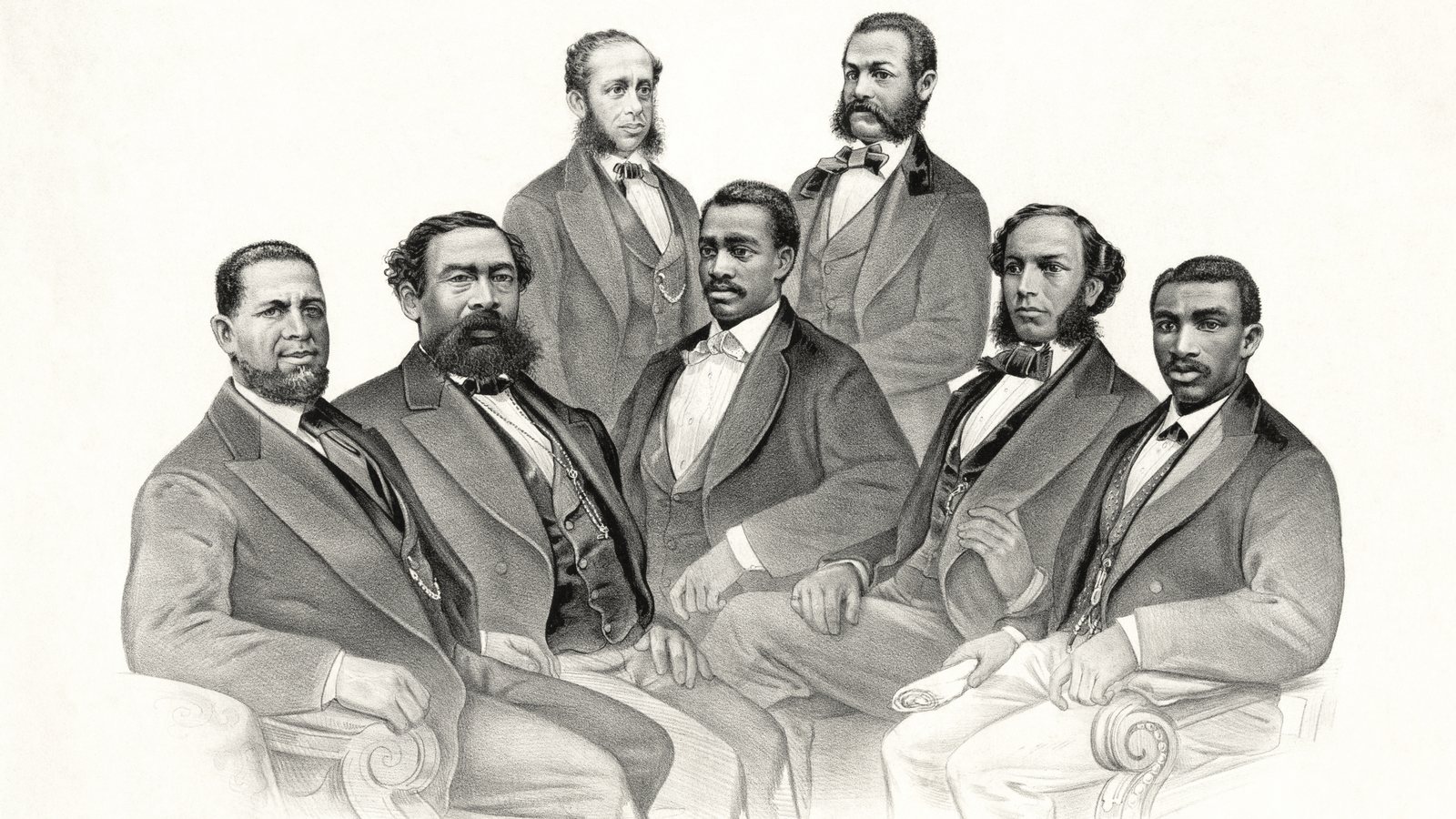
The Reconstruction line has a sharper meaning. Mississippi has had two Black senators, both Republicans, and the state’s voters chose neither of them. Before 1913, state legislatures elected senators. The 17th Amendment, ratified on April 8, 1913, gave that choice to voters.
The legislature chose Hiram Revels on Jan. 20, 1870, according to the House Office of the Historian.
Some senators argued that the Dred Scott decision barred him. The Senate voted 48 to 8 to seat him on Feb. 25, 1870, making him the first Black US senator. He filled out a term that ended on March 3, 1871.
Bruce left in 1881, and the next is Colom
The legislature then elected Blanche K. Bruce on Feb. 4, 1874, which is why Time dates Colom’s milestone to 1874. Bruce served a full term from 1875 to 1881. In 1879 he became the first Black senator to preside over a session.
By the end of that decade, Democrats had retaken the legislature. In January 1880 they picked Democrat James Z. George to replace him.
| Senator | Party | Chosen by | Date chosen | Senate service |
|---|---|---|---|---|
| Hiram Revels | Republican | State legislature | Jan. 20, 1870 | Seated Feb. 25, 1870, to March 3, 1871 |
| Blanche K. Bruce | Republican | State legislature | Feb. 4, 1874 | March 4, 1875, to March 3, 1881 |
| Scott Colom | Democrat | Mississippi voters | Nov. 3, 2026 (AP call Nov. 11) | Term due to begin Jan. 3, 2027 |
Sources: House Office of the Historian profiles of Revels and Bruce; the AP; the 20th Amendment.
Colom will be the first Black senator from Mississippi since Bruce left on March 3, 1881, a gap of almost 146 years. He is the first Black Mississippian chosen for the Senate by the state’s voters, a point Democracy Docket also made. Black residents make up close to 40% of Mississippi’s population, the highest share of any state, NPR reported.
Counties’ certified totals are due by 5 p.m. Friday. Those totals become the official margin, and the state’s declaration follows by Dec. 3.