

Alaskans voting for a senator today will find two Dan Sullivans on the ballot. One is the Republican incumbent, Sen. Dan S. Sullivan.
The other is Daniel J. Sullivan Jr., a retired teacher from Petersburg whose listing carries no party at all.
The duplicate name has drawn a Justice Department lawsuit, a state investigation and a federal criminal probe. But the people who study Alaska’s ranked-choice system doubt it will decide the race between Sullivan and Democrat Mary Peltola.
That matters beyond Alaska, because the Cook Political Report rates the race a toss-up. The final New York Times/Siena poll of Alaska likely voters had Peltola at 48% and Sullivan at 46%, inside its margin of error of plus or minus 5 points. Our look at the final polls in the races that decide Congress puts that number in context.
How the two names appear on the ballot
We read Judge Sharon Gleason’s 20-page order from Sunday in full. It sets out exactly what voters see.
The incumbent appears as “Sullivan, Dan S. (Registered Republican) Incumbent.” The newcomer appears as “Sullivan, Daniel J. Jr.,” with no party label. The order says the general election listings are identical to the primary ballot, and that the court is unaware of any challenge to either listing.
The labels are how the division carried out the state Supreme Court’s instruction. Daniel J. Sullivan asked to run as “Dan Sullivan” and as a Republican. He ended up listed with his middle initial, a “Jr.” and no party.
Two other candidates are on the Senate ballot, Republican Gerald Heikes and Peltola. In the August primary, the order records Peltola at 49.54%, Sen. Sullivan at 41.40%, Daniel J. Sullivan at 2.47% and Heikes at 1.05%.
Who Daniel J. Sullivan is, and how he stayed on
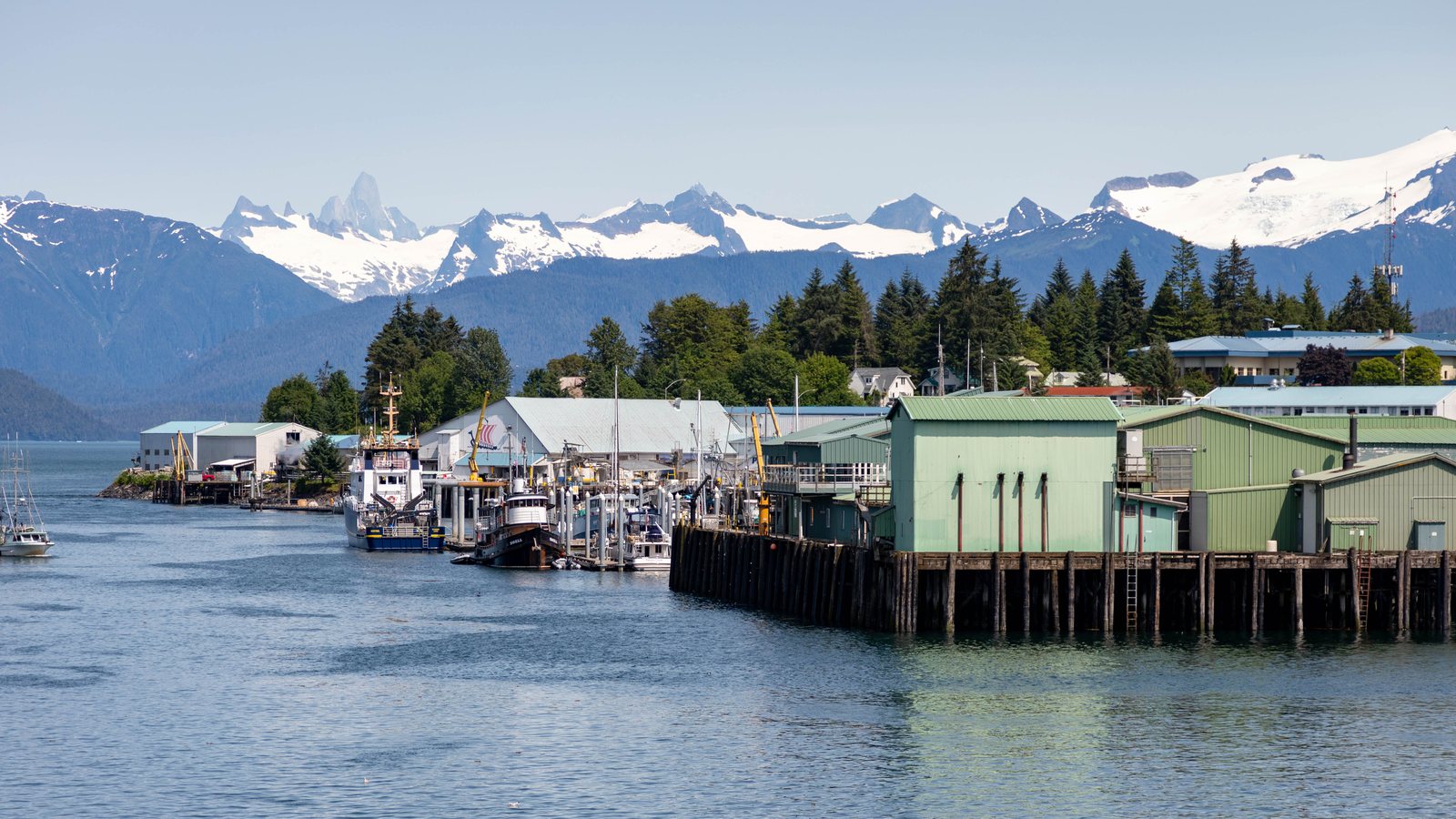
He is a former elementary school teacher in Petersburg, a fishing town of about 3,000 known as “Little Norway,” the AP reported in a story published by the Anchorage Daily News. He ran an after-school guitar program. Votebeat describes him as a former member of the Alaskan Independence Party who switched to Republican shortly before filing.
His candidacy was in court almost from the start. Gleason’s order sets out how quickly it moved:
- May 29: He files for the Senate, 13 days after the senator.
- June 15: Division of Elections Director Carol Beecher decertifies him. She concludes he filed “with a purpose to confuse or mislead,” citing his request to appear as “Dan Sullivan,” his party switch two days before filing, and a campaign website similar in look to the senator’s.
- June 26: An Alaska Superior Court judge rules that Beecher’s decision was not based on Alaska law.
- June 29: The Alaska Supreme Court affirms in a short order. It leaves the ballot listing to the division.
The Superior Court found that no state statute requires a “good faith” filing or looks at a candidate’s motive, PolitiFact reported.
Sullivan has denied being anyone’s spoiler. In June he told the AP he had “zero, none, zilch” contact with Peltola’s campaign.
In a letter to the lieutenant governor, he called the allegations “entirely false” and said he shares his name and party with his father and grandfather, FactCheck.org reported.
Nobody in Petersburg has seen him for weeks, and the AP said it could not reach him. CBS News reported he left town in late October. A friend told CBS that friends know him and his wife as “world travelers.”
The recruiting allegation and the investigations
On Oct. 28, The New York Times reported that operatives aligned with Peltola helped recruit him and others to split the senator’s vote, citing texts and documents, per FactCheck.org. Peltola’s campaign and the Democratic Senatorial Campaign Committee told the Times they had no role.
Peltola called the allegations “garbage” and a “smear campaign,” the AP reported via PBS. “I know I can beat Dan Sullivan. I do not need any help winning this race,” she said.
Gov. Mike Dunleavy, a Republican, then ordered a state inquiry into whether anyone broke Alaska law.
On Oct. 30, U.S. Attorney Michael Heyman confirmed criminal and civil investigations into Peltola-affiliated groups without naming targets or laws, PolitiFact reported.
The Justice Department has also begun issuing a new wave of subpoenas, ABC News reported, citing unnamed sources. ABC said they target Democratic officials prosecutors believe have ties to the effort.
FBI agents have since visited about a dozen of Daniel J. Sullivan’s donors, most in Petersburg, who gave about $7,150 between them, the AP reported.
Donors the AP reached said they were not fooled. “We knew to whom we had contributed,” said Pat Campbell, a donor in Massachusetts.
Whether any of this is a crime is the open question. “It’s unsavory, it’s gross, but it’s not illegal under any Alaska law that I’m aware of,” Alaska election lawyer Scott Kendall told PolitiFact. No report we read describes any charges.
The DOJ’s civil suit, laid out in our Oct. 24 explainer on the Alaska and California ballot cases, argued the second Dan “threatens to mislead” Sullivan voters. Gleason dismissed it on Sunday, finding no way to set ballots aside for investigators and keep them secret.
She also warned against “late-breaking changes to the election rules” days before a vote. The department plans to appeal, PolitiFact reported.
Why ranked choice blunts a namesake
Alaska ranks candidates. If nobody wins more than half of first choices, the count drops the last-place candidate and moves those ballots to each voter’s next choice. That repeats until someone has a majority.
So a Sullivan supporter who ranks the wrong Dan first, then the right one second, still ends up counting for the senator once the newcomer drops out of the count. “It’s highly unlikely that the existence of two Dan Sullivans on the ballot will be the decisive factor in this election,” Russell Luke, a University of Alaska Fairbanks political scientist, told PolitiFact.
The risk lies with voters who mark only one name.
In Alaska’s 2024 general election, about 60% of voters marked only one candidate, averaged across all races with more than two candidates, according to an Alaska Public Media analysis that Votebeat cited. A voter who picks only Daniel J. Sullivan has no backup. Sarah John, a ranked-choice researcher, told Votebeat there is “less than a 1% chance” of a spoiler if Republicans rank their preferences.
Our own arithmetic on the primary points the same way. If every vote for Daniel J. Sullivan had gone to the senator, he would have had 43.87%, still 5.67 points behind Peltola. A primary with 16 candidates is not a general election, but the second Dan’s share was smaller than the gap between the front-runners.
When Alaska will have a result
Polls close at 1 a.m. Eastern, the last in the country, as our guide to election night poll closing times shows. The Division of Elections plans its first results between 8:45 and 9 p.m. Alaska time, Alaska Public Media reported.
Those are first-choice counts only. If no Senate candidate tops 50%, ranked-choice tabulation runs on Nov. 18, and the current target to certify results is Nov. 25, according to the same Alaska Public Media guide.
PolitiFact noted the winner may not be known until Nov. 18, 15 days after the election, once election workers count absentee ballots.
Sen. Sullivan has told CNN he “will accept the election results regardless of the outcome,” PolitiFact reported. The next fixed date is Nov. 18, when the division runs the ranked count.