
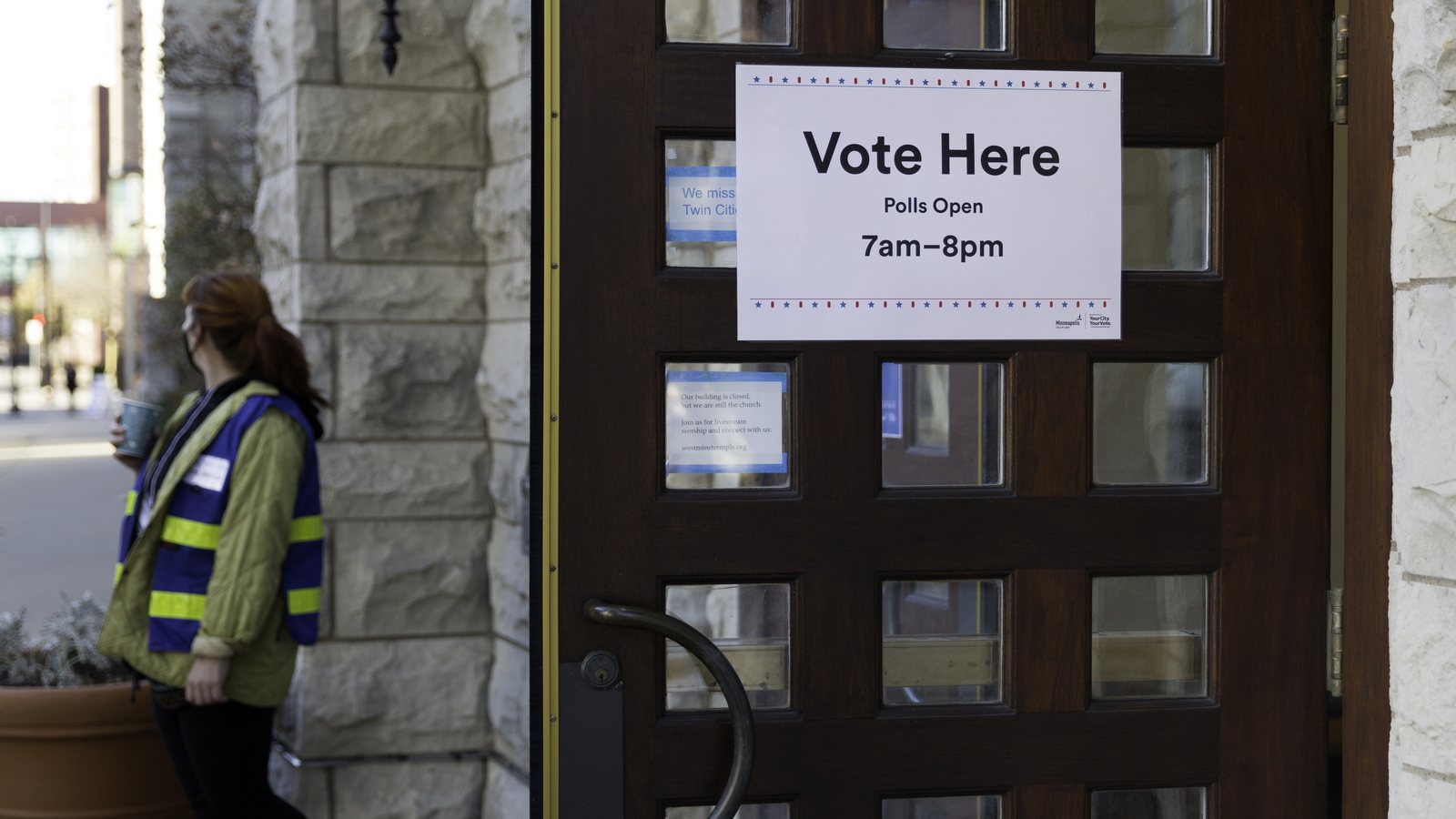

The first polls close at 7 p.m. Eastern on Tuesday, November 3, and Alaska’s close last, at 1 a.m. Eastern on Wednesday. Election results for the House may come into focus overnight. Control of the Senate could take days, and in the slowest states, weeks.
That is normal. Each state sets its own rules on when workers may open mail ballots, how late those ballots can arrive and when officials must certify the count.
The margins are thin. Republicans hold the Senate 53 to 47, so Democrats need a net gain of four seats, according to CBS News. As of early October, Republicans held 218 House seats to the Democrats’ 214, and 218 makes a majority.
NPR’s reporters expect the House to become clear sooner because its margins are bigger. House control likely won’t come down to one seat, they wrote, “but control of the Senate very well could.”
Polls close in waves from 7 p.m. to 1 a.m. Eastern
NPR’s hour-by-hour guide lists each state at the time its last polls close. Some states span two time zones, so early returns there can start an hour sooner. We added Central and Pacific times.
| Last polls close (ET) | Central / Pacific | States |
|---|---|---|
| 7 p.m. | 6 p.m. / 4 p.m. | GA, IN, KY, SC, VT, VA |
| 7:30 p.m. | 6:30 p.m. / 4:30 p.m. | NC, OH, WV |
| 8 p.m. | 7 p.m. / 5 p.m. | AL, CT, DE, FL, IL, ME, MD, MA, MS, MO, NH, NJ, OK, PA, RI, TN, DC |
| 8:30 p.m. | 7:30 p.m. / 5:30 p.m. | AR |
| 9 p.m. | 8 p.m. / 6 p.m. | AZ, CO, IA, KS, LA, MI, MN, NE, NM, NY, ND, SD, TX, WI, WY |
| 10 p.m. | 9 p.m. / 7 p.m. | MT, NV, UT |
| 11 p.m. | 10 p.m. / 8 p.m. | CA, ID, OR, WA |
| 12 a.m. | 11 p.m. / 9 p.m. | HI |
| 1 a.m. | 12 a.m. / 10 p.m. | AK |
CBS lists 10 key Senate races: Alaska, Georgia, Iowa, Kansas, Maine, Michigan, New Hampshire, North Carolina, Ohio and Texas.
Georgia closes first among them. North Carolina and Ohio follow at 7:30, then Maine and New Hampshire at 8. Iowa, Kansas, Michigan and Texas all close at 9 p.m. Eastern. That is four of the 10 battlegrounds in one hour, so 9 p.m. is when a Senate trend is most likely to show.
Alaska, which NPR rates a toss-up, comes last at 1 a.m. Eastern. Our guide to the 2026 Senate races breaks down each contest.
Why some states count overnight and others take days
Mail ballots are the main variable. Workers must check each voter’s identity, often by matching a signature, and take the ballot out of its envelope. Votebeat expects more than 100 million ballots this year. States with heavy mail voting tend to report more slowly, it notes.
States that allow that prep work early can post big batches soon after polls close. The Center for Election Innovation & Research tracks these rules. Its latest update, current as of August 24, counts 45 states plus Washington, D.C., that allow envelope processing before Election Day.
Five states do not: Alabama, Mississippi, New Hampshire, Pennsylvania and Wisconsin. Pennsylvania counties can start no earlier than 7 a.m. on Election Day. Wisconsin clerks wait until polls open, and New Hampshire’s default start is 1 p.m.
Other battlegrounds start well ahead. Texas counties with at least 100,000 people begin counting four days before Election Day, the report says. In Michigan, larger cities and townships may tabulate absentee ballots during the eight days before the vote.
Georgia shows what early prep buys. Workers there can open, verify and scan absentee ballots ahead of time, WRDW reported. They cannot tabulate or release anything until 7 p.m. A 2021 law then gives counties one hour to report.
“You can go to bed at night, before 12 midnight, knowing what the results are,” Secretary of State Brad Raffensperger told the station. Georgia still reports in waves: early and absentee votes first, then Election Day ballots. Military and overseas ballots that arrive within three days come last.
Early leads can flip after midnight
Because states count different kinds of ballots at different times, early leads can move. A PolitiFact explainer by Amy Sherman, published by PBS, recalls Wisconsin in 2020. Donald Trump led the state by more than 100,000 votes early in the night. The lead shifted after Milwaukee’s central count finished its mail ballots around 3:30 a.m. local time.
Ryan Macias, an election technology and cybersecurity expert, told PolitiFact that “states are neither fast or slow.” Speed, he said, depends on how fast the media can gather evidence to predict a winner, “which is typically based on the margin of victory.”
Big cities set the pace. Detroit, with more than 500,000 voters, expects to report about 95% of its ballots on election night. It aims to finish by 4 a.m. Daniel A. Baxter, the city’s elections chief of operations, called that “an estimate, not a statutory deadline or guarantee.”
Fewer people are voting by mail in some states this year. State data from Wisconsin, North Carolina and Georgia show fewer mail ballots than in 2022, as we found in our look at Democrats switching to in-person voting. That could shrink the late-counted pile, though nobody will know until Tuesday night.
Alaska, California and Maine could run for weeks
California counts ballots that arrive after Election Day. Mail ballots postmarked by November 3 count if they reach the county by November 10, the Secretary of State’s calendar says. Counties start reporting at 8 p.m. Pacific and must update the state at least every two hours that night. They have until December 3 to certify, and the state certifies on December 11.
Alaska accepts ballots mailed from abroad for 15 days after Election Day, PolitiFact reported. It also uses ranked-choice voting, and NPR warned that its results “could take weeks” to finalize.
Alaska’s Senate race pits Republican Sen. Dan Sullivan against Democrat Mary Peltola. The Justice Department sued on October 22 to block certification if the incumbent loses. The suit alleges voter confusion involving a second candidate named Sullivan, as our explainer on the DOJ’s Alaska and California ballot cases details.
Maine also uses ranked-choice voting. Republican Sen. Susan Collins faces Democrat Troy Jackson and six write-in candidates. If nobody wins a majority of first choices, officials drop the last-place finisher and move those ballots to their next pick, round by round. Secretary of State Shenna Bellows said Maine would know within a day or two whether it needs that count, PolitiFact reported.
A call on TV is not the official result
Election night numbers are unofficial. When a network calls a race, it is projecting a winner from the votes reported so far. Joe Lenski, executive vice president of SSRS, which runs a national exit poll, told PolitiFact there are “always a handful of really close Senate and House races.”
The legal result comes with certification, which “in most cases doesn’t happen until weeks after Election Day,” Votebeat notes. Close races can also go to recounts. Florida settled three statewide races that way in 2018.
Pennsylvania’s mail ballots must reach county offices by 8 p.m. Tuesday, the Department of State says, and anyone in line at 8 p.m. can still vote. Georgia’s first batch should post shortly after 7 p.m. Eastern, and Alaska’s first count follows about six hours later.