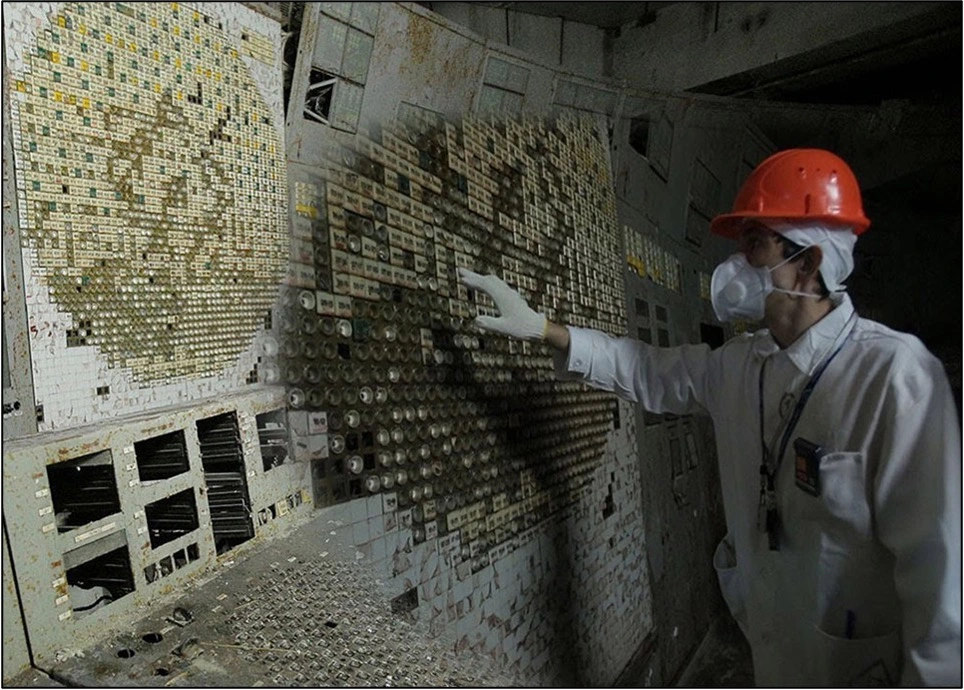
For nearly four decades, Chernobyl has symbolized one of the greatest technological failures of the modern era. But inside the ruins of Reactor No. 4, something unexpectedly alive has been quietly rewriting what we thought we knew about biology: a strange black fungus that doesn’t just survive extreme radiation, it may actually use it.
The organism, Cladosporium sphaerospermum, has become the center of one of the most intriguing scientific mysteries linked to the Chernobyl Exclusion Zone. Tagged by many as the “Chernobyl fungus,” it grows on highly radioactive surfaces where most life would die within minutes.
And scientists still don’t know exactly how.
What Makes This Chernobyl Fungus So Strange?
C. sphaerospermum is rich in melanin, the same pigment that gives human skin its color. But in fungi, melanin does more than offer protection, it appears to take part in a puzzling process that researchers call radiosynthesis.
What is Radiosynthesis: Explained
The working theory:
- The fungus absorbs ionizing radiation.
- Its melanin changes shape and behavior in response.
- This might allow the organism to convert radiation into a usable biochemical advantage, somewhat like how plants use chlorophyll to convert light into energy.
It’s a bold idea and not yet proven. But the evidence is weird and compelling enough that scientists can’t ignore it.
A Mystery That Began in the Late ‘90s
The first big clue came from microbiologist Nelli Zhdanova and her team in the late 1990s. While surveying the inner walls of the Chernobyl reactor shelter, they found something unexpected:
- 37 species of fungi
- Many of them are dark or black
- All thriving inside one of the most radioactive buildings on Earth
Among them, C. sphaerospermum dominated the samples and carried some of the highest levels of radioactive contamination.
Something wasn’t just surviving; it was doing well.
Radiation Didn’t Kill It. It Helped It Grow.
The mystery deepened when radiopharmacologist Ekaterina Dadachova and immunologist Arturo Casadevall exposed the fungus to ionizing radiation in controlled experiments.
Their results flipped expectations:
- Radiation did not damage the fungus.
- It actually grew faster when bathed in radiation.
- Melanin inside the fungus changed its behavior under radiation.
This led the researchers to their 2008 hypothesis: the fungus wasn’t just shielding itself. It might be drawing some kind of metabolic benefit from radiation exposure.
This is where the idea of radiosynthesis took shape, and where the scientific debate began.
From Chernobyl to Outer Space: Could It Protect Astronauts?
If a fungus can tolerate Chernobyl-level radiation, NASA scientists naturally want to know what it could do in space.
A 2022 experiment strapped samples of C. sphaerospermum to the outside of the International Space Station, exposing it to constant cosmic radiation.
The results were surprising:
- The fungus reduced the amount of radiation detected behind it.
- An agar-only control let more radiation through.
- The effect persisted throughout exposure.
While not a full solution on its own, the fungus shows promise as a living radiation shield, especially when combined with other protective materials.
For future missions to the Moon or Mars, where radiation is one of the biggest barriers for long-term human presence, biological shielding could become part of a hybrid protective system.
But Here’s the Catch: Scientists Still Can’t Prove Radiosynthesis
Despite decades of clues, researchers still lack a definitive demonstration of energy production from radiation.
Specifically:
- No one has shown carbon fixation driven by radiation, the biological hallmark of energy conversion.
- No measurable metabolic gain has been directly tied to radiation exposure.
- The pathway connecting melanin changes to energy production remains unknown.
A 2022 review led by Nils Averesch of Stanford University underscored the gap:
The mechanism of radiosynthesis is still unproven.
So for now, the fungus is a scientific paradox, a champion of extreme environments, but not yet a confirmed radiation eater.
Why This Matters Beyond Chernobyl
Even without a final answer, the Chernobyl fungus sits at the intersection of several big research areas:
1. Space exploration
A biological radiation shield is cheaper and lighter than traditional shielding and could self-repair, a major advantage for deep-space missions.
2. Bioremediation
If melanin-rich fungi tolerate radiation this well, they could help clean contaminated sites on Earth.
3. New frontiers in biochemistry
Radiosynthesis, if real, would introduce a new way life can harvest energy, something scientists once believed impossible.
4. Understanding life in extreme environments
If life can use radiation, the search for extraterrestrial organisms gets a lot more interesting.
The Bottom Line
A black fungus growing on the walls of a destroyed nuclear reactor shouldn’t exist, but it does. And it’s thriving.
Cladosporium sphaerospermum hasn’t yet rewritten biology textbooks, but it’s opening a door scientists didn’t know was there. Whether it’s simply tolerant of radiation or actually feeding on it, the organism is a reminder that life has more tricks than we give it credit for.
And in places where nothing should live, something often finds a way.