Investigators say a little-known businessman may have helped build one of the most complex sanctions-busting oil networks in the world. According to reporting by Bloomberg and Western authorities, Hossein Shamkhani allegedly orchestrated a vast web of shipping firms, shell companies, and traders that moved billions of dollars worth of oil despite international sanctions on Iran.
The network, sometimes described by investigators as a $100-billion shadow oil economy, illustrates how global energy markets adapt when geopolitical restrictions collide with demand for cheap crude.
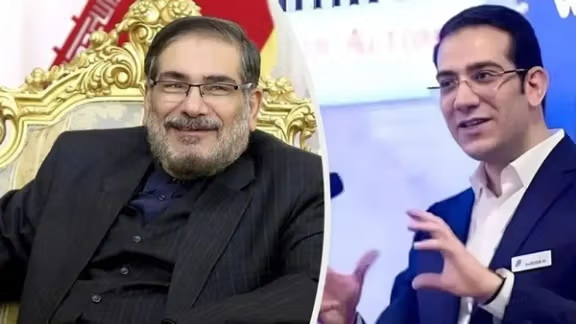
At the center of the story is Shamkhani, the son of Ali Shamkhani, a longtime advisor to Iran’s leadership. Authorities in the United States, United Kingdom, and European Union say his business empire exploited loopholes in global shipping, banking, and commodity trading systems to keep Iranian oil flowing to international buyers.
Who Is Hossein Shamkhani?
Hossein Shamkhani has long kept a low public profile despite operating in the lucrative and politically sensitive global oil trade.
Investigators and journalists say he built influence partly through family connections. His father, Ali Shamkhani, served for years as a senior security official within Iran’s political establishment and was considered close to Ali Khamenei.
Western authorities claim the younger Shamkhani leveraged that access to build an international trading network that:
- Marketed Iranian crude abroad
- Coordinated shipping and logistics
- Moved money through offshore financial channels
- Used foreign companies to disguise the oil’s origin
Shamkhani and several companies linked to him have denied wrongdoing.
How the Alleged $100 Billion Oil Network Worked
The sanctions-evasion system described by investigators relied on a sophisticated set of tactics designed to obscure the origin and ownership of oil shipments.
Authorities say the network functioned through multiple layers of companies and vessels across several countries.
Key components of the network reportedly included
- Shell companies
Investigators say the operation involved more than 100 affiliated companies registered in places such as:
- The United Arab Emirates
- Hong Kong
- European jurisdictions
These companies often existed primarily on paper, allowing the network to move oil contracts without revealing Iranian ownership.
- A shadow tanker fleet
The system allegedly used aging oil tankers operating under “flags of convenience.”
These ships frequently changed ownership, names, and registration to avoid sanctions tracking.
Common shipping tactics reportedly used
- Ship-to-ship oil transfers at sea
- Turning off AIS ship tracking signals
- Blending Iranian crude with other oil grades
- Relabeling cargo origins before delivery
The Role of Milavous Group
One company investigators have highlighted is Milavous Group Ltd., a commodities trading and shipping firm based in Dubai.
According to reporting, the company expanded rapidly around 2022 and reportedly handled significant volumes of oil connected to the sanctions network.
Milavous allegedly served as a logistical hub connecting:
- Oil suppliers in Iran
- Traders in the Middle East
- Buyers in Asia
Authorities say the firm leased office space in one of Dubai’s high-profile commercial towers as its operations scaled up.
Milavous has denied involvement in illegal activity.
Where the Oil Was Going
Even under sanctions, Iranian crude continues to reach global markets through complex supply chains.
Investigators say buyers were primarily located in:
- China
- India
- Other Asian energy markets
Often the oil was sold at discounted prices compared with benchmark crude.
That discount created strong incentives for traders and refiners willing to navigate legal and regulatory risks.
Energy analysts say the system essentially allowed Iranian oil to enter the global market under different labels.
Western Sanctions Crackdown
The alleged network eventually drew the attention of Western governments.
In July 2025, the U.S. Department of the Treasury announced what it described as the largest Iran-related sanctions package in years.
Authorities targeted:
- More than 50 individuals and entities
- Over 50 vessels tied to the shipping network
- Companies allegedly linked to Shamkhani’s trading operation
The European Union and the Government of the United Kingdom later introduced additional sanctions targeting companies connected to the same network.
Investigations also examined potential financial links to international banks and trading houses.
U.S. Justice Department Seizure Efforts
In March 2026, prosecutors from the U.S. The Department of Justice filed civil forfeiture complaints seeking to seize assets allegedly tied to sanctions violations.
Authorities said the funds were connected to oil sales linked to Iran and potentially to organizations such as the Islamic Revolutionary Guard Corps.
The forfeiture cases involve more than $15 million in assets, though investigators believe the broader network handled vastly larger sums.
Why Sanctions-Evasion Oil Networks Exist
Sanctions are intended to limit the economic power of governments or organizations.
However, global energy markets often create incentives to bypass those restrictions.
Several factors help such networks survive:
- High demand for discounted crude
- Complex global shipping systems
- Limited transparency in offshore finance
- Jurisdictions with weak regulatory oversight
Energy experts say sanctions rarely eliminate trade, they push it into more opaque channels.
The Geopolitical Context
The revelations about Shamkhani’s alleged network come amid heightened tensions involving Iran and Western powers.
Recent regional conflict and sanctions have increased scrutiny of Iran’s oil exports and financial networks.
At the same time, the global oil market continues to rely on complex supply chains that make tracing crude origins difficult.
For investigators, the Shamkhani case illustrates how state interests, private business networks, and global commodity markets can overlap.
Did Iran Really Build a $100 Billion Oil Network?
The figure cited in investigations refers to the estimated scale of oil traded through the network over time.
However, authorities and journalists caution that precise financial totals are difficult to confirm because of the secrecy surrounding these operations.
What is clearer is that the alleged system functioned as a parallel oil trading ecosystem, moving sanctioned crude into global markets through layers of intermediaries.
Whether future investigations dismantle the network completely remains uncertain.
TL;DR
- Iranian trader Hossein Shamkhani is accused by Western authorities of running a massive sanctions-evading oil network.
- Investigators say the operation used shell companies, tanker fleets, and offshore finance to move billions in oil.
- The alleged system connected suppliers in Iran with buyers in Asia.
- The U.S., EU, and UK imposed sanctions on companies and ships linked to the network.
- Despite crackdowns, investigators say similar shadow oil markets often adapt and continue operating.