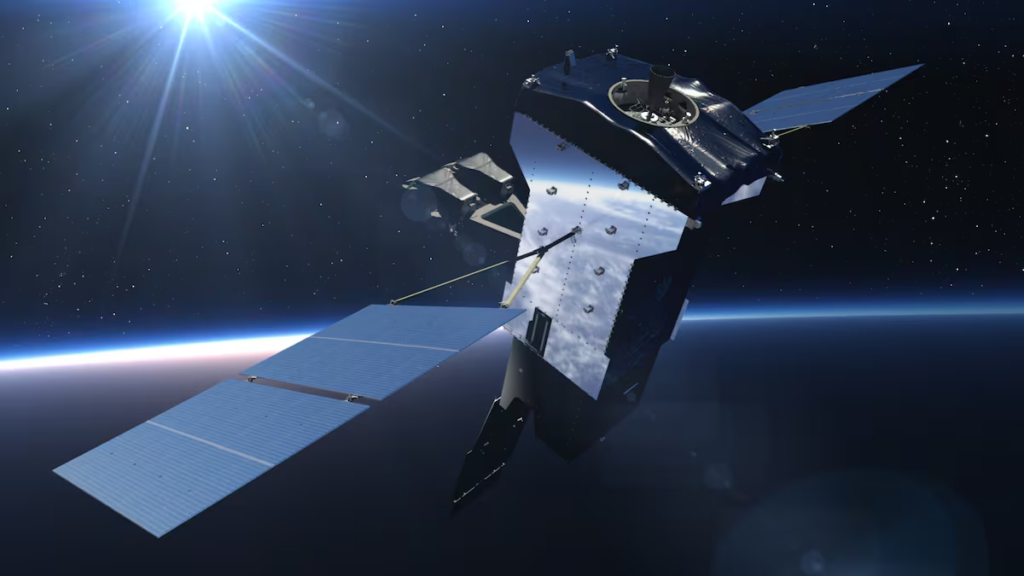
Space is becoming increasingly crowded, commercially valuable, and strategically important, raising fresh concerns among scientists about how humanity is using Earth’s orbit. Laura Grego, a senior scientist at the Union of Concerned Scientists, argues that the growing militarization of space, the rapid expansion of satellite networks, and the speed of nuclear decision-making are combining to create what she describes as a “doomsday system.” Speaking to The Guardian, Grego warned that space is no longer simply a place for scientific exploration or stargazing. Instead, it is becoming an arena for military competition, commercial dominance, and geopolitical rivalry. While her comments reflect expert opinion rather than an imminent threat, they highlight concerns that have been debated for decades among arms control and space security specialists.
Why does Laura Grego believe space is becoming more dangerous?
According to Grego, several long-term trends are converging at the same time.
These include:
- A rapid increase in the number of satellites orbiting Earth.
- Growing military reliance on space-based systems.
- Short decision windows during a potential nuclear attack.
- The emergence of AI-assisted military technologies.
- A weakening global arms control framework.
Her concern is not that any one of these developments will inevitably trigger catastrophe, but that together they increase the risk of miscalculation during an international crisis.
As Grego told The Guardian, “Most people don’t know we’ve set up a system that is essentially a doomsday system. And we can dismantle it. We just have not.”
How crowded is Earth’s orbit becoming?
Low Earth orbit is experiencing unprecedented growth in satellite deployments.
According to publicly available satellite tracking data:
- Around 17,600 active satellites currently orbit Earth.
- More than 9,500 of them belong to SpaceX’s Starlink constellation.
- SpaceX has proposed expanding Starlink significantly in the coming years, alongside plans from other satellite operators.
In addition to Starlink, companies including Amazon’s Project Kuiper, OneWeb, and several national space agencies are deploying large satellite constellations to expand broadband internet, communications, navigation, and Earth observation services.
Scientists say this rapid expansion raises concerns about orbital congestion, collision risks, and the long-term sustainability of space operations.
Grego also argues that thousands of additional satellites could permanently change humanity’s experience of the night sky, making artificial satellites increasingly visible during astronomical observations.
What is the concern about nuclear decision timelines?
One of Grego’s biggest concerns involves how quickly leaders must respond during a potential nuclear attack.
Early-warning satellites monitor missile launches around the world. If an intercontinental ballistic missile (ICBM) is detected, national leaders may have only minutes to determine whether the warning is genuine and whether to authorize a retaliatory strike.
This creates what strategic analysts often describe as a “use them or lose them” dilemma. The fear is that delaying a response could allow an adversary to destroy a country’s nuclear arsenal before it can be launched.
Critics argue that these compressed timelines increase the risk of accidental nuclear war caused by false alarms, technical failures, or human error.
Why does AI add another layer of risk?
Artificial intelligence is becoming increasingly integrated into military planning, intelligence analysis, and battlefield operations.
While AI can improve the speed of detecting threats and processing information, Grego warns that greater automation could also reduce meaningful human oversight during high-pressure situations.
Many defense experts have raised similar concerns, arguing that AI should support rather than replace human decision-making, particularly in matters involving nuclear weapons.
Although there is no evidence that autonomous AI systems currently control nuclear launch decisions, governments and international organizations continue debating rules for the military use of AI.
Is space already being used for military purposes?
Yes.
Although the 1967 Outer Space Treaty prohibits placing nuclear weapons or other weapons of mass destruction in orbit, it does not ban all military activities in space.
Today, satellites play an essential role in:
- Military communications.
- Navigation.
- Missile warning systems.
- Intelligence gathering.
- Reconnaissance.
- Target tracking.
Intercontinental ballistic missiles also travel through space during much of their flight after leaving Earth’s atmosphere before re-entering toward their targets.
Grego argues that these realities demonstrate how central space has become to modern military operations.
What are anti-satellite weapons?
Several countries have developed technologies capable of disrupting or disabling satellites.
These include:
- Electronic jamming.
- GPS spoofing.
- Cyberattacks.
- Ground-based lasers.
- Direct-ascent anti-satellite missiles.
In recent years, officials and analysts have reported attempts to interfere with satellite communications during ongoing conflicts, highlighting the growing importance of space infrastructure in modern warfare.
While no nation has intentionally destroyed another country’s operational satellite during an active conflict, anti-satellite weapons have been tested by several major powers, raising concerns about debris generation and escalating military tensions.
Why is Grego critical of the Golden Dome proposal?
Grego also criticized President Donald Trump’s proposed “Golden Dome” missile defense initiative, describing it as technically difficult and strategically problematic.
Supporters argue that advanced missile defense systems could improve homeland security against evolving threats.
Critics, including Grego, contend that no missile defense system can guarantee protection against every type of attack and that expanding such systems could encourage adversaries to develop more sophisticated offensive weapons.
The debate reflects a broader disagreement among defense experts over the effectiveness and strategic consequences of large-scale missile defense programs.
What does this mean for the future of space?
Most experts agree that space will play an increasingly important role in communications, navigation, commerce, scientific research, and national security.
The challenge facing governments is balancing those benefits with growing concerns about congestion, military competition, cybersecurity, and international stability.
While Grego’s warning reflects one perspective within the broader debate on space security, many researchers agree that stronger international cooperation, updated space governance, and renewed arms control discussions will be important as orbital activity continues to expand.
TL;DR
- Physicist Laura Grego warns that expanding military activities in space, satellite growth, AI, and nuclear decision timelines are increasing global risks.
- Around 17,600 active satellites currently orbit Earth, with Starlink operating more than 9,500 of them.
- Scientists warn that rapidly expanding satellite constellations could permanently change Earth’s night skies and increase orbital congestion.
- Early-warning satellite systems can leave national leaders only minutes to respond during a potential nuclear attack.
- AI could accelerate military decision-making, raising concerns about accountability during crises.
- The 1967 Outer Space Treaty bans nuclear weapons in orbit but allows many other military uses of space.