
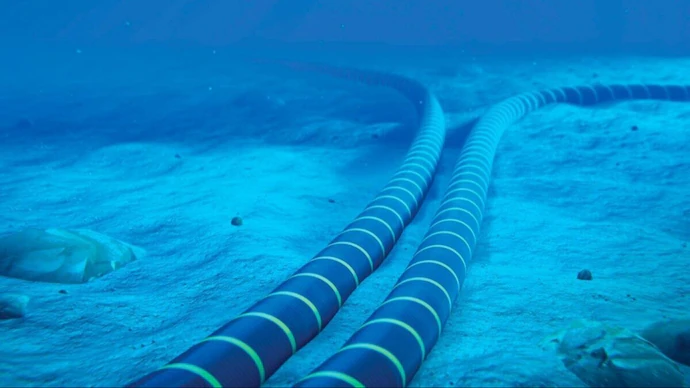
Most people know the Strait of Hormuz as one of the world’s most critical oil choke points. Now Iran is reminding governments and tech companies that the narrow waterway carries something else just as vital: The internet itself.
Tehran is escalating rhetoric around the subsea communication cables that run beneath the strait, with state-linked media warning that global tech giants such as Google, Meta, Amazon, and Microsoft may soon face fees or restrictions tied to undersea cable infrastructure crossing the region.
The threats are raising alarms because those cables form part of the hidden nervous system powering global finance, military communications, AI infrastructure, cloud computing, and everyday internet traffic.
And unlike oil tankers, these arteries are mostly invisible until something goes wrong.
What exactly is Iran threatening?
Iranian officials and state-linked media have floated plans that would:
- Impose licensing fees on submarine cable operators
- Require permissions for cable passage through the strait
- Give Iranian firms exclusive repair and maintenance rights
- Potentially restrict or disrupt cable operations if demands are ignored
The warning aimed at Big Tech
Iranian military spokesperson Ebrahim Zolfaghari publicly suggested Tehran could “impose fees on internet cables.”
State-affiliated media connected to the Islamic Revolutionary Guard Corps went further, specifically naming major American technology companies.
The message appears designed to signal:
- Iran’s leverage over regional infrastructure
- Its ability to raise costs for Western companies
- Its willingness to weaponize geography beyond oil shipping routes
Whether Tehran can legally or practically enforce such demands remains highly uncertain, particularly because US sanctions already prohibit many forms of direct financial dealings with Iran.
Still, the warnings have attracted attention because the threat need not be fully enforceable to create geopolitical anxiety.
Why subsea cables matter so much
Undersea fiber-optic cables are among the least visible but most important pieces of global infrastructure.
The hidden machinery of the internet
These cables carry:
- International banking transactions
- Cloud computing traffic
- AI data transfers
- Military communications
- Video streaming
- Government data
- Global internet traffic
Roughly 95% of international internet data moves through subsea cables, not satellites.
Most people imagine “the cloud” as something wireless and abstract. In reality, it is largely a giant web of glass fibers lying across the ocean floors.
Why the Strait of Hormuz is strategically important
The strait serves as both:
- A maritime energy corridor
- A digital transit corridor
A narrow but critical route
The waterway links the Persian Gulf to the Arabian Sea and sits between the following:
- Iran
- Oman
- The United Arab Emirates
It is already one of the world’s most militarized shipping routes because roughly a fifth of global oil trade passes through it.
Attention is now turning to the cables beneath it.
Which cables pass through the region?
Most operators intentionally avoid Iranian territorial waters when possible due to sanctions and security concerns.
According to telecommunications analysts:
- Most cables run along the Omani side of the strait
- Two major systems, Falcon and Gulf Bridge International, reportedly pass through Iranian waters
That means Tehran potentially has at least some geographic leverage over portions of the regional internet infrastructure.
Could Iran actually damage the cables?
Technically, yes.
Why analysts are concerned
Security researchers warn Iran possesses the following:
- Combat divers
- Small submarines
- Underwater drones
- Naval sabotage capabilities
Experts say those tools could theoretically target subsea infrastructure.
Why cable attacks are so disruptive
Subsea cable systems are surprisingly fragile.
A single severed cable can:
- Slow internet speeds dramatically
- Disrupt financial markets
- Interrupt cloud services
- Affect banking systems
- Create regional outages
In 2024, multiple cables in the Red Sea were damaged after a vessel, struck by Iran-linked Houthi militants, dragged its anchor across the seabed while sinking.
That single incident reportedly disrupted roughly 25% of regional internet traffic.
The internet may feel ethereal, but physically, it behaves more like a sprawling underwater highway network made of surprisingly breakable spaghetti.
Would the whole global internet collapse?
No. But the regional consequences could still be severe.
The global impact may be limited
According to industry estimates:
- Cables through Hormuz account for less than 1% of global international bandwidth
That means:
- The worldwide internet would continue functioning
- Traffic could be rerouted through alternative systems
- Large-scale global collapse is unlikely
But the regional impact could be painful
Countries in the Gulf region could face:
- Slower internet
- Financial transaction delays
- Banking disruptions
- Energy sector communication problems
- Increased latency for cloud and AI services
The economies most exposed would likely include:
- Gulf states
- Parts of East Africa
- Regional financial hubs tied to Europe and Asia
Why Iran is raising the issue now
The timing appears deeply connected to rising geopolitical tensions.
A broader pressure strategy
The cable warnings come amid:
- Fragile US-Iran ceasefire conditions
- Ongoing military tensions in the Gulf
- Fears of renewed conflict
- Escalating economic pressure on Tehran
By highlighting subsea cables, Iran is effectively signaling:
“If conflict escalates, the consequences will extend beyond missiles and oil.”
A shift toward infrastructure leverage
Modern geopolitical power increasingly involves control over:
- Shipping lanes
- Energy corridors
- Semiconductor supply chains
- Internet infrastructure
Iran appears to be emphasizing that geography gives it influence not only over oil markets, but over digital connectivity itself.
Why this matters beyond the Middle East
The story reflects a much larger global trend:
Critical infrastructure is becoming part of geopolitical warfare.
The new battlegrounds
Countries are increasingly treating:
- Data cables
- Satellites
- Power grids
- Cloud infrastructure
- AI systems
as strategic assets vulnerable during conflicts.
That means future wars may target not just cities and military bases, but the invisible systems that keep economies running.
And because those systems are deeply interconnected, even localized disruptions can ripple across continents.
TL;DR
- Iran is threatening to impose fees and restrictions on subsea internet cables beneath the Strait of Hormuz
- State-linked media warned companies like Google, Meta, Amazon, and Microsoft may be affected
- The cables carry vital global internet, financial, and cloud data traffic
- Analysts warn Iran could theoretically disrupt cables using naval and underwater capabilities
- A full global internet collapse is unlikely, but Gulf-region disruptions could be significant
- The threats reflect growing geopolitical use of infrastructure as leverage