
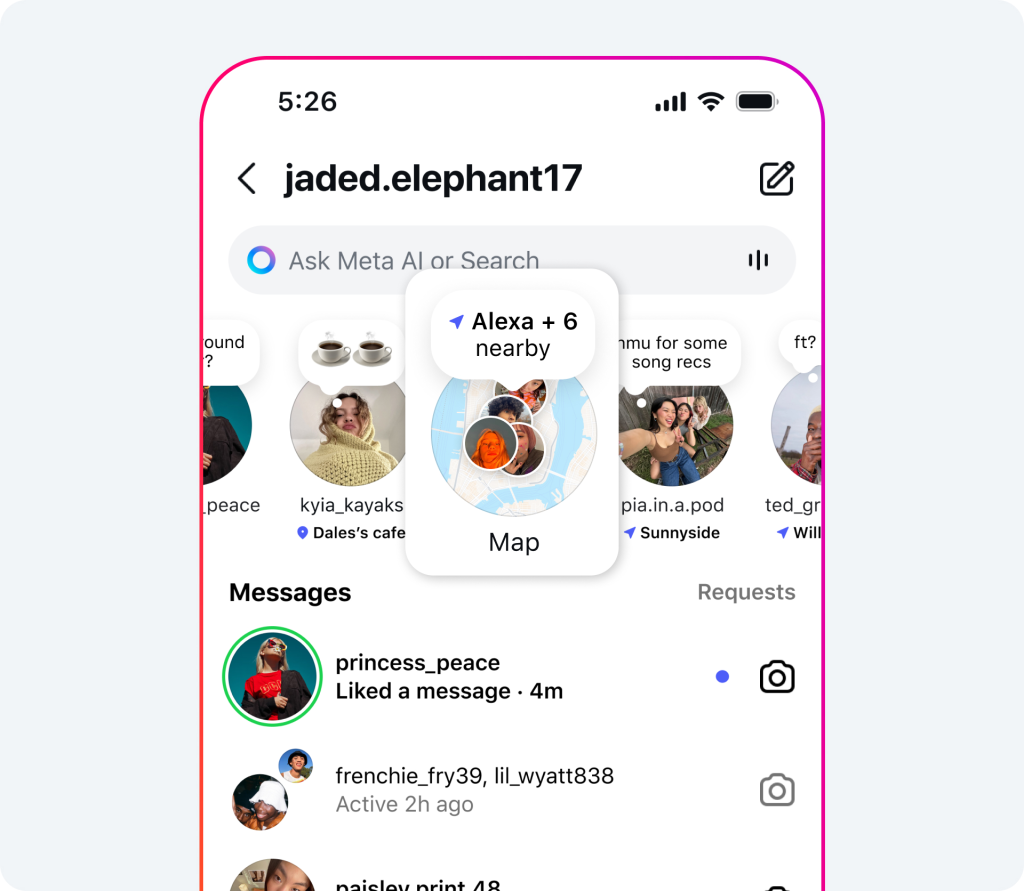
Instagram has rolled out a new “Friend Map” feature, allowing users to share their real-time location with friends, but only if they choose to. The update is designed to make it easier for friends to connect by tagging and sharing “cool spots.” Still, its debut has raised eyebrows, given recent legal controversies surrounding Meta’s handling of sensitive user data.
What Is Instagram’s Friend Map?
Friend Map works like a private location-sharing tool inside Instagram. Users can:
- Share their current location with a handpicked group of friends.
- Limit visibility to specific contacts.
- Turn the feature off at any time.
Instagram head Adam Mosseri stressed that location sharing is “completely off” by default. In a post addressing user concerns, he wrote: “Your location will only be shared if you decide to share it, and if you do, it can only be shared with a limited group of people you choose.”
According to Instagram’s blog, the feature is meant to help people discover and share interesting places with their circles — not to broadcast where they are to the entire platform.
Why Privacy Advocates Are Paying Attention
This launch comes at a delicate time for Instagram’s parent company, Meta. Just a week ago, a federal jury in San Francisco sided with a group of women who accused Meta of exploiting sensitive health data collected by the Flo app, a popular period and pregnancy tracker.
The plaintiffs, represented by law firm Labaton Keller Sucharow, argued that Meta knowingly received confidential health information from Flo and used it to target ads. Evidence presented in court reportedly showed Meta employees were aware of the nature of the data and, in some cases, mocked it.
“This case was about more than just data, it was about dignity, trust, and accountability,” said lead attorney Carol Villegas in a blog post after the verdict. Damages are still to be determined.
The verdict has heightened scrutiny on any new Meta feature involving personal data, even if it’s optional.
How Friend Map Differs from Snapchat’s Snap Map
Friend Map bears a resemblance to Snapchat’s Snap Map, introduced in 2017, which also lets users share live locations. The difference lies in control settings. Instagram emphasizes:
- Location sharing is opt-in only.
- Users must manually choose who can see them.
- There’s no default public sharing.
Still, privacy experts note that once location data is shared, even with a select group, the risk of misuse remains. Screenshots, third-party apps, or even compromised accounts could expose a user’s whereabouts.
Why This Matters
The Friend Map update underscores a larger debate in tech: Can social platforms enhance user connection without overstepping privacy boundaries?
Real-time location tools can be useful for meeting friends at an event, finding a café together, or keeping tabs on loved ones in crowded places. But they also carry inherent risks, including stalking, unwanted tracking, and data exploitation if security measures fail.
The timing of this launch, so soon after Meta’s legal defeat, could affect public perception. Even if the Friend Map is secure and voluntary, many users may be hesitant to engage, remembering past allegations against Meta.
How Users Can Protect Themselves
If you decide to try Friend Map, consider these safety tips:
- Limit your audience: Share locations only with people you trust completely.
- Use temporary sharing: Avoid leaving location sharing on for extended periods.
- Review your privacy settings regularly: Platforms often update policies without clear notice.
- Be aware of your digital footprint: Even private shares can be captured or leaked.
For users concerned about data handling, reviewing Instagram’s privacy policy and third-party data-sharing agreements is a good starting point.
The Bottom Line
Instagram’s Friend Map could make meeting up with friends more seamless, but the feature’s success will depend on whether users believe Instagram can be trusted with their location data. Given Meta’s recent legal troubles, the burden is on the company to prove it values privacy as much as it values engagement.
Until then, Friend Map may remain a tool that’s as much about perception as it is about connection.