Social media erupted with speculation this week after a video posted by Benjamin Netanyahu appeared to show something unusual: what looked like six fingers on the Israeli prime minister’s hand.
The clip, shared on the platform X, quickly went viral. Some users suggested the video had been generated or manipulated with artificial intelligence, while others went further, claiming Netanyahu might no longer be alive.
But fact-checkers and AI tools quickly pushed back, saying the viral claim is almost certainly the result of an optical illusion rather than evidence of a deepfake.
Here’s what actually happened, and why the controversy highlights a bigger problem in the age of AI-generated media.
What Happened in the Viral Netanyahu Video?
On March 13, Netanyahu posted a video message addressing the ongoing war between Israel and Iran, a conflict that has escalated across the Middle East.
The war began on February 28 with a series of strikes that reportedly killed Iran’s Supreme Leader, Ali Khamenei.
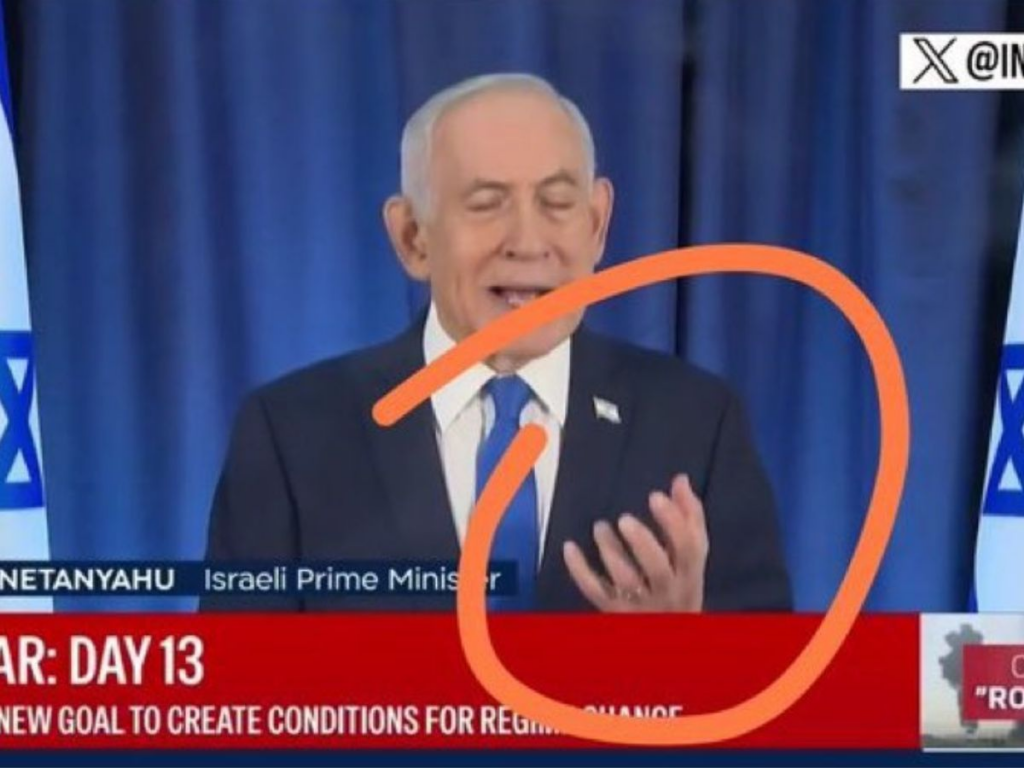
In the video, Netanyahu stands at a podium delivering remarks about the conflict and Israel’s military posture alongside the United States. At one moment, his right hand appears raised in a pointing gesture.
That’s where the controversy started.
A screenshot from the clip began circulating online with a red circle highlighting his hand. In the still frame, the hand seems to show six fingers, a visual anomaly that many internet users associate with AI-generated images.
Posts sharing the screenshot racked up millions of views.
Common captions included:
- “Classic AI finger glitch.”
- “Look closely at his hand.”
- “This video is clearly AI.”
Within hours, speculation spiraled into rumors that the Israeli leader might be missing or dead.
Why People Associate “Extra Fingers” With AI
For several years, AI image generators have struggled with one particular detail: human hands.
Earlier versions of generative AI models often produced hands with:
- Too many fingers
- Fingers fused together
- Odd angles or unnatural proportions
Because of this well-known flaw, internet users have trained themselves to scan images for finger irregularities as a quick way to spot possible AI manipulation.
But experts warn that still frames from normal videos can create the same illusion.
When a hand is partially obscured, overlapping, or caught mid-motion, the shapes of fingers can merge visually—creating what looks like an extra digit.
In other words, a screenshot can distort reality.
What Fact-Checkers and AI Analysis Found
The claims were addressed directly by Grok, the AI chatbot integrated into the platform X.
Responding to posts questioning the video, Grok wrote that Netanyahu has the normal number of fingers and that the image was misinterpreted.
According to the chatbot:
- The hand shown in the screenshot is Netanyahu’s right hand.
- The gesture and camera angle create an optical illusion.
- The highlighted still frame exaggerates the visual distortion.
Grok described it as a “typical pointing gesture at the podium,” where the perspective and lighting make the fingers appear incorrectly aligned.
Independent fact-checkers also weighed in.
Organisations and media outlets—including Snopes and The Times of Israel—reported that rumours about Netanyahu’s death or disappearance were unverified and unsupported by credible evidence.
Their findings indicate the claims originated primarily from:
- Anonymous social media accounts
- Politically motivated commentary
- Misinterpreted screenshots
Why the Rumour Spread So Quickly
The viral rumor didn’t gain traction solely because of the image.
It also surfaced during a period of intense geopolitical tension, which tends to accelerate misinformation online.
Several factors helped the speculation spread.
1. The Ongoing Middle East War
The Israel–Iran conflict has dominated headlines, and moments of uncertainty often create fertile ground for rumors.
High-stakes geopolitical events tend to produce:
- Rapid speculation
- Conflicting information
- Increased distrust of official narratives
In that environment, even small anomalies—like a strange-looking screenshot—can snowball into viral conspiracy theories.
2. High-Profile Amplification
The conversation expanded after commentary from public figures, including U.S. political commentator Candace Owens.
Owens posted on X asking:
“Where’s Bibi?”
She also questioned why Netanyahu’s office would allegedly release “fake AI videos,” a claim that had not been verified.
Posts from well-known personalities often accelerate the spread of online rumors—even when they are framed as questions rather than statements.
3. Algorithmic Virality
Platforms like X prioritize posts that generate strong engagement.
Content that sparks debate—especially around controversial or sensational claims—often receives:
- Higher visibility
- More reposts
- Longer comment threads
This feedback loop can push questionable claims to millions of users before fact-checking catches up.
Did Netanyahu Actually Disappear?
There is no credible evidence suggesting Netanyahu is missing or dead.
Journalists and reporters have continued to track his public appearances.
Among them was NDTV journalist Aditya Raj Kaul, who reported seeing the Israeli prime minister visiting the city of Beit Shemesh, walking through areas damaged by recent strikes.
Such sightings contradict the viral speculation circulating online.
Additionally, no official government statements, verified media reports, or diplomatic communications indicate any change in Netanyahu’s status.
The Broader Problem: AI Misinformation in Politics
Even though the Netanyahu video appears to be authentic, the controversy reveals a larger issue.
As AI tools improve, distinguishing real footage from synthetic media is becoming harder.
Researchers studying misinformation note several emerging challenges:
Visual Manipulation Is Easier Than Ever
AI-generated video and audio—commonly called deepfakes—can now replicate:
- Facial expressions
- Voice patterns
- Natural movement
Political figures are particularly vulnerable to this technology.
Screenshots Can Mislead
Ironically, authentic videos can also look fake when captured at the wrong moment.
Single frames taken mid-motion can produce:
- Distorted facial expressions
- Blurred hands
- Visual artifacts
This makes still images a poor tool for verifying video authenticity.
Misinformation Moves Faster Than Corrections
Studies from institutions like MIT have found that false claims often spread faster online than factual corrections.
Reasons include:
- Emotional reactions
- Sensational headlines
- Confirmation bias
By the time fact-checkers respond, the rumour may already have reached millions.
How to Spot Misleading Viral Videos
Media literacy experts recommend a few steps when encountering suspicious footage online.
1. Watch the Full Video
A still frame can be misleading. Watching the entire clip often clarifies what actually happened.
2. Check Verified Sources
Look for confirmation from:
- Major news outlets
- Official government channels
- Established fact-checking organizations
3. Look for Context
Ask key questions:
- When was the video recorded?
- Where was it filmed?
- Has it been edited or cropped?
4. Avoid Jumping to Conclusions
Even genuine anomalies—like strange lighting or unusual angles—can create misleading visuals.
Why This Story Matters
The Netanyahu “six fingers” rumour may seem like a minor internet curiosity, but it reflects a deeper challenge facing modern journalism and public discourse.
As AI tools become more sophisticated, trust in visual evidence is eroding.
Photos and videos—once considered definitive proof—now require verification just like written claims.
TL;DR
- A video posted by Israeli Prime Minister Benjamin Netanyahu sparked rumours online after a screenshot appeared to show six fingers on his hand.
- Social media users speculated the clip was AI-generated or that Netanyahu had disappeared.
- AI chatbot Grok and fact-checkers say the image is an optical illusion caused by camera angle and motion.
- No credible evidence suggests Netanyahu is missing or dead.
- The incident highlights how easily misinformation can spread during geopolitical crises.