
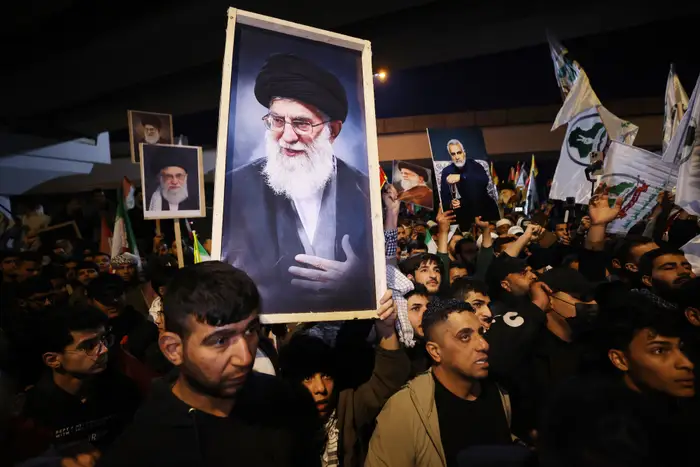
Operation Epic Fury is already reshaping the Middle East. According to reporting by The New York Times, the CIA uncovered intelligence about a secret meeting involving Iran’s Supreme Leader, Ayatollah Ali Khamenei, scheduled for Saturday, February 28. That discovery prompted President Donald Trump to accelerate a joint U.S.-Israeli strike that ultimately killed the 86-year-old cleric, who had ruled Iran for nearly four decades.
The assassination has since ignited a broader regional conflict. Tehran retaliated with missile and drone strikes across the Gulf, targeting U.S. bases and allies, including Kuwait, Bahrain, the UAE, and Saudi Arabia.
Here’s what we know and why it matters.
How Did Operation Epic Fury Begin?
Months of Surveillance
U.S. intelligence agencies, working closely with Israeli counterparts, had reportedly been tracking Khamenei’s movements for months. The breakthrough came when analysts learned that several senior Iranian officials were scheduled to meet him at his palace on Saturday morning.
That intelligence changed everything.
Originally, U.S. and Israeli planners intended to strike at night. But the confirmed presence of multiple high-value targets in one location offered what military strategists call a “time-sensitive opportunity.”
A Morning Strike Instead of a Night Raid
At 6 a.m., Israeli fighter jets armed with long-range missiles and precision-guided munitions took off. Hours later, missiles struck the palace complex.
The goal: decapitate Iran’s top leadership in one coordinated blow.
In addition to Khamenei, the strike reportedly killed:
- Rear Adm. Ali Shamkhani
- IRGC Commander Maj. Gen. Mohammad Pakpour
- Two additional senior military officers
- Members of Khamenei’s immediate family, including his daughter, granddaughter, daughter-in-law, and son-in-law
The precision and timing suggest tight coordination between U.S. and Israeli command structures.
Why Target Khamenei?
The Strategic Logic
Khamenei wasn’t just Iran’s Supreme Leader. He was the central authority over:
- The Iranian military
- The Islamic Revolutionary Guard Corps (IRGC)
- Foreign policy strategy
- Proxy relationships across the region
Eliminating him aimed to create leadership paralysis.
From Washington’s perspective, the calculus appears straightforward:
- Remove the symbolic and operational head of the regime
- Disrupt command-and-control systems
- Deter further Iranian aggression
But regime decapitation strategies carry enormous risks. History shows that removing a central leader can either destabilize a government—or harden it.
A Leadership Vacuum or Rallying Point?
Iran has faced leadership transitions before. But Khamenei ruled since 1989, making him one of the longest-serving political leaders in the region.
His death creates immediate questions:
- Who assumes authority in the interim?
- How unified is Iran’s clerical and military leadership?
- Does this strengthen hardliners within the IRGC?
These are critical factors in determining whether the strike weakens Tehran or escalates confrontation.
How Did Iran Retaliate?
Missile and Drone Strikes Across the Gulf
Within hours of the strike, Tehran responded.
Iranian forces launched missiles and drones at U.S. military bases and allied infrastructure in:
- Kuwait
- Bahrain
- The United Arab Emirates
- Saudi Arabia
- Iraq
- Oman
- Qatar
The attacks triggered air defense responses across the region, with civilian airspace temporarily disrupted.
USS Abraham Lincoln Claim Disputed
Iran’s Revolutionary Guards claimed they struck the USS Abraham Lincoln, a U.S. aircraft carrier stationed in the Arabian Sea.
The Pentagon denied the claim, stating that missiles were launched but none struck the vessel or caused damage.
For credibility and transparency, this claim should be verified against official Pentagon statements and Defense Department briefings. Consider linking directly to the U.S. Department of Defense website for primary source confirmation.
Hezbollah Opens Another Front
On Sunday, Hezbollah launched missiles toward Israel. In response, the Israeli Defense Forces conducted strikes in Beirut aimed at dismantling the group’s infrastructure.
This significantly widens the scope of the conflict beyond a bilateral U.S.-Iran confrontation.
A regional war is no longer theoretical—it’s unfolding.
What Does Operation Epic Fury Mean for the Middle East?
Risk of Multi-Country Escalation
The most immediate concern is geographic expansion.
Iran’s targeting of Gulf states raises the risk of:
- Disruption to global oil supplies
- Maritime insecurity in the Strait of Hormuz
- Broader NATO involvement
A useful addition here would be a map infographic highlighting missile impact zones and major U.S. military bases in the region.
Energy Markets and the Global Economy
Any sustained instability in the Gulf could spike oil prices. Nearly 20% of global oil passes through the Strait of Hormuz.
Even short-term volatility could impact:
- Gas prices in the U.S.
- Shipping costs
- Stock markets
Where Does Iran Go From Here?
Internal Power Struggle
With Khamenei gone, succession becomes the immediate focus.
Iran’s constitution outlines a process involving:
- The Assembly of Experts
- Senior clerical leadership
- Military influence behind the scenes
Whether this transition is orderly or contested will shape the next phase of the crisis.
Exiled Opposition Voices
In exile, Crown Prince Reza Pahlavi has claimed that “millions of Iranians are calling my name” and expressed readiness to serve as a transitional leader.
His statement adds a political dimension beyond military escalation.
For balance, it’s essential to source this claim directly from a verified interview or statement. Consider citing reputable outlets or his official communications.
International Response: Diplomatic Fallout
Iran’s foreign minister has appealed to the United Nations, urging immediate action against what Tehran calls “illegal acts of force.”
That appeal could set the stage for:
- Emergency U.N. Security Council meetings
- Diplomatic condemnation or support
- Potential sanctions adjustments
Why Operation Epic Fury Changes the Strategic Playbook
Targeted killings of senior leaders are not new. But eliminating a sitting head of state—or in this case, a supreme religious-political authority—marks a dramatic escalation.
The strike signals:
- Willingness to act on high-risk intelligence
- Deep intelligence penetration inside Iran
- A new threshold in U.S.-Israel military coordination
It also tests international norms regarding sovereignty and the use of force.
Legal scholars will likely debate whether this constitutes self-defense under Article 51 of the U.N. Charter or an unlawful act of aggression.
TL;DR
- CIA intelligence uncovered a secret meeting involving Ayatollah Ali Khamenei.
- The discovery accelerated a joint U.S.-Israeli strike under Operation Epic Fury.
- Khamenei and multiple senior Iranian officials were killed.
- Iran retaliated with missile and drone strikes across the Gulf.
- The conflict has expanded, with Hezbollah joining hostilities.
- Regional escalation and economic fallout are now major concerns.
What Comes Next?
The coming days will determine whether this becomes
- A contained but intense military exchange
- A protracted regional war
- A turning point in Iranian domestic politics
Much depends on how Iran’s leadership consolidates power—and whether global powers intervene diplomatically or militarily.
One thing is certain: Operation Epic Fury has permanently altered the balance of power calculations in the Middle East.