
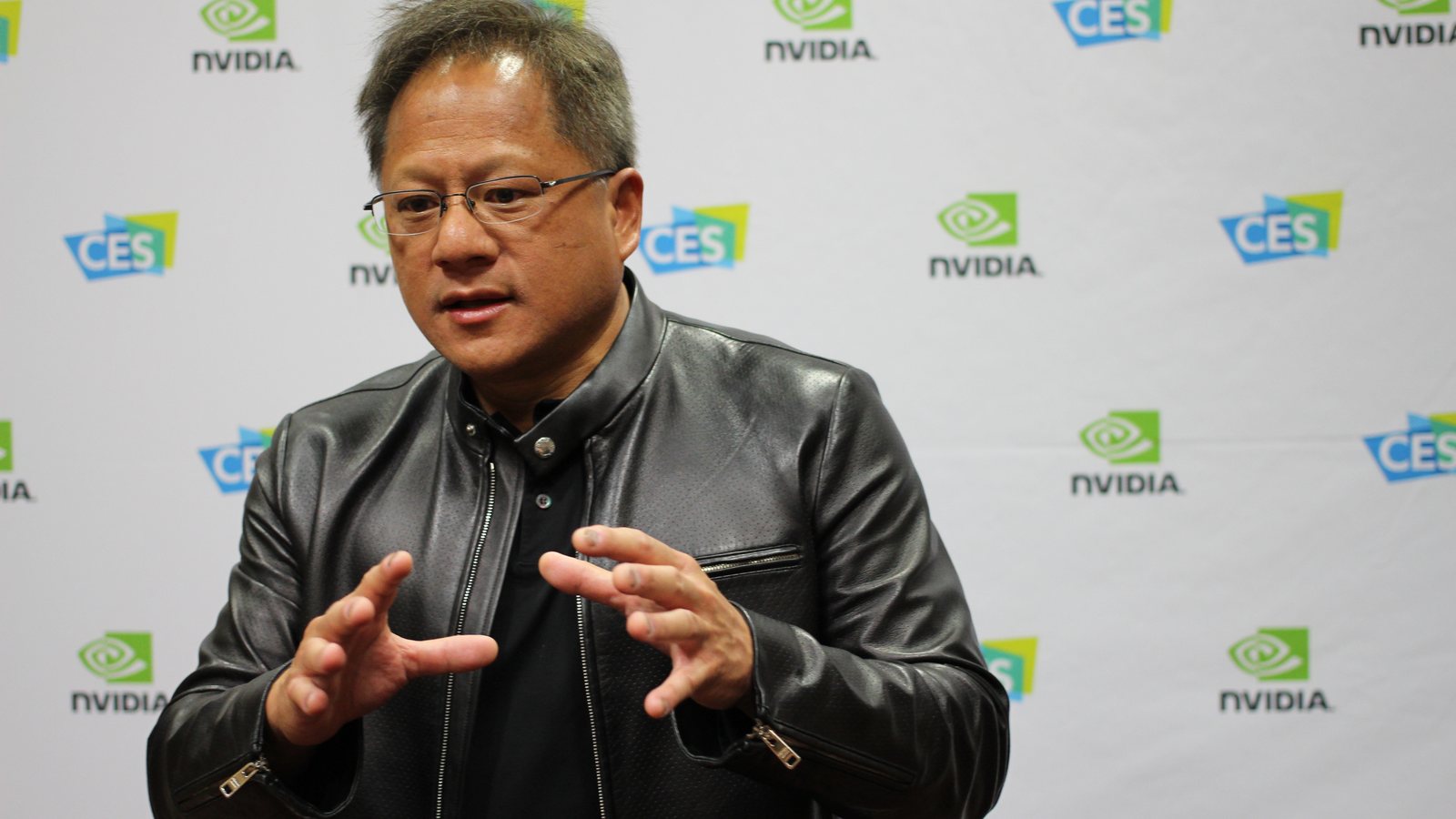

Nvidia has no named successor to Jensen Huang, and the company says he is staying put. A spokesperson told NBC News that Huang is “committed to continuing to lead NVIDIA as CEO without interruption.” The Nvidia succession question is back anyway, because the board opened an independent investigation into its founder on Nov. 8.
This is not a story about Huang leaving. On Monday, Kalshi traders put his odds of departing by 2027 at 17%, CNBC reported. Polymarket gave about one-in-four odds of an exit by the end of March 2027. Our story on the probe and the stock covers what the board said and why shares fell 4.3%.
What the probe has done is make investors look harder at the bench. Nvidia’s own 10-K says the company is “highly dependent on the services of our longstanding executive team.” So we went through the filings to see who that team is.
Huang’s top four are, on average, older than he is
Nvidia lists five executive officers in its 2026 annual report. Huang is one, and he holds both the president and CEO titles. Pay figures come from the summary compensation table in the 2026 proxy statement.
| Executive | Role | Age (Feb. 2026) | Joined Nvidia | FY2026 total pay |
|---|---|---|---|---|
| Jensen Huang | President and CEO | 63 | 1993 (co-founder) | $36.3 million |
| Colette Kress | EVP and chief financial officer | 58 | 2013 | $14.3 million |
| Ajay Puri | EVP, worldwide field operations | 71 | 2005 | $14.8 million |
| Debora Shoquist | EVP, operations | 71 | 2007 | $14.3 million |
| Tim Teter | EVP and general counsel | 59 | 2017 | $14.3 million |
Our arithmetic shows the problem a board would face. The four executive vice presidents average 64.75 years old, more than Huang’s 63. Two are 71, and Kress, the youngest, is five years his junior.
None of the four has a product or engineering title. Kress came from Cisco and Microsoft finance jobs, Puri runs sales, Shoquist runs operations and Teter is a former Cooley patent litigator. No chief operating officer appears in the filings, and Huang keeps the president title himself.
Most of their pay is stock. Each executive vice president received between $12.5 million and $12.9 million in stock awards for fiscal 2026, measured at grant-date value. Together the four earned about $57.7 million, roughly 1.6 times Huang’s total.
Nvidia also has no contracts holding them in place. The proxy says its executive officers are “at-will” employees, with no “employment, severance, or change-in-control agreements.”
Bloomberg found no clear heir in January
Bloomberg raised the gap nine months before the probe. Ian King’s Jan. 27 story was headlined “Nvidia Lacks Clear Successor for Superstar CEO Who Built Company.” We could not open bloomberg.com, so we read the Spanish version republished by Bloomberg Línea and the English opening on Bloomberg Government.
Bloomberg noted that Bill Gates had Steve Ballmer and Steve Jobs had Tim Cook. It said Nvidia has no equivalent, and that no executive with a long internal career has risen to a high-profile role. It also noted that tech giants rarely promote their finance chief to the top job.
The story named two technical leaders with strong reputations, Ian Buck and Bryan Catanzaro. Jon Bathgate of NZS Capital told Bloomberg neither looked ready to make the big strategic calls. He said key-person risk comes with owning Nvidia, and that without Huang the company would need a more traditional structure.
Nvidia did not respond to Bloomberg’s request for comment. Its proxy describes a process instead of a plan. Senior managers work directly with the CEO, it says, which “presents the Board with a pool of excellent candidates for future promotion.”
Huang says he doesn’t believe in succession planning
Huang has answered the question himself, in his own way. “I’m famous in saying that I don’t believe in succession planning,” he told podcaster Lex Fridman in March, according to the published transcript.
His reason, he said, “isn’t because I’m immortal.” Instead, he said, the answer to succession anxiety is to “pass on knowledge, information, insight, skills, experience as often and continuously as you can.” That is why he reasons through decisions in front of his team, he said, and why he hopes to “die on the job.”
In January, at a company event in Las Vegas, he was asked how he has lasted more than three decades. “The secret for being CEO for this long is, one: Don’t get fired. And then, two: Don’t get bored,” he said, as Bloomberg reported.
Apple, Microsoft and Amazon picked insiders with decades in
The handovers Bloomberg cited share one feature: each successor had spent years running a large part of the business first. The companies’ own announcements show it.
| Company | Date | Founder’s new role | Successor’s role before |
|---|---|---|---|
| Microsoft | Jan. 13, 2000 | Bill Gates, chairman and chief software architect | Steve Ballmer, president since July 1998 |
| Apple | Aug. 24, 2011 | Steve Jobs, chairman | Tim Cook, chief operating officer |
| Amazon | Feb. 2, 2021 (effective Q3 2021) | Jeff Bezos, executive chair | Andy Jassy, CEO of Amazon Web Services |
Microsoft’s release, carried by Scoop, said Ballmer would “take over management of the company.” Apple’s release said Jobs “strongly recommended that the Board implement its succession plan and name Tim Cook as CEO.” Amazon announced the change with its results. Its 8-K says Jassy joined in 1997 and had led AWS since its start in 2006.
All three founders stayed on as chair. Nvidia has no chair to hand over; its proxy says the board uses an independent lead director instead.
The comparison doesn’t flatter Nvidia’s bench. None of its executive vice presidents holds a role like Cook’s or Ballmer’s, and no business-unit chief like Jassy appears among the executive officers. For how much of the market rides on the company, see our AI bubble explainer.
The next time investors hear from the team is Tuesday, Nov. 17. Nvidia reports third-quarter results that day, with a call at 5 p.m. ET, the company said.