
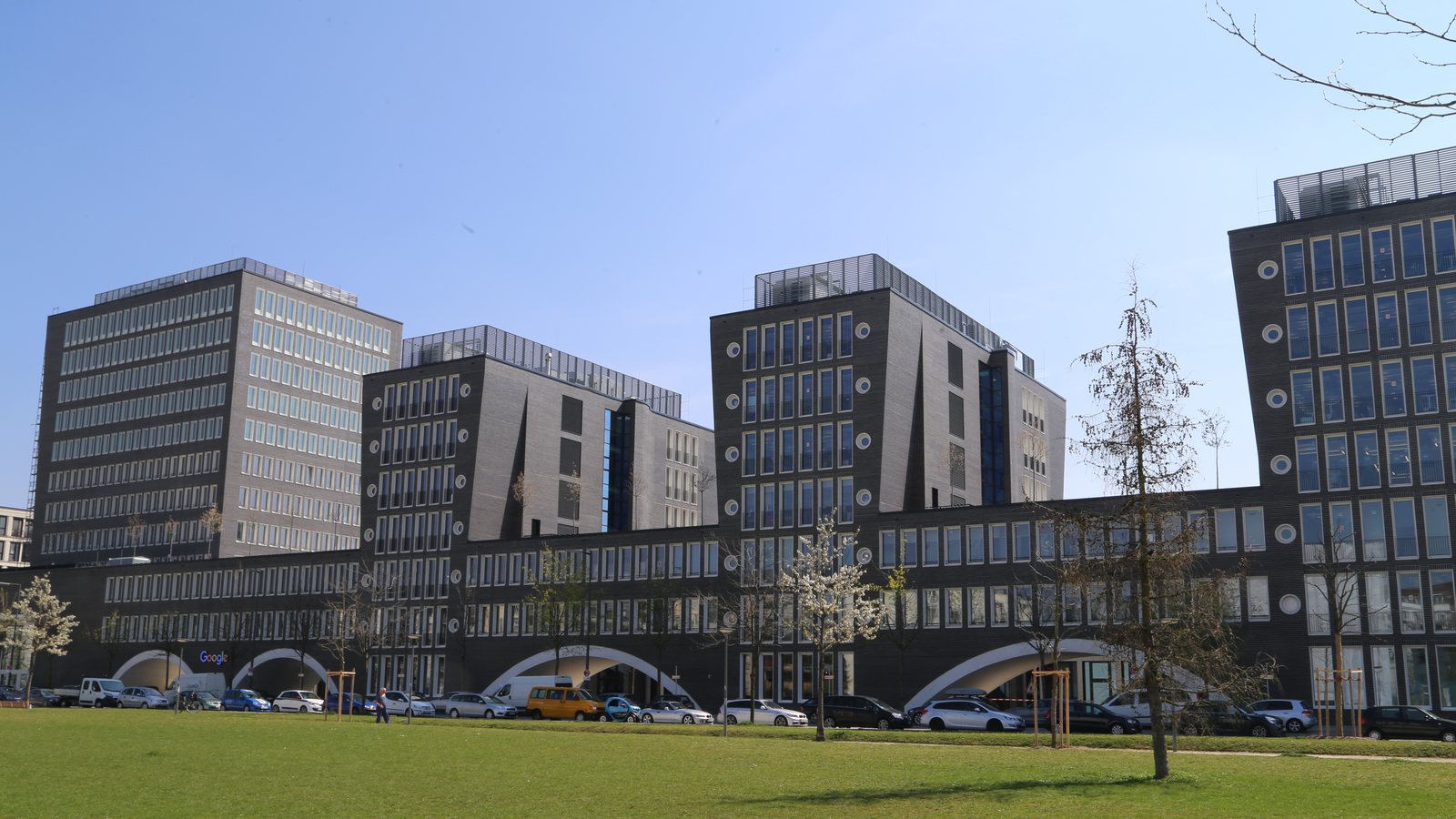

Google buyouts have spread beyond the US and UK. Google confirmed to Reuters that it began offering voluntary exit packages in June. The offers, with severance, went to some employees in Canada, France, Germany, Japan and Switzerland.
The news surfaced this week, five months after the fact, in a Reuters report from Zurich. Marleen Kaesebier and Kenrick Cai wrote it, and the Globe and Mail ran it. Reuters couldn’t determine how many people took the offer, and Google hasn’t said.
Microsoft offered buyouts to about 60,000 employees last week. We covered that in our explainer on who qualifies for the Microsoft buyouts. Google’s version is quieter, and nobody outside the company knows how big it is. It is also happening at a company whose workforce is still growing.
What Google confirmed, and what it didn’t
Google’s statement to Reuters was brief. “In 2025, some of our teams introduced a voluntary exit program with severance,” a spokesperson said. “This past summer, in June, we expanded this program globally in a few countries to support our important work ahead,” the spokesperson added. Fox Business carried the same statement.
That statement confirms the five countries and the June start. It doesn’t say which teams took part outside Switzerland or how many people qualified. Nor does it say what the packages paid in Canada, France, Germany or Japan.
The program isn’t new in the US. Google’s Platforms and Devices unit, home to Android, Chrome and Pixel, offered the first round in January 2025. It applied to US staff in a unit of more than 25,000 full-time employees, CNBC reported.
By August 2025, executives told staff that 10 product areas had made offers. Chief people officer Fiona Cicconi said 3% to 5% of employees on those teams had accepted, according to CNBC. YouTube followed with its own US offer in October 2025, saying “the next frontier for YouTube is AI,” CNBC reported.
Reuters says earlier offers also reached some divisions in Britain. The June round takes the program to continental Europe, Canada and Japan for the first time on record.
The Swiss terms: a month’s pay per year, up to 12
Switzerland is the only country where we know the terms. Google employs about 5,000 people there, including a large engineering hub in Zurich. Three people familiar with the matter described the offer to Reuters.
- Google announced the packages in mid-June.
- Employees who applied heard back by mid-July, and those who accepted began leaving in August.
- The severance was one month’s salary for each year at Google, capped at 12 months.
- The offer covered several divisions but not DeepMind, Google’s AI research lab.
On one team of about 50 people, at least four accepted, one of the sources told Reuters. That’s one team, not a company-wide rate.
The Swiss history helps explain why a voluntary route appeals. Google laid off more than 200 employees in Switzerland in 2023, Reuters noted. Staff responded with protests and a walkout. A buyout shrinks a team too, but every departure is a choice.
It isn’t always the end of cuts, though. Reuters reported that in at least one case, a Google division that offered buyouts later made layoffs.
Cloud and DeepMind stay off-limits
Past buyout offers left out employees in Google Cloud and DeepMind, Reuters reported. The Swiss offer in June again skipped DeepMind. Those are the two units closest to Google’s AI business.
The exclusion lines up with what Alphabet tells investors. On the July 22 earnings call, chief financial officer Anat Ashkenazi said Google expects to keep hiring in “key investment areas such as AI and Cloud,” Fox Business reported.
Cloud is also where the revenue is growing fastest. Google Cloud revenue rose 103% to $30.7 billion in the third quarter, according to Alphabet’s earnings release on October 28. CEO Sundar Pichai credited “huge demand for our AI infrastructure and AI solutions.” The buyout offers go to teams outside that engine.
Google’s headcount grew by 14,600 anyway
This is where Google’s story differs from a simple cost-cutting tale. Alphabet had 204,757 employees on September 30, up from 190,167 a year earlier. Those figures come from the earnings release on its investor relations site. That’s an increase of 14,590 people, or 7.7%, in the same year the buyouts spread.
Capital spending moved faster. Alphabet’s purchases of property and equipment reached $51.4 billion in the third quarter, against $24.0 billion a year earlier. For the first nine months of 2026, the total was $132.0 billion. That’s more than double the $63.6 billion of the same stretch in 2025.
Put those figures side by side and the buyouts look like a reallocation rather than a shrinking. Google is moving people and money toward AI and cloud. Elsewhere, it pays some employees to leave on their own terms. Reuters ties the move to AI spending that has “unnerved Wall Street.” Google itself has only said the expansion supports “our important work ahead.” Whether investors should worry is a separate question, covered in our explainer on what an AI crash would actually hit.
For the AI specialists that big tech companies are still hiring, the going rates are a different story, as our look at what AI labs pay showed.
How it compares with Microsoft’s buyouts
Microsoft’s Voluntary Exit Offer is far bigger and more public. Chief people officer Amy Coleman announced it in a memo on the company’s blog on October 26. It covers participating teams in the US, Canada, the UK and India. That reaches about 27% of Microsoft’s roughly 223,000 full-time staff.
Google never announced its expansion and gave no eligible headcount. Its Swiss terms scale with tenure and stop at 12 months. Microsoft says its offer matches standard severance, and eligible employees have until early December to decide.
The two offers overlap in only one country, Canada. Google’s June round went to Europe and Japan. Microsoft’s reaches the UK and India, where Google hasn’t confirmed a new offer.
The next marker is Microsoft’s early-December deadline, which will show how many of its 60,000 eligible employees take the money. Google hasn’t said whether it will report how many accepted in the five countries.