
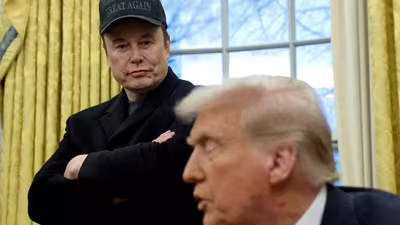
The public feud between President Donald Trump and Tesla CEO Elon Musk has reignited—this time over Trump’s proposed “Big Beautiful Bill.” While Trump touts the legislation as a boost to national defense and economic stability, Musk warns it could balloon the national debt and unfairly target clean energy. But beneath the surface, this battle may have more to do with electric vehicle (EV) subsidies, tax credits, and a growing rift between two of America’s most polarizing figures.
What’s in Trump’s “Big Beautiful Bill”?
The bill, currently in a marathon Senate voting session, includes several key provisions:
- Increased defense spending (a key Trump priority).
- Repealing major portions of Biden’s Inflation Reduction Act (IRA), including EV tax credits.
- New fees for EV owners ($250 annual registration fee for EVs, $100 for hybrids).
- Special exemptions for some automakers, allowing smaller EV startups to retain tax credits longer than industry leaders like Tesla.
Trump argues the bill will strengthen national security and curb excessive spending, while Musk claims it’s a disguised handout to fossil fuel companies—one that could derail America’s clean energy progress.
Why Is Elon Musk Fighting It?
1. The End of EV Tax Credits Could Hurt Tesla’s Sales
The bill eliminates the $7,500 federal tax credit for EV purchases by September 30, 2025—a move that directly impacts Tesla, which currently has 10 eligible models. While Musk has previously criticized subsidies, Tesla has already restructured its supply chains to comply with IRA requirements. Repealing the credit now would make Tesla’s vehicles more expensive overnight, potentially slowing sales.
Musk’s Stance:
- 2024: “Take away the subsidies. It will only help Tesla.”
- 2025 (as the bill advances): Tesla’s energy division warns that cutting incentives threatens U.S. energy independence.
2. Solar and Battery Incentives Are on the Chopping Block
The bill also rolls back tax credits for solar energy, battery storage, and grid infrastructure—key areas where Tesla’s energy business is expanding. Musk argues this unfairly favors oil and gas, calling the bill a “fossil fuel protection act in disguise.”
3. A Loophole Benefits Rivals Like Rivian and Lucid
A controversial clause allows EV startups that haven’t sold 200,000 vehicles by 2025 to keep tax credits until 2026. This benefits companies like Rivian and Lucid but excludes Tesla, Ford, and GM. Critics see this as a targeted move against Musk’s dominance in the EV market.
4. New EV Fees Could Slow Adoption
The proposed $250 annual fee for EV owners is framed as a way to fund road maintenance (since EVs don’t pay gas taxes). But opponents argue it penalizes clean energy adoption while fossil fuel subsidies remain untouched.
Is This Really About Debt—Or a Personal Feud?
Trump and Musk were once political allies, but their relationship has soured in recent years. Some speculate this policy clash is as much about personal rivalry as fiscal policy.
- Trump’s Camp suggests Musk is opposing the bill purely to protect Tesla’s profits.
- Musk’s Allies argue Trump is punishing the tech billionaire for past criticisms and favoring legacy automakers.
What Happens Next?
The Senate’s vote could go either way, but one thing is clear: The Trump-Musk feud is now a proxy war over America’s energy future. If the bill passes:
- EV sales could dip without tax incentives.
- Renewable energy investments may stall.
- The fossil fuel industry stands to gain.
For now, all eyes are on Washington—and on X (formerly Twitter), where these two titans are sure to keep the debate raging.