As Britain’s political class reels from the fallout of the Jeffrey Epstein disclosures, a once-unlikely question has moved to the center of Westminster gossip: could the United Kingdom be on the verge of appointing its first Muslim prime minister?
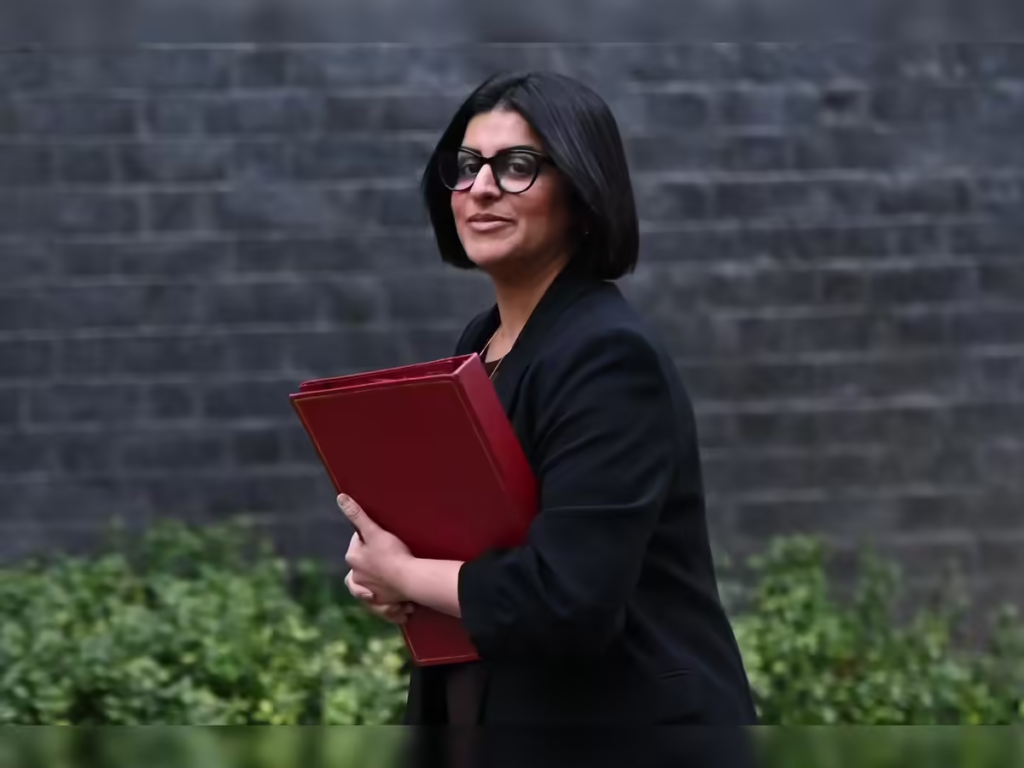
At the heart of that conversation is Shabana Mahmood, the 45-year-old Home Secretary and a senior figure inside the Labour Party. With Prime Minister Keir Starmer under intense pressure, Mahmood is being discussed not just as a caretaker option but as a serious, if still long-shot, contender for the top job.
This article breaks down who Mahmood is, why her name is suddenly everywhere, and what would need to happen for her to make political history.
Who Is Shabana Mahmood?
Shabana Mahmood is not a sudden invention of crisis politics. She is a trained barrister, a seasoned parliamentarian, and one of Starmer’s most trusted allies.
Born and raised in Birmingham, she is the daughter of parents with roots in Pakistan and the Mirpur region of Pakistan-administered Kashmir. Her biography matters politically, not merely as symbolism, but because it places her at the intersection of two forces shaping modern Labour: cultural diversity and law-and-order credibility.
Education and Early Career
Mahmood’s résumé follows a familiar Starmer-era path:
- Law degree from Lincoln College, Oxford
- Bar Vocational Course at the Inns of Court School of Law
- Practice as a barrister before entering Parliament
In 2010, she entered the House of Commons as one of the first female Muslim MPs, alongside Rushanara Ali and Yasmin Qureshi. That cohort marked a generational shift inside Labour, one that Mahmood has steadily leveraged.
Why Is Her Name Rising Now?
The immediate trigger is political chaos at the top.
Starmer’s authority has been badly shaken by revelations linked to the Epstein files, particularly over the appointment of Peter Mandelson as the UK’s ambassador to Washington. Mandelson’s past association with Jeffrey Epstein, who died in a New York jail in 2019, ignited backlash within Labour and beyond.
The damage worsened when Starmer’s chief of staff resigned, attempting to shield the prime minister but instead reinforcing the perception of a government in disarray.
With approval ratings sliding and internal dissent growing, Westminster has entered what MPs privately describe as “succession mode.”
That’s where Mahmood comes in.
Where Does Shabana Sit Inside the Labour Party?
Mahmood is often described as being on the party’s right, a label that matters in today’s Labour.
She is:
- Tough on immigration
- Strong on policing and security
- Comfortable with surveillance technology
- Willing to challenge progressive orthodoxies
This positioning appeals to party strategists worried about voter drift to Nigel Farage’s Reform UK. At the same time, her identity as a Muslim woman gives her potential reach among voters disillusioned by Labour’s stance on Gaza and its strong alignment with Israel.
That dual appeal is also why critics accuse her of contradiction, if not outright hypocrisy.
What Is Her Record on Immigration and Security?
As Home Secretary, Mahmood has made immigration the defining issue of her tenure.
Key Immigration Policies
Her most controversial proposal would:
- Double the qualifying period for permanent residency
- Extend it from five years to ten for most migrant workers
- Apply changes retrospectively in some cases
Shabana Mahmood has framed settlement as a “privilege, not a right,” arguing that unprecedented migration levels require firm government action.
Critics inside Labour disagree sharply.
Around 40 MPs have warned that retrospective rule changes are “un-British” and risk worsening skills shortages—especially in healthcare.
Policing and Surveillance
Beyond immigration, Shabana Mahmood has
- Defended the nationwide rollout of facial recognition
- Rejected devolving policing powers to Wales
- Emphasized public order over civil liberties concerns
These stances have reassured centrists and unsettled the party’s left flank.
Who Are Her Main Rivals for the Leadership?
Shabana Mahmood is not the frontrunner, at least not yet.
Bookmakers and analysts point to several better-known contenders:
- Angela Rayner
A favorite of Labour’s left despite past controversies, and currently seen as the safest pair of hands. - Wes Streeting
Media-savvy and ambitious, but weakened by ties to Mandelson and his support for private NHS involvement. - Ed Miliband
Enjoying a second act, though still shadowed by Labour’s 2015 election defeat. - Andy Burnham
Popular nationally, but currently outside Parliament, a major procedural obstacle.
Against this field, Shabana Mahmood stands out less for popularity than for positioning.
What Are Shabana Mahmood’s Actual Chances?
Right now, bookmakers place her odds at roughly 9/1, about a 10% chance.
That reflects three realities:
- She is not the party’s first instinct.
- Her policies are divisive inside Labour.
- Her path depends entirely on Starmer’s fall.
To trigger a leadership contest, at least 20% of Labour MPs, around 81 lawmakers, would need to back a challenge. Even then, Mahmood would have to convince colleagues that she can unite a party already on edge.
Her biggest strength may be timing. In moments of crisis, parties often turn to figures seen as “serious,” “tough,” and capable of restoring authority. Mahmood fits that brief better than many rivals.
Why This Moment Matters Beyond One Politician
If Mahmood were to become prime minister, the symbolism would be historic. But the substance matters more.
Her rise would signal:
- Labour’s shift toward enforcement-first governance
- A recalibration of how identity and ideology intersect in British politics
- A gamble that toughness—not consensus—is the path back to voter trust
Whether that gamble pays off is far from clear.
TL;DR
- Shabana Mahmood is emerging as a dark-horse contender to replace Keir Starmer.
- She combines hardline immigration policies with historic identity appeal.
- Internal Labour opposition and strong rivals limit her odds—for now.
- Her chances rise only if Starmer’s leadership collapses fully.