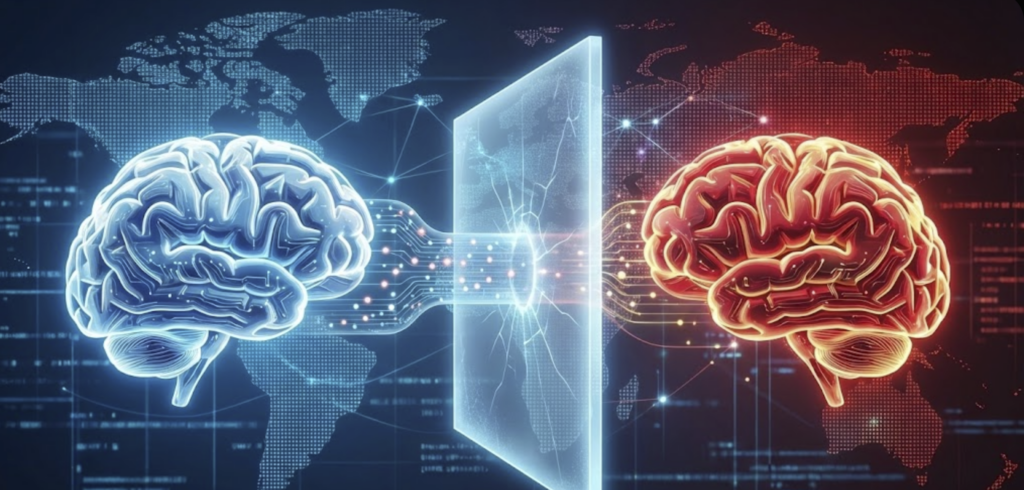
In its Tuesday bombshell, Anthropic didn’t just accuse Chinese labs of copying; it provided a blueprint of a new, highly sophisticated form of digital espionage. They call it a “Hydra Cluster” attack.
If a standard data scrape is like a student glancing at a peer’s paper, a Hydra Cluster attack is like a swarm of 24,000 microscopic cameras recording every pen stroke, thought process, and erasure in real-time.
What is a Hydra Cluster?
The term “Hydra” refers to the mythical many-headed serpent: cut off one head, and two more grow back. In the context of AI distillation, it represents a sprawling network of coordinated, fraudulent accounts used to bypass safety filters and rate limits.
Anthropic identified that DeepSeek, Moonshot, and MiniMax used commercial proxy services to mask their origins. These services are operated:
- Massive Account Networks: Over 24,000 unique accounts were used simultaneously.
- Traffic Blending: The “theft” queries were mixed with millions of ordinary, harmless requests to make the attack look like legitimate global traffic.
- Instant Regeneration: When Anthropic’s security systems identified and banned an account, the “Hydra” simply activated a new one within seconds.
The Goal: Chain-of-Thought (CoT) Extraction
The attack wasn’t just about getting answers; it was about stealing the logic. Anthropic alleges the labs targeted Claude’s “Reasoning” capabilities.
In many of the 16 million exchanges, the fraudulent accounts prompted Claude to:
- “Show your work”: Forcing the model to articulate its internal “Chain-of-Thought” (the step-by-step logic it uses to solve a complex coding or math problem).
- Rubric-Based Grading: Asking Claude to grade other AI responses, effectively “stealing” Anthropic’s internal quality standards.
- Censorship Bypassing: DeepSeek reportedly used Claude to generate “safe” alternatives to politically sensitive queries, essentially using Claude to train their own models on how to handle difficult topics without triggering Chinese regulators.
Why “Distillation” is the New Front Line
Distillation is the process of training a smaller model (the student) to mimic a larger, more expensive model (the teacher).
| Type of Distillation | Legality | Description |
| Internal Distillation | ✅ Legal | Anthropic uses Claude 3.5 Opus to train a smaller, faster “Haiku” model for its own customers. |
| Illicit Distillation | ❌ Disputed | A competitor uses 16 million queries to “siphon” the teacher’s intelligence into their own rival product. |
Anthropic’s “Hydra” discovery shows that MiniMax was so efficient that when Anthropic released a new model update, the Chinese lab pivoted nearly half its traffic to the new system within 24 hours to begin “siphoning” the latest improvements immediately.
The Looming R2 Threat
This technical context explains why US labs are panicking. DeepSeek R2 is rumored to drop within the next two weeks. If DeepSeek has successfully used “Hydra” clusters to ingest 16 million data points from Claude, the R2 model might not just be a Chinese alternative—it could be a “mirror” of Claude’s own intelligence, offered at a fraction of the cost.