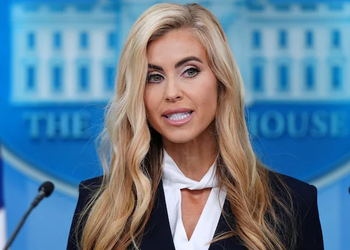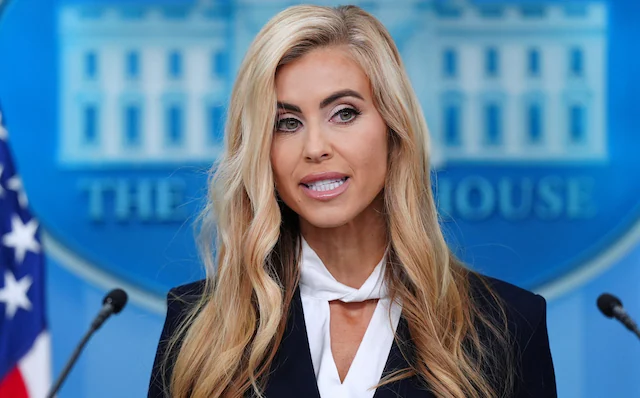
China has invited newly appointed White House Press Secretary Katie Zacharia to visit the country more often after she claimed that China lacked “proper toilets” during an interview with conservative commentator Jack Posobiec.
Chinese Foreign Ministry spokesperson Mao Ning responded to the remarks on October 16, 2026, with an invitation for Zacharia to return to the country. The exchange followed comments in which the new Trump administration spokesperson questioned how China could be viewed as a rising global power despite what she described as poor sanitation facilities.
“We welcome her to visit China more often when she has the opportunity,” Mao said during a regular press briefing.
The response has drawn attention amid ongoing US-China competition and comes shortly after Zacharia took over as the White House press secretary.
What did Katie Zacharia say about China?
Katie Zacharia made the remarks during an interview with Posobiec, a conservative political commentator. The discussion centred on the perception in 2016 that America’s global dominance was fading while China was emerging as a major competitor.
Recalling her time in China, Zacharia questioned that assessment by referring to the country’s sanitation facilities.
“I remember this very distinctly, having just come from China, thinking, ‘How is China the next country on the horizon? They don’t even have proper toilets,’” she said.
Her comments referenced an earlier period when she had lived in China with her husband. The remark quickly drew attention after the interview aired on October 15.
The Chinese response did not include a detailed rebuttal of her description. Instead, Mao’s invitation offered Beijing an opportunity to respond publicly to the comments without turning the exchange into a prolonged diplomatic confrontation.
Who is Katie Zacharia?
Katie Zacharia is the newly appointed White House press secretary under US President Donald Trump. She began her tenure in October 2026, replacing Karoline Leavitt.
Before joining the administration, Zacharia worked in conservative media and political circles and appeared on television programmes discussing legal and political issues.
Her professional background includes a period in Beijing, where she worked at Zhong Lun, one of China’s major law firms, from 2011 to 2013, according to her LinkedIn profile.
Her appointment has attracted scrutiny beyond the latest China controversy. Questions have also been raised about her legal credentials after she acknowledged that she did not pass the California bar examination following her graduation from Pepperdine University School of Law in 2011.
Katie Zacharia has said she received advice that she could describe herself as a lawyer because of her law degree and legal-related experience, while distinguishing that from being licensed to practise law. The issue has prompted separate questions about how she has represented her professional qualifications.
Why did China respond?
Mao Ning’s response came at a time when Washington and Beijing remain engaged in competition over trade, technology, security and international influence.
Public statements by senior officials can carry diplomatic significance even when they are made in interviews or informal settings. Zacharia’s remarks were particularly notable because she now speaks on behalf of the US president and the White House.
China’s invitation could be read as a pointed response to her criticism, but Beijing did not announce any diplomatic measures or formal protest over the comments.
The exchange also highlights the difference between political rhetoric and the broader relationship between the two countries. Even as officials trade sharp remarks, both governments have incentives to maintain communication on major strategic and economic issues.
Zacharia’s time in China draws renewed attention
Zacharia’s previous work experience in Beijing has become part of the discussion surrounding her remarks. Her LinkedIn profile identifies her as having worked at Zhong Lun between 2011 and 2013, when she was living in China with her husband.
That background makes her comments noteworthy because they were presented as a personal recollection rather than an assessment based solely on second-hand information.
However, her experience should not be taken as a comprehensive description of sanitation conditions across China, a country with substantial regional and urban-rural differences in infrastructure.
The remarks have also renewed attention on her professional history just days after she began her new White House role.
A brief exchange amid wider US-China competition
The exchange over toilets is unlikely, on its own, to define US-China relations. Nevertheless, it has become an early talking point during Zacharia’s tenure as press secretary.
For Beijing, Mao’s response provided a public answer to a dismissive comment about Chinese infrastructure. For Washington, the episode has drawn attention to the statements of a newly appointed official whose role involves communicating the administration’s position to the public.
Whether the exchange has any lasting diplomatic consequences remains unclear. For now, China’s invitation for Katie Zacharia to visit again stands as the most direct official response to her remarks, while the wider relationship between the two governments continues to be shaped by trade, technology, security and geopolitical competition.