Key Takeaways:
- Historic Exit: The UAE will officially leave OPEC and the OPEC+ alliance on May 1.
- The Reason: Abu Dhabi wants the freedom to maximize its oil production capacity without OPEC quota restrictions while diversifying its broader economy.
- Geopolitical Impact: The exit comes amid heightened global energy volatility tied to the ongoing US-Iran conflict and disruptions in the Strait of Hormuz.
In a move that is set to reshape global energy markets, the United Arab Emirates (UAE) announced on Tuesday, April 28, that it is officially withdrawing from the Organization of the Petroleum Exporting Countries (OPEC) and the broader OPEC+ alliance.
Effective May 1, the exit marks the end of a partnership that has lasted for over five decades. But why is the UAE walking away from one of the world’s most powerful economic blocs, and how will it impact the price of crude oil? Here is everything you need to know.
Why is the UAE Leaving OPEC?
The core driver behind the UAE’s departure is a clash between Abu Dhabi’s long-term economic vision and OPEC’s strict production limits.
State energy giant ADNOC has been investing heavily to raise its crude production capacity to 5 million barrels per day by 2027. However, OPEC’s quota system—designed to prevent market oversupply—has forced the UAE to leave much of its expensive, newly built infrastructure sitting idle.
By stepping away from the cartel, the UAE gains the independence to utilize its production capabilities fully. Furthermore, this move aligns with the nation’s strategy to rapidly monetize its oil reserves to fund its transition toward a knowledge-based economy focused on technology, education, and global investment.
How the US-Iran Conflict Accelerated the Move
The timing of the UAE’s exit is highly strategic, occurring amid intense instability in West Asia.
Rising tensions from the US-Iran conflict have led to disruptions in the Strait of Hormuz, a critical maritime chokepoint that handles nearly 20% of global oil shipments. Because Iran is a founding member of OPEC, the organization’s consensus-based decision-making process has occasionally limited the UAE’s flexibility to swiftly adjust exports during these geopolitical crises. Leaving the alliance grants Abu Dhabi full autonomy over its energy security and export strategies.
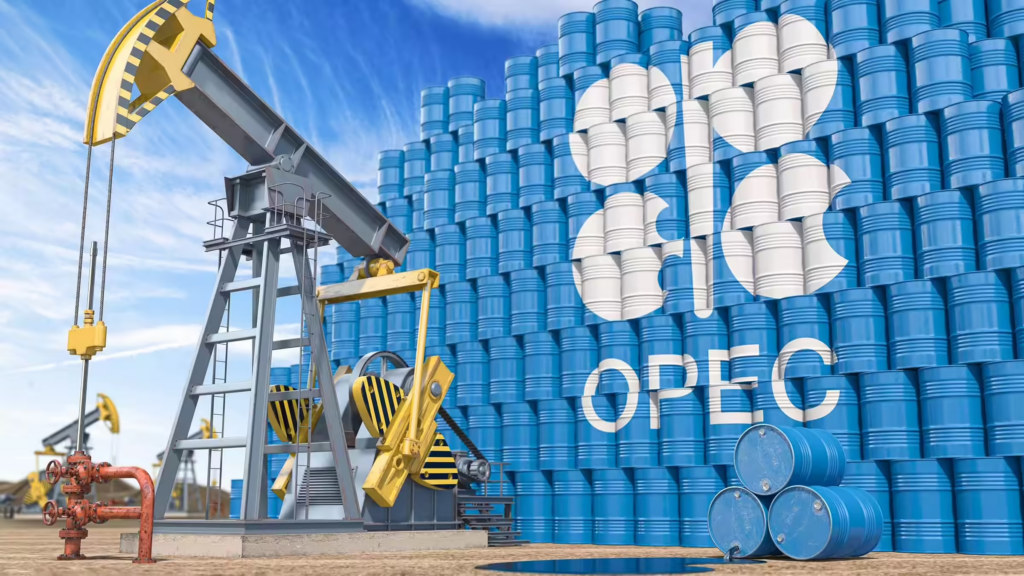
What is OPEC and How Does it Control Oil Prices?
To understand the magnitude of the UAE’s exit, it is essential to understand the power OPEC holds over the global economy.
Before OPEC, Western oil conglomerates (famously known as the “Seven Sisters”) dictated global oil pricing. In September 1960, Iran, Kuwait, Iraq, Saudi Arabia, and Venezuela formed OPEC at the Baghdad Conference to give oil-producing nations control over their own resources. The UAE joined shortly after in 1967.
How it works: OPEC functions as a coordinating body. It manages global oil prices by setting strict production quotas for its members.
- When demand is low: OPEC cuts production to prevent oversupply and keep prices stable, protecting the economies of member nations.
- When supply is short: OPEC increases production to prevent massive price spikes.
The Rise of OPEC+
In 2016, the cartel expanded its influence by partnering with major non-OPEC oil producers, primarily Russia, to form OPEC+. According to the US Energy Information Administration, this super-alliance controls roughly 40% of global crude production and nearly 60% of internationally traded oil. The UAE’s departure removes a massive pillar from this alliance, fundamentally altering the future dynamics of global oil supply.