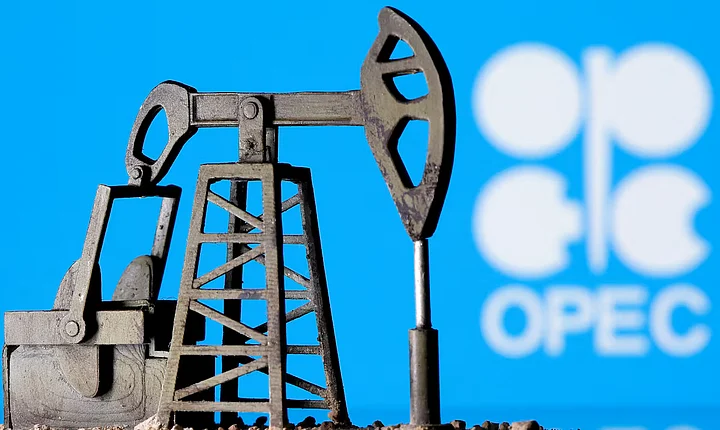
In a move that could ripple across global energy markets, the United Arab Emirates has announced it will leave the Organization of the Petroleum Exporting Countries and the broader OPEC+ framework effective May 1, ending nearly six decades of membership in one of the world’s most influential energy alliances.
The decision marks one of the most consequential shifts in oil diplomacy in recent years. For the UAE, it opens the door to greater production flexibility and faster expansion. For OPEC+, it raises difficult questions about cohesion, pricing power, and the future of coordinated oil supply management.
Why is the UAE leaving OPEC and OPEC+?
The official explanation centers on strategy, flexibility, and long-term economic priorities.
A push for production freedom
For years, the UAE has invested billions into expanding oil production capacity. But OPEC+ quotas limited how much of that capacity could actually be used.
By exiting the alliance, the UAE gains:
- Full control over production decisions
- Freedom from quota restrictions
- Greater flexibility to respond to market demand
The country is targeting a production capacity of 5 million barrels per day by 2027, a goal that increasingly conflicts with OPEC+ output controls.
What UAE officials are saying
Suhail bin Mohammed Al Mazrouei described the move as a “policy-driven evolution” aligned with market realities and long-term strategy.
Officials also emphasized:
- Energy security
- Reliable supply
- Lower-carbon production
- Responsiveness to market dynamics
The messaging suggests the UAE wants to position itself not just as a major oil producer, but as a modern and flexible energy power.
What tensions existed between the UAE and OPEC+?
This split did not emerge overnight. Friction had been building for years.
The quota problem
OPEC+ relies on coordinated production cuts to stabilize prices. That system works best when members accept limits on output.
The UAE increasingly viewed those limits as the following:
- Restrictive to growth
- Misaligned with its investment strategy
- Unfair relative to its production capacity
In simple terms, Abu Dhabi spent heavily to pump more oil, while OPEC+ rules often required it to hold back.
A clash of priorities
The disagreement reflects two competing visions:
- OPEC+: Protect prices through collective restraint
- UAE: Expand market share through higher production capacity
This tension became harder to manage as the UAE developed some of the world’s most cost-competitive oil operations.
What does this mean for global oil prices?
The immediate market reaction will likely focus on supply expectations.
More oil could enter the market
Without OPEC+ restrictions, the UAE may gradually increase production faster than previously allowed.
That could:
- Increase global supply
- Put downward pressure on oil prices
- Reduce OPEC+ influence over the market
However, UAE officials have stressed that additional production will be introduced gradually and responsibly.
Why markets may still stay volatile
Oil pricing depends on more than one producer. Traders will also watch:
- Demand growth in China and India
- U.S. shale output
- Geopolitical tensions in the Middle East
- Global economic growth
The UAE exit adds uncertainty to an already fragile energy landscape.
Why is this a major moment for OPEC+?
The departure is symbolically and strategically significant.
The loss of a heavyweight producer
The UAE is the world’s seventh-largest oil producer and one of OPEC’s wealthiest and most technologically advanced members.
Its exit:
- Weakens the perception of alliance unity
- Signals internal disagreements
- Could encourage other members to seek more independence
A challenge to cartel cohesion
OPEC+ has functioned largely through negotiated compromise. When a key member leaves over production disputes, it raises broader questions:
- Can the alliance maintain discipline?
- Will quota systems remain effective?
- Could more producers prioritize national strategy over collective policy?
This is especially important because OPEC+ influence depends as much on credibility as on barrels.
How does the UAE fit into the energy transition?
The UAE’s strategy is not just about pumping more oil. It is also about reshaping its energy identity.
The “lower-carbon barrel” argument
The UAE has increasingly marketed its crude as:
- Cost-efficient
- Operationally cleaner
- Lower in carbon intensity than many competitors
This allows the country to argue that its oil remains relevant even as the world moves toward cleaner energy.
A dual-track strategy
The UAE is simultaneously:
- Expanding oil capacity
- Investing heavily in renewables and clean energy projects
This reflects a broader Gulf strategy: maximize hydrocarbon revenue while preparing for a post-oil future.
What happens next?
The first major test will come after May 1, when markets assess whether the UAE immediately changes production strategy.
Key things analysts will watch
- Actual production increases
- Reactions from Saudi Arabia and other OPEC+ members
- Oil price movement over the next quarter
- Whether the UAE maintains informal coordination with OPEC+
Even outside the alliance, the UAE may still cooperate strategically when interests align.
TL;DR
- The UAE will officially exit OPEC and OPEC+ on May 1
- The move ends nearly six decades of membership
- Abu Dhabi wants greater freedom to expand oil production
- The country aims to reach 5 million barrels per day capacity by 2027
- The decision could weaken OPEC+ cohesion and impact global oil prices
- Analysts now expect closer scrutiny of supply levels and Gulf energy politics