
Microsoft’s latest round of layoffs marks one of the biggest shake-ups in Xbox’s nearly 25-year history. Around 3,200 jobs are expected to be eliminated over the next fiscal year, with about 1,600 cuts taking effect immediately. Several game studios are also leaving Microsoft’s gaming portfolio as the company restructures its business. For long-time gamers, the announcement feels like the end of an era. But Xbox itself was born from a moment of uncertainty. What started as a small, rebellious project inside Microsoft evolved into one of gaming’s biggest brands. Today, the company is betting that another reinvention will secure Xbox’s future.
Here’s how Xbox went from a prototype “held together by chewing gum and tape” to a gaming giant now facing one of its toughest resets.
How did Xbox begin inside Microsoft?
In the late 1990s, Microsoft dominated personal computing through Windows and Office. Video game consoles were not part of its business strategy.
However, a small team inside Microsoft’s DirectX division believed Sony’s PlayStation posed a long-term threat. If consoles became the primary gaming platform, Windows could gradually lose importance among gamers.
That concern inspired four Microsoft employees, Seamus Blackley, Kevin Bachus, Otto Berkes, and Ted Hase, to pitch an entirely new gaming console.
A project few executives wanted
According to Microsoft’s documentary Power On: The Story of Xbox, the team frequently described themselves as internal rebels.
They repeatedly pitched senior executives, refined prototypes, and tried to win support despite widespread scepticism.
Former Microsoft President Steve Ballmer reportedly viewed the proposal as far too risky. Executives questioned nearly every hardware decision, from adding a hard drive to including an Ethernet port, because every extra component increased manufacturing costs.
Despite those concerns, the team kept building.
One prototype barely functioned.
As developers later recalled in the documentary, one early version was literally “held together by chewing gum and tape.”
Why was the original Xbox different?
When Xbox launched on November 15, 2001, it immediately stood out.
The console was physically larger than its rivals, and its original controller, later nicknamed “The Duke,” became famous for its oversized design.
Behind the bulky appearance, however, Microsoft introduced several innovations that would eventually reshape console gaming.
Key features that changed the industry
Unlike many competing systems, the original Xbox included the following:
- A built-in hard drive instead of removable memory cards
- An integrated Ethernet port for broadband internet gaming
- PC-style hardware powered by Intel and Nvidia
- Microsoft’s DirectX technology for easier game development
These decisions later helped make Xbox Live one of the gaming industry’s most influential online services.
How did Halo save Xbox?
Great hardware alone rarely guarantees success.
Microsoft understood it also needed exclusive games capable of convincing players to buy a new console.
That breakthrough came with Halo: Combat Evolved.
Originally developed by Bungie, Halo launched alongside the Xbox in 2001 and quickly became one of gaming’s defining franchises.
Players embraced its cinematic storytelling, multiplayer gameplay, and iconic protagonist, Master Chief.
Halo established Xbox as a legitimate competitor to Sony and laid the foundation for future franchises such as:
- Halo
- Forza Motorsport
- Gears of War
Without Halo, industry analysts widely believe Xbox’s early years could have looked very different.
What were Xbox’s biggest setbacks?
Although Xbox achieved major success, its journey has included costly mistakes.
The Red Ring of Death
The Xbox 360 became one of Microsoft’s most successful consoles after launching in 2005.
But widespread hardware failures soon emerged.
Thousands of consoles displayed three flashing red lights, a problem that became infamous as the “Red Ring of Death.”
Microsoft ultimately extended warranties and covered repairs at a cost reportedly exceeding $1 billion.
Former Xbox executive Shannon Loftis later described the decision as essential to preserving customer trust.
The Xbox One launch
Microsoft stumbled again in 2013.
The company unveiled the Xbox One alongside controversial plans involving:
- Always-online connectivity
- Restrictions on used games
- Digital ownership policies
Consumers reacted negatively, while Sony capitalised on the backlash with the PlayStation 4.
Many analysts view the launch as a turning point that allowed Sony to dominate the eighth console generation.
How has Xbox changed since then?
Microsoft has steadily transformed Xbox from a traditional console business into a broader gaming ecosystem.
Today, Xbox includes the following:
- Game Pass subscription service
- PC gaming
- Xbox Cloud Gaming
- Xbox Live online services
- Bethesda Softworks
- Activision Blizzard
- Mojang, creator of Minecraft
- King, the mobile gaming company behind Candy Crush
Rather than relying solely on console sales, Microsoft increasingly focuses on subscriptions, cloud services and cross-platform gaming.
Why is Microsoft cutting Xbox jobs?
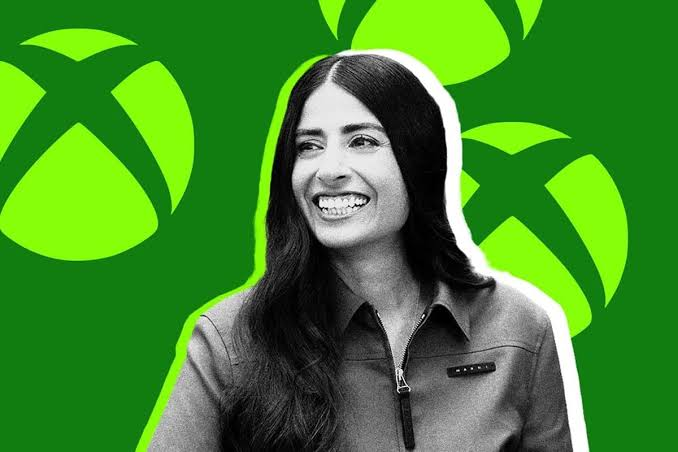
Xbox CEO Asha Sharma says the company expanded faster than its financial performance justified.
According to Sharma, Microsoft invested heavily in:
- Game Pass
- Major studio acquisitions
- Internal game development
- Platform expansion
However, revenue growth has not matched those investments.
She also argued that Xbox operates with significantly lower profit margins than comparable platform businesses while entering the current console generation with a smaller hardware user base than key competitors.
Sharma described today’s gaming hardware market as facing one of its most difficult periods in years.
What exactly is changing?
The restructuring extends well beyond layoffs.
Microsoft is reducing the size of its game studio portfolio.
According to the company:
- Compulsion Games will become independent.
- Double Fine will regain independent ownership.
- Ninja Theory will move to new ownership.
- Undead Labs is being transferred.
- Arkane’s future remains under review.
Microsoft also plans to simplify decision-making.
Sharma said some projects currently move through as many as 14 management layers before approval.
The company now wants:
- Fewer management levels
- Faster product decisions
- More engineers and developers leading projects
- Lower vendor spending
- Simpler internal systems
Meanwhile, Mojang and King will report directly to Sharma, reflecting Microsoft’s growing emphasis on franchises with large global audiences.
Can Xbox recover again?
Xbox has repeatedly survived moments that once appeared existential.
It overcame early internal resistance, established itself through Halo, rebuilt consumer trust after the Red Ring of Death and expanded beyond consoles through Game Pass and cloud gaming.
The latest restructuring represents another pivotal chapter.
Microsoft believes a leaner organisation with fewer studios and a stronger focus on profitability will position Xbox for long-term growth.
Whether that strategy succeeds will depend not only on financial discipline but also on Microsoft’s ability to continue delivering games and services that keep players invested in the Xbox ecosystem.
TL;DR
- Microsoft is cutting around 3,200 Xbox jobs over the next year.
- Xbox began in the late 1990s as a small internal project opposed by many Microsoft executives.
- The original console introduced innovations such as a built-in hard drive and broadband internet support.
- Halo transformed Xbox into a major gaming platform.
- Hardware failures and strategic mistakes later challenged the brand.
- Microsoft is now shrinking its studio network, flattening management and focusing on profitable long-term growth.