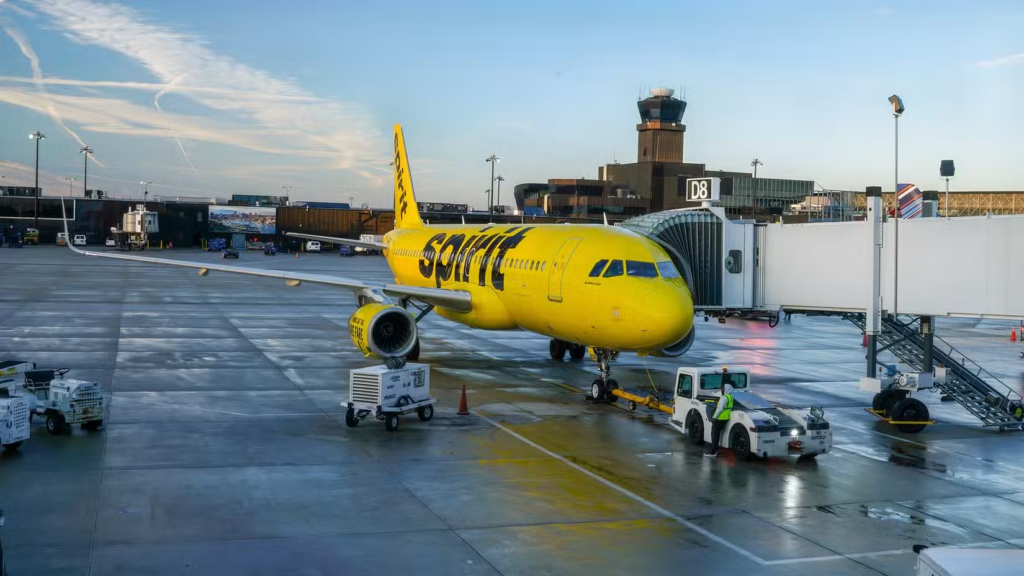
Budget carrier Spirit Airlines is reportedly preparing to shut down operations after failing to secure a proposed $500 million bailout tied to the Trump administration, raising fresh concerns about the future of ultra-low-cost air travel in the United States. The reported collapse of negotiations marks a dramatic turn for the Florida-based airline, which has struggled with bankruptcy, rising fuel costs, shrinking operations, and mounting doubts about whether its bare-bones business model can survive a turbulent aviation market reshaped by war-driven energy shocks.
According to reports, Spirit had explored an extraordinary rescue arrangement that could have given the US government a massive ownership stake in the airline in exchange for emergency funding. But internal disagreements within the administration, resistance from bondholders, and skepticism from airline industry leaders appear to have sunk the proposal.
Why Spirit Airlines is reportedly nearing shutdown
The airline has spent months searching for financial lifelines after entering bankruptcy proceedings for the second time in less than a year.
Spirit’s problems have been building for years, but several pressures collided at once:
- Rising jet fuel costs
- Increased operating expenses
- Weak consumer spending in budget travel segments
- Heavy debt obligations
- Route disruptions linked to geopolitical instability
- Intense competition from larger airlines
The company’s turnaround strategy reportedly depended on fuel prices remaining relatively stable. Instead, fuel costs surged sharply after the escalation of the conflict involving Iran disrupted global energy markets.
Fuel prices became a major breaking point
According to the Argus US Jet Fuel Index cited in reports, average jet fuel prices in major US cities reached $4.51 per gallon by the end of April.
That represented an enormous jump from roughly $2.50 per gallon earlier in the year, before the conflict-driven energy shock.
For airlines operating on razor-thin margins, fuel costs are often the difference between survival and collapse.
Ultra-low-cost carriers like Spirit Airlines are especially vulnerable because they depend on:
- Extremely cheap fares
- High passenger volume
- Aggressive cost-cutting
- Ancillary fees for bags, seats, and services
When fuel costs spike suddenly, those economics can unravel fast.
What the proposed Trump administration bailout reportedly involved
According to earlier reports, Spirit Airlines had discussed a potential arrangement with the Trump administration involving a government-backed rescue package.
The proposal reportedly included:
- Up to $500 million in support
- A potential government ownership stake reaching 90%
- Possible use of Spirit aircraft for military transport operations
That last element attracted particular attention because it suggested the airline could serve dual civilian and logistical roles during heightened geopolitical tensions.
Why did the bailout face resistance
The deal reportedly encountered opposition from several directions.
Some officials inside the administration reportedly questioned the following:
- Whether taxpayers should rescue a private airline
- Whether Spirit’s business model was fundamentally viable
- How the bailout would be funded
Meanwhile, certain bondholders reportedly opposed the plan altogether.
The debate echoes long-running American political arguments over government intervention in private industry.
Critics argue that bailouts distort markets and reward poor management. Supporters counter that airline collapses can damage infrastructure, jobs, and national logistics capacity.
Spirit Airlines has already been shrinking dramatically
Even before the latest shutdown reports, Spirit had announced plans to reduce its operations drastically.
The airline reportedly intended to shrink its fleet to roughly the following:
- 76 to 80 aircraft by the third quarter of 2026
That would leave the company operating at roughly one-third of its pre-bankruptcy size.
For an airline once known for rapid expansion and aggressively low fares, the downsizing signaled how severe the financial strain had become.
Spirit’s identity helped it stand out and divide passengers
Spirit Airlines became famous for the following:
- Bright yellow Airbus aircraft
- Ultra-cheap base fares
- High fees for luggage and seat selection
- Minimal-frills service
Its approach transformed parts of the US domestic travel market by making flights accessible to extremely price-sensitive travelers.
But the airline also became a magnet for criticism over the following:
- Customer service complaints
- Delays and cancellations
- Fee-heavy pricing structures
- Crowded seating layouts
The brand developed a reputation that was both mocked and fiercely defended online, creating what many analysts described as a love-it-or-hate-it airline culture.
United Airlines CEO says Spirit’s model “failed.”
Scott Kirby publicly questioned whether any bailout could realistically save Spirit. Kirby reportedly described the airline as “an interesting experiment” that had ultimately failed. He argued the company’s low-cost structure could no longer sustainably cover operating expenses.
That criticism cuts to the center of a larger industry debate: Can ultra-low-cost airlines still survive in an era of higher fuel prices, labor costs, and operational complexity?
Spirit pushed back publicly
Spirit responded sharply on social media platform X, defending both its customer base and pricing strategy.
The airline argued travelers still value affordable tickets and low-cost travel options.
It also mocked United executives directly, writing:
“Maybe that’s why United executives can’t stop yapping about us.”
The exchange reflected how fiercely competitive the US airline market has become, especially as carriers fight over budget-conscious travelers.
What happens if Spirit shuts down?
If Spirit ultimately ceases operations, the effects could ripple across the airline industry.
Budget travelers could face fewer cheap fare options
Spirit helped pressure larger airlines to lower prices on some domestic routes.
Without Spirit:
- Airfare competition may weaken
- Some routes could become more expensive
- Budget travelers may lose key low-cost options
Jobs and airport operations could be affected
A shutdown could impact:
- Pilots
- Flight attendants
- Ground crews
- Maintenance workers
- Airport vendors
Airports heavily reliant on Spirit routes may also lose passenger traffic.
Other airlines may absorb routes and aircraft
Competitors could eventually acquire:
- Spirit aircraft
- Airport slots
- Route rights
- Staff talent
That process could reshape competition in several US regional markets.
Why the Spirit story reflects bigger problems in aviation
Spirit’s crisis is not happening in isolation.
Airlines globally are dealing with:
- Higher fuel prices
- Supply chain disruptions
- Aircraft shortages
- Geopolitical rerouting costs
- Labor pressures
- Softer consumer demand in some sectors
The post-pandemic aviation rebound initially fueled optimism across the industry. But the combination of war-related energy shocks and rising operational costs has created a far harsher environment in 2026.
For ultra-budget airlines operating with minimal financial cushions, the pressure has become especially intense.
What to watch next
Several key questions remain unresolved:
- Will another buyer emerge for Spirit?
- Could the airline liquidate assets instead of fully shutting down?
- Will regulators intervene if routes disappear?
- Could competitors attempt a merger or acquisition?
- How would a shutdown affect ticket holders and employees?
So far, Spirit has declined to comment on ongoing discussions surrounding its future publicly.
But if the reports prove accurate, the airline that once reshaped low-cost flying in America may soon become one of the industry’s most high-profile collapses.