
Tesla is recalling nearly 3 million electric vehicles in China over a safety issue involving emergency door releases, in one of the country’s biggest automotive recall campaigns. The action affects about 2.98 million Tesla vehicles, including China-made and imported versions of the Model 3, Model Y, Model X and Model S.
The problem is not that Tesla’s doors routinely fail to open. The concern is what could happen in an extreme crash when the vehicle loses low-voltage electrical power and occupants or rescuers need to open a door quickly.
China’s recall comes as Beijing prepares to prohibit concealed door handles from 2027. The feature, popularised by Tesla and subsequently adopted by numerous electric vehicle manufacturers, is facing growing scrutiny over emergency escape and rescue risks.
Why is Tesla recalling nearly 3 million cars in China?
China’s State Administration for Market Regulation, or SAMR, said certain Tesla vehicles have interior emergency mechanical door releases that can be difficult to identify and operate because their color is too similar to the surrounding interior trim.
Under normal circumstances, this may not create a problem. The concern emerges during a severe collision that causes the vehicle’s low-voltage electrical system to fail.
In such a situation, occupants may need to rely on a mechanical emergency release. If they cannot quickly locate or operate it, they could have difficulty getting out of the vehicle. Emergency responders outside the car could also face problems gaining access.
Tesla’s recall covers about 973,156 China-made Model 3 vehicles and 1,956,713 China-made Model Y vehicles. It also covers imported Model 3, Model X and Model S vehicles, bringing the total to roughly 2.98 million cars.
What exactly is wrong with Tesla’s hidden door handles?
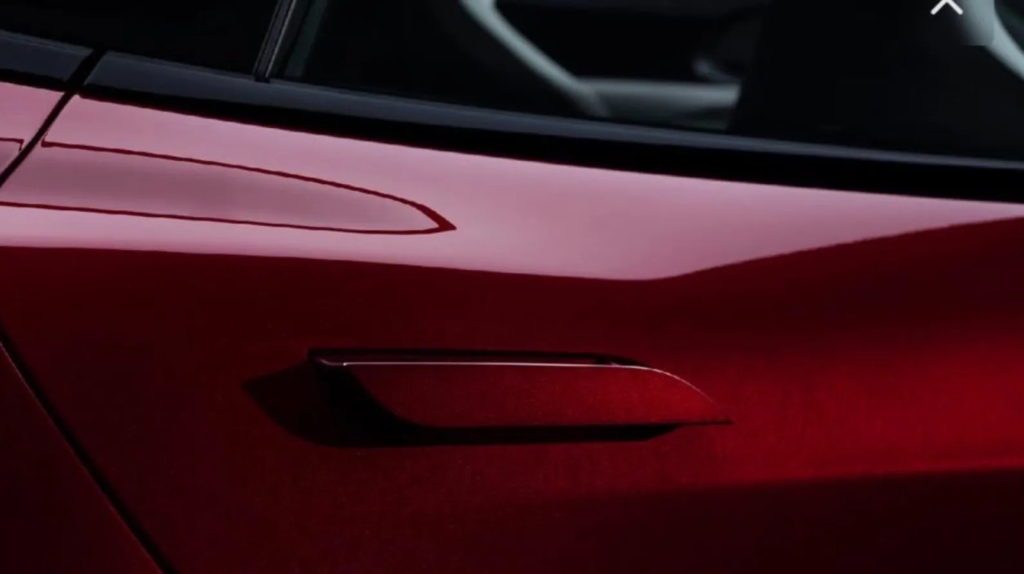
Tesla’s exterior door handles are designed to sit flush with the bodywork rather than protrude like conventional handles.
When functioning normally, the system can be opened electronically. The sleek design helps create the minimalist appearance associated with Tesla and has influenced the design of many newer EVs.
The problem is that electronic convenience becomes a potential vulnerability when electrical power is lost.
Vehicles have mechanical emergency releases as backups, but those mechanisms can be less obvious than a conventional door handle. China’s regulator specifically identified cases in which the emergency mechanical release could be difficult to recognise and operate.
That creates a critical mismatch during an emergency: the moment when a vehicle’s occupants need the simplest possible escape mechanism can also be the moment when the vehicle’s electronic systems are compromised.
What happens if a Tesla loses electrical power after a crash?
A serious collision can damage a vehicle’s electrical systems. If the low-voltage system fails, electronic controls may not work as expected.
Tesla vehicles have mechanical emergency releases intended to provide an alternative means of opening doors. However, China’s regulator determined that some affected vehicles did not make those releases sufficiently easy to identify and operate.
The danger is particularly serious in situations involving fire, smoke or water, where occupants may have only seconds to escape.
It can also create a problem for rescuers. A person outside the vehicle may know that an emergency mechanical release exists but still struggle to locate it quickly.
This is why the recall focuses on emergency accessibility rather than ordinary door operation.
How will Tesla fix the problem?
Tesla will use two main remedies in China.
First, the company will add warning labels to help occupants identify the emergency mechanical releases.
Second, Tesla will update the window-control software using over-the-air, or OTA, technology. The update will add a strategy for lowering the windows following an accident, creating another potential route for occupants to escape.
Some affected vehicles already have the relevant warning labels and will not need another label installed.
Because the software changes can be delivered remotely, many owners will not need to take their vehicles to a service center.
That is one reason the financial and logistical burden of this recall could be considerably different from a traditional recall involving a physical replacement part.
Is China banning Tesla’s concealed door handles?
China is moving toward a ban on concealed door handles.
Chinese authorities announced plans earlier this year to prohibit the design from 2027, following growing concerns about emergency access in vehicles equipped with electronic or hidden handles.
The policy is significant because Tesla was among the companies that helped make flush-mounted handles a defining feature of modern EV design.
The technology was embraced by numerous Chinese automakers as well. That means the regulatory shift is not aimed solely at Tesla.
Instead, it represents a broader change in how Chinese authorities view emergency vehicle design.
The message is increasingly clear: styling and aerodynamic efficiency cannot come at the expense of a driver’s ability to escape a damaged vehicle.
Is Tesla the only automaker affected?
No.
Tesla is the largest participant in the recall campaign, but several Chinese automakers are also addressing similar door-handle safety concerns.
Companies affected include Xiaomi, Leapmotor, XPeng and Geely brands, among others. China’s broader recall campaign covers millions of vehicles.
Reuters reported that the coordinated recalls initially covered about 4.3 million vehicles from nine automakers, although China’s regulator has separately disclosed recall plans involving a wider group of manufacturers and more than 7 million vehicles across related campaigns.
For consumers, that distinction matters because the immediate Tesla recall should not be described as the entirety of China’s broader crackdown.
Tesla simply accounts for the largest single share of the vehicles affected by the specific recall announced on August 21.
Why is China taking action now?
The recall comes after growing concern about concealed door handles and emergency escape systems in electric vehicles.
Chinese authorities have cited accidents in which electronic door systems reportedly failed, leaving occupants trapped inside vehicles.
The issue is particularly relevant to EVs because modern electric cars increasingly depend on software and electrical systems for functions that were traditionally mechanical.
That does not mean EVs are inherently unsafe. Rather, it highlights a design challenge created when conventional mechanical functions are replaced or supplemented by electronic systems.
The recall is therefore part of a wider push by Chinese regulators to make emergency functions easier to understand and use.
Is this Tesla’s biggest recall?
The China campaign is among Tesla’s largest recall actions and represents the largest single share of China’s current automotive recall effort.
About 2.98 million Tesla vehicles are affected by the door-release issue alone.
There is another Tesla recall in China happening at the same time involving driver-monitoring technology.
China’s regulator separately ordered Tesla to recall about 2.74 million China-made Model 3 and Model Y vehicles produced between March 2019 and December 2025. The issue involves the vehicle’s attention-monitoring system when assisted steering is active. Tesla will add cabin-camera monitoring through an OTA software update.
The two recalls should therefore not be conflated. One concerns emergency door access, while the other involves driver monitoring and assisted steering.
Why do hidden door handles create a safety debate?
The appeal of concealed handles is easy to understand.
They give vehicles a cleaner exterior design, can reduce aerodynamic drag and reinforce the futuristic appearance that automakers want for EVs.
But an emergency exit is a different kind of vehicle feature.
It needs to be intuitive when the driver or passenger is frightened, injured, disoriented or surrounded by smoke. A mechanism that looks elegant in a showroom may become less useful if its operation is not obvious during a crash.
This is the central issue behind China’s regulatory response.
The question is not whether concealed handles work under normal conditions. It is whether people can reliably find and operate the emergency mechanism when normal vehicle systems have failed.
Could the recall affect Tesla outside China?
The immediate recall applies to vehicles covered by China’s regulatory action.
However, the underlying issue has implications beyond the Chinese market because concealed electronic door handles are used internationally.
US and European regulators have also been examining questions surrounding emergency door access and vehicle escape systems. Reuters reported that regulators in other markets are considering the safety implications, although no equivalent US recall has been mandated as part of this Chinese action.
That means Tesla owners elsewhere will be watching closely for any future regulatory action.
The broader auto industry is likely to be watching too. If China ultimately prohibits concealed door handles, manufacturers selling globally may reconsider whether maintaining different exterior door designs for different markets makes economic and engineering sense.
What does the Tesla recall mean for EV design?
The recall could mark a turning point in the evolution of EV design.
For years, automakers have competed to make electric vehicles look increasingly futuristic. Flush door handles became one of the most visible symbols of that transformation.
China’s regulatory response introduces a different priority: emergency usability.
The lesson is broader than Tesla.
As vehicles become more dependent on software, cameras, sensors and electronic controls, automakers must ensure that critical safety functions remain accessible when those systems fail.
A door is ultimately a way out of a vehicle. In a serious crash, that basic function matters more than how neatly the handle disappears into the bodywork.
What should Tesla owners in China know?
Owners of affected vehicles will be notified about the recall and the required remedies.
For the door-release recall, Tesla says the fix will involve warning labels and an OTA software update. Vehicles that cannot receive the software update remotely may require service-center assistance.
Owners should pay particular attention to the location and operation of their vehicle’s mechanical emergency releases.
Knowing how the emergency release works before an accident is far more useful than trying to discover it during one.
The bigger picture
Tesla’s nearly 3 million-vehicle recall is not simply a story about faulty door handles.
It is a case study in how quickly a design trend can become a regulatory issue when a safety weakness emerges.
China’s decision to phase out concealed door handles from 2027 puts the issue on a much larger stage. Tesla helped popularize the design, but the recall shows that the concern now extends across the EV industry.
For automakers, the message is straightforward: futuristic design still has to work when everything else goes wrong.
For drivers, the takeaway is even simpler. The most important door handle in a car is the one you can find when the lights are out.
Key takeaways
- Tesla is recalling about 2.98 million EVs in China over emergency door-release concerns.
- The recall covers China-made and imported Model 3, Model Y, Model X and Model S vehicles.
- The risk arises if a severe crash causes the vehicle’s low-voltage electrical system to fail.
- Some emergency mechanical releases may be difficult to identify and operate.
- Tesla will add warning labels and introduce an OTA software update that can lower windows after an accident.
- China plans to ban concealed door handles from 2027.
- Xiaomi, Leapmotor, XPeng, Geely and other automakers are also affected by related safety actions.
- The broader recall campaign underscores growing scrutiny of electronic vehicle systems and emergency escape mechanisms.