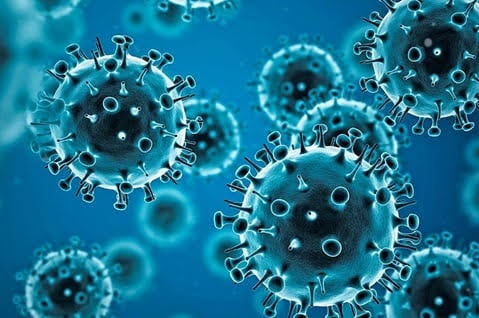
Even though COVID-19 appears to be waning globally, it is still fragmenting into various variants. Other omicron variations have also been found, while BA.5 is still the prevalent strain in the US.
“BQ.1 and a closely related variant known as BQ.1.1 are the ones that are most worrying.” According to Roy Gulick, chief of the infectious disease section at Weill Cornell Medicine and NewYork-Presbyterian Hospital, those two are growing fairly quickly in the United States.
XBB variant that has become a major talking point
However, the extremely contagious XBB variant is the one that has drawn the most attention. It was originally noted in Singapore, and is anticipated to overtake Covid-19 in Hong Kong, but has not yet been noted in the US. Health professionals are optimistic that the population’s degree of hybrid immunity will prevent serious infections from developing.
The term “Scrabble variants” was developed by Peter Hotez, co-director of the Center for Vaccine Development at Texas Children’s Hospital, to describe these Omicron strains. The moniker alludes to the letters B, Q, and X, which are quite valuable in the game in terms of points. Since the first known carrier was identified on October 10 in a foreign traveler, 140 XBB infections have been documented in Hong Kong.
However, other strains like BA.4 or BA.5 are currently in circulation the most. In contrast to less than 0.1% of XBB instances over the last two weeks, they accounted for 95.1% of local cases.
XBB could be the next dominant strain in Hong Kong
“XBB could be the next dominant strain in Hong Kong,” Professor Ivan Hung Fan-ngai, a top infectious disease expert at the University of Hong Kong, told SCMP.
“Nevertheless, XBB is a recombinant of BA 2.75 and 2.10.1. Most people in Hong Kong have been infected with Omicron BA.2 or BA.5 before, plus [they have] a very high vaccination rate. Therefore, [they have] very high hybrid immunity.”
The case for XBB being more virulent than the other strains is still not well supported by the available data. When combined with the immunity component, this makes specialists think that it won’t represent a significant threat to the Hong Kong healthcare system.
“Therefore, it will not be a threat to the healthcare system in Hong Kong in the winter,” he said.